Göttingen Cognition & Behavior Research
Welcome to the "Göttingen Cognition & Behavior" - Insights into cognition and behavior research at the Göttingen Campus!
We are an interdisciplinary team of cognitive scientists, behavioral biologists, psychologists, neuroscientists, and data scientists studying social interactions, decision-Imaking, exploration, curiosity, foraging, partner choice, and Theory of Mind.
We entertain variour research initiatives, which are united under this channel:
• Leibniz ScienceCampus Primate Cognition (2015-2025)
• SFB 1528 - Cognition of Interaction (since 2022)
• RTG 2906 Curiosity (since 2024)
• RTG 2070 Understanding Social Relationships (2015-2024)
• Human Cognition and Behavior (HuCaB) Research Center and Building, currently under construction at the University of Göttingen.
We thank our funders: Leibniz Association, DFG, Volkswagen Foundation, MWK & BMBF
Impressum:
DPZ: https://www.dpz.eu/impressum
Uni Göttingen: https://www.uni-goettingen.de/de/439238.html

The field station CRP Simenti in Senegal

Kirindy Forest. 30 years of research on the lemurs of Madagascar

Leibniz ScienceCampus: Bridging Field and Lab Research

Leibniz ScienceCampus: The Dyadic Interaction Platform

Leibniz ScienceCampus: Inside the Phenomobil - A Rolling Lab to Track Infant Early Development

Leibniz Science Campus: How AI Helps Decoding Primate Behavior

First Generation Academics. Wie das Elternhaus Karrierewege junger Wissenschaftler*innen beeinflusst

Neurodivergenz - Wenn Hürden nicht offensichtlich sind. Eine Podiumsdiskussion des SFB 1528

The Computational Structure of Human Social Cognition

What Can We Learn From Studying Curiosity in Animals? Insights from Primatology

Social Influences on Childrens' Persistence: The Role of Over-Engaged Parenting

Neural Pathways Generating Social Curiosity

Adaptive Social Learning in Immersive Foraging Environments
How (Epistemic) Curiosity affects Learning and Information Seeking via the Dopaminergic Circuit

How Sociality Influences How We Explore The World

Curiosity, awareness of ignorance and meta-representation

The relation between visual-spatial object processing and object exploration in infants
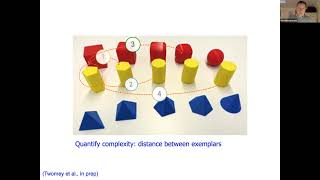
Curiosity as a driver of learning in infancy

Understanding exploration by formalizing the function of curiosity

Children's active learning in a multisensory world

The emergence and developmental trajectory of active and ecological learning.

Learning through parent-infant social interactions: A dyadic neuroscience perspective

Information seeking in infancy

What is theta and how to use it for studying active learning

What the caretaker knows: Observer ratings of animal welfare

The origins of reciprocal help

Ways of Thinking. From Crows to Children and Back Again

Why boredom is interesting

What the human eye tells the human clock

Why Brain-Machines Think They're Conscious