Multivalent RNA CAR-T cell for malignant glioma
Автор: Labroots
Загружено: 2024-02-15
Просмотров: 258
Presented By: Prof. Denis Migliorini
Speaker Biography: Professor Denis Migliorini completed his MD studies and internal medicine post graduate training at the Universities of Toulouse and Strasbourg. He then moved to the University Hospitals of Geneva (HUG) where he completed his postgraduate training in medical oncology under the mentorship of Professor Pierre-Yves Dietrich. From 2015 to 2016, he successfully completed his clinical fellowship in neuro-oncology. He holds a DAS in clinical trial management from the University of Geneva (UNIGE) and became principal investigator of several early phase trials testing various anti-tumor immunotherapy approaches, including peptide vaccines for the treatment of glioblastoma. From 2017 to 2019, he performed a post-doctoral fellowship at the Center for Cellular Immunotherapies, University of Pennsylvania, in the laboratories of Professor Carl June and Professor Avery D. Posey. He trained in synthetic biology and T cell engineering, disciplines that enabled the development of CAR-T cell technology. In 2019, he was awarded the Swiss Bridge Foundation Prize in recognition of his work identifying neurotoxicity mechanisms of engineered cell therapies. Returning to Switzerland in 2020, he was appointed assistant professor at the Department of Medicine of the Faculty of Medicine of the UNIGE, and holds the ISREC Chair in Brain Tumour Immunology. At the HUG, he is an attending physician, head of the Neuro-Oncology Unit and clinical coordinator of the brain tumor biobank. Professor Migliorini is a member of the CRTOH steering committee.
Webinar: Multivalent RNA CAR-T cell for malignant glioma
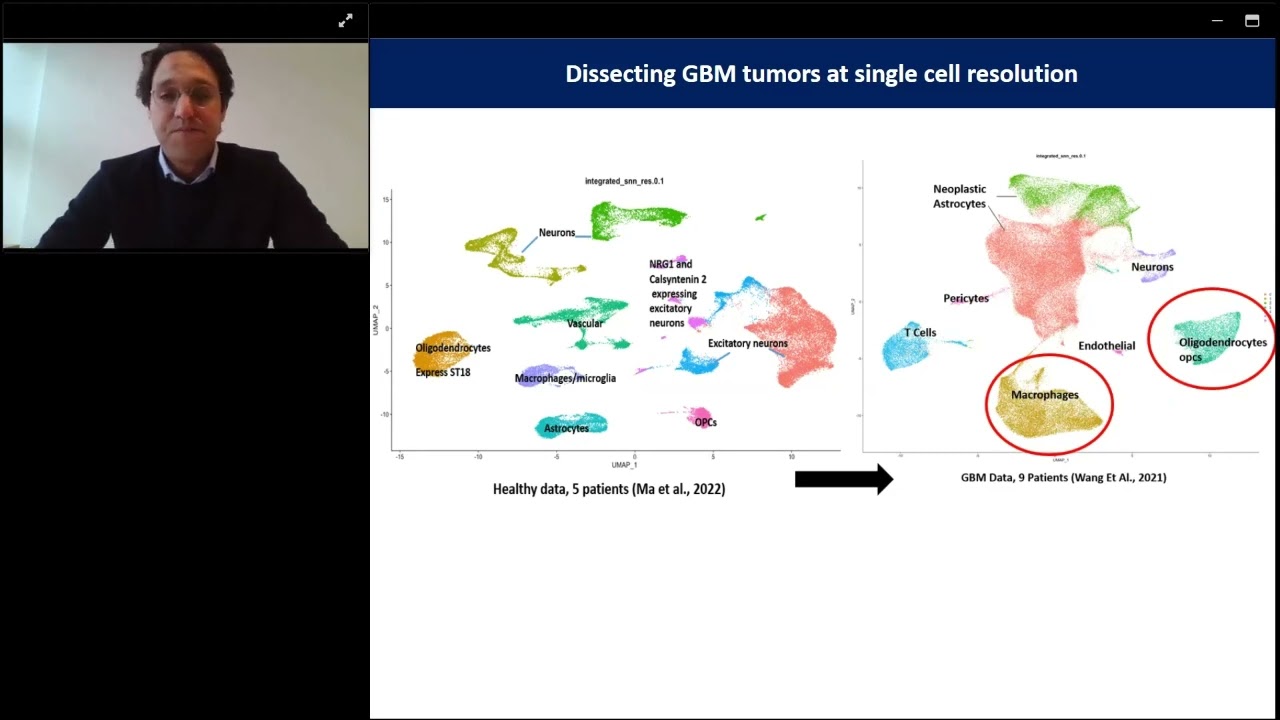
Webinar Abstract: The therapeutic use of chimeric antigen receptor T cells has achieved significant success in the treatment of B cells malignancies. Despite promising results in mouse tumor models, a similar outcome hasn’t yet been observed in solid tumors. Specifically, in glioblastoma (GBM) several clinical trials only showed a modest efficacy, partly due to the high tumor heterogeneity. In this setting, we aim to develop an "à-la-carte" CAR-T cell strategy that targets a panel of GBM antigens. We use transiently expressed RNA CAR-T cells, allowing to acheive the dual goal of reducing potential side effects while delivering multiple CAR-T cell infusions. Through a phage display screening, we generated various different new scFv against GBM associted cell surface targets and cloned them into an RNA CAR plasmid. Then we selected the ones with better cytotoxic activity against a GBM target expressing cell lines derived from patients operated in our institution. Using triple reporter Jurkat cell lines we show that CAR transient expression is able to be sustained for at least 7 days whitout toxic signaling. In an orthotopic allogeneic tumor model using NSG mice, a single dose of our lead CAR-T cell product is able to significantly increase the mice’s overall survival. Our results point to validating the use of RNA CARTs as an attractive new manufacturing platform in the GBM setting.
Labroots on Social:
Facebook: / labrootsinc
Twitter: / labroots
LinkedIn: / labroots
Instagram: / labrootsinc
Pinterest: / labroots
SnapChat: labroots_inc
Доступные форматы для скачивания:
Скачать видео mp4
-
Информация по загрузке:


