Interpretation of colour tints
Автор: Geography is Fun
Загружено: 2020-12-04
Просмотров: 2295
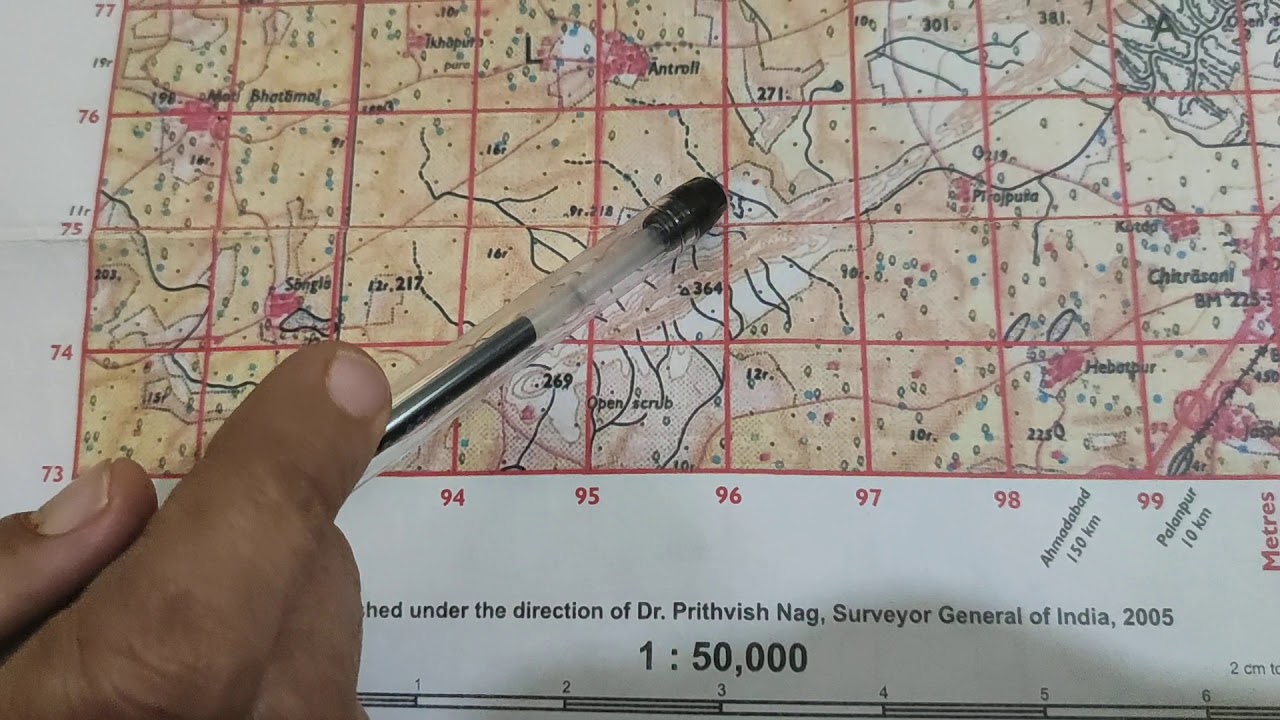
Interpretation of colour tints used on a topographical survey of India map. The occupation of the people of an area can be inferred from the following:
Farmer- Agriculture- Yellow wash
Forestry, Green Patch
Cattle-grazing or sheep rearing- Presence of open Scrub
Quarrying and mining- Mines and Quarries, lime stone beds
Trade- Settlement near metalled roads and dense settlement
The main occupation of the people living in the area is agriculture.
It is indicated in the map by the yellow wash that covers almost the entire map extract. The presence of a large number of perennial lined wells also support this inferencePeople living in Sakora might be engaged in forestry, because of the presence of dense mixed jungle around them.
Some People living in Sakora might be engaged in agriculture, indicated in the map by the yellow wash that covers some portion in the map extract.
The main occupation of the people living in Idaria is cattle rearing.
It is indicated in the map by the presence of open scrub
One of the occupation, the people living in Chitrasani is engaged in, can be trading.
It is indicated in the map, as Chitraseni is well connected by metalled road and railways
One of the occupation, the people living in Panswala is engaged in, can be mining
It is indicated in the map, by the presence of lime kiln
Well irrigation is the most widespread mode of irrigation in the map extract. This is because of the presence of large number of perennial wells which have a supply of water throughout the year.
Wells are indicated by blue dots on the map.
The line perennial well with brackish water, means the water is salty and is unfit for drinking.
As the region is very arid in nature and due to extreme heat excessive evaporation takes place, leaving high mineral content in the water.

Доступные форматы для скачивания:
Скачать видео mp4
-
Информация по загрузке: