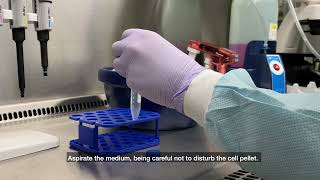
DOUBLE DENSITY GRADIENT METHOD
Автор: FUSION FERTILITY IVF CLINIC (FUSION BIOCELL)
Загружено: 2024-11-29
Просмотров: 2703
The *Double Density Gradient Method* is an advanced sperm preparation technique used to isolate the most viable and motile sperm cells from a semen sample. It is particularly useful in cases where sperm quality is suboptimal, such as low sperm motility, high levels of sperm DNA fragmentation, or high concentrations of dead sperm or other debris. This method is commonly used in assisted reproductive technologies (ART) like *in vitro fertilization (IVF)* and **intracytoplasmic sperm injection (ICSI)**.
How the Double Density Gradient Method Works:
1. **Semen Collection**: The sperm sample is collected from the male partner or donor.
2. *Density Gradient Preparation**: A **two-layer density gradient* is created using two different concentrations of a density medium (usually **Percoll**, **sucrose**, or **Ficoll**). The gradients are designed so that sperm with different densities can be separated during centrifugation:
The first (bottom) layer typically has a *higher density* medium.
The second (top) layer has a *lower density* medium.
3. **Layering the Sample**: The semen sample is carefully layered on top of the gradient in a test tube.
4. **Centrifugation**: The tube is centrifuged at high speed (typically for 15–30 minutes). This causes sperm to separate based on their density, with the most motile and viable sperm moving toward the interface between the two gradients or toward the lower part of the tube (depending on the specific protocol used).
*Motile sperm* with better quality tend to move toward the interface between the two gradients or to the lower part of the tube, while *less motile sperm* and *debris* remain at the top or in the upper layers.
5. **Collection of Sperm**: After centrifugation, the sperm are separated into different layers:
The motile sperm will usually be found at the interface of the two gradients or in the lower gradient layer.
These motile sperm are carefully aspirated and collected.
6. **Final Washing**: The sperm are then washed with a culture medium to remove any remaining gradient medium, which could be harmful if introduced into the fertilization culture.
7. **Concentration and Use**: The sperm are concentrated and can be used for fertilization in IVF or ICSI procedures.
Advantages of the Double Density Gradient Method:
**Superior Sperm Selection**: The two-gradient system allows for more effective separation of motile, morphologically normal, and viable sperm from debris, dead sperm, or immotile sperm. This results in a higher proportion of healthy sperm for fertilization.
**Improved Sperm Quality**: It helps remove sperm with DNA fragmentation, abnormal morphology, or other defects that could impair fertilization potential.
**Higher Success Rates**: By selecting the best-quality sperm, it improves the chances of successful fertilization and embryo development in ART procedures.
**Better for Poor Sperm Quality**: It is particularly helpful in cases of low sperm count or poor motility, where other methods (such as the swim-up technique) might not be as effective.
Disadvantages:
**Complexity**: The double density gradient method requires more steps and careful handling compared to simpler methods like swim-up, which may make it more time-consuming and labor-intensive.
**Equipment**: It requires specialized equipment such as a centrifuge, and the use of density gradient media may add additional costs.
**Not Ideal for All Cases**: While effective in many cases, it may not be necessary for samples with already high sperm motility or sperm quality.
Clinical Applications:
**Male Factor Infertility**: It is used in cases of male infertility with low sperm quality, poor motility, or high sperm DNA fragmentation.
**Pre-ICSI and IVF Preparation**: It is particularly beneficial when preparing sperm for ICSI, where a single sperm is injected into an egg, and selecting the best sperm is critical.
**Sperm Banking**: It is also used in sperm freezing and storage, to ensure that the sperm used for future fertilization has optimal motility and quality.
In summary, the *Double Density Gradient Method* is a highly effective sperm washing technique that offers superior sperm selection, especially for men with fertility issues such as low motility or DNA fragmentation. It is widely used in ART procedures to increase the likelihood of successful fertilization and embryo development.

Доступные форматы для скачивания:
Скачать видео mp4
-
Информация по загрузке: