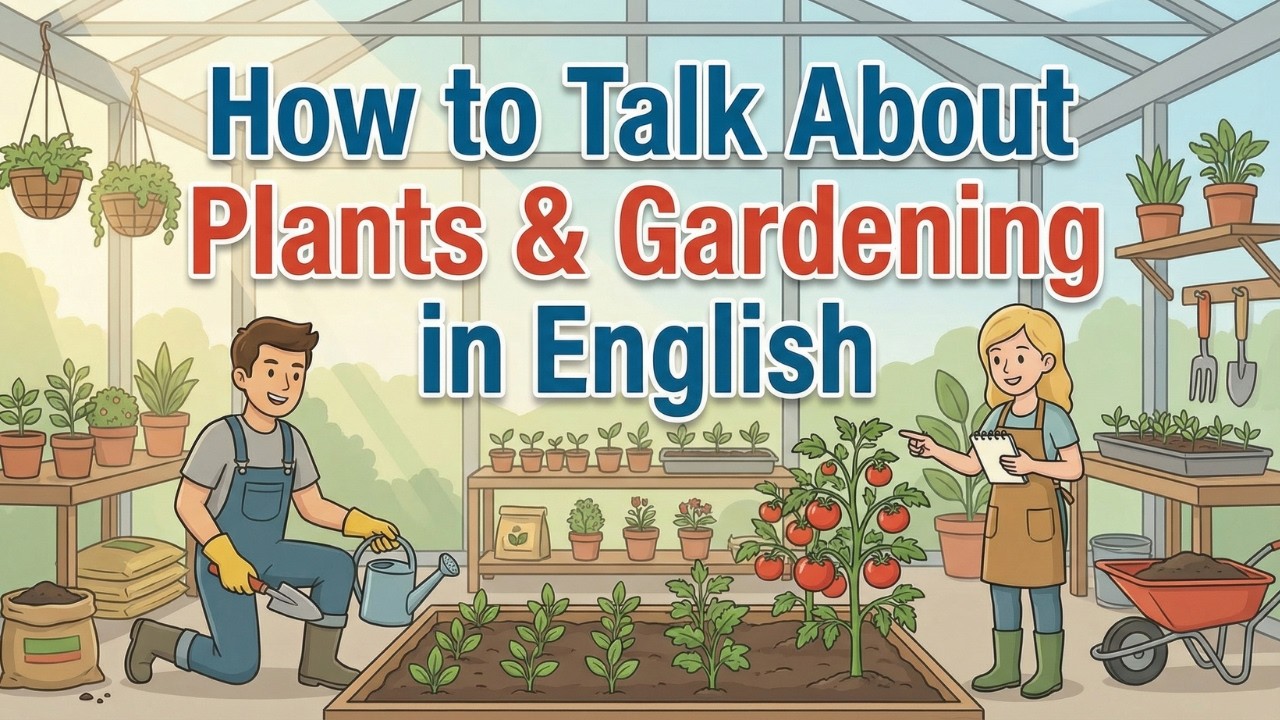
English Conversation Practice for Listening & Speaking | Talking About Plants & Gardening in English
Автор: Prof Tavakol
Загружено: 2026-01-20
Просмотров: 2
🌿 Want to talk about gardening in English without getting stuck?
Welcome to Language Bloom — the podcast where you grow your English vocabulary one topic at a time. In today’s episode, Alice and Bob (our resident plant enthusiast 🌱) dig into a very green, very practical topic: Gardening vocabulary in English.
Gardening is a popular hobby around the world — but for English learners, it can feel like trying to untangle a vine. The good news? You don’t need “expert” words to sound natural. In this episode, we teach you simple, real-life gardening English you can use with neighbors, friends, and anyone who loves plants.
✅ What You’ll Learn in This Episode (Gardening English for Everyday Life)
🌼 1) Easy small talk starters with neighbors
Not sure how to begin a conversation when you see someone working in their yard? We give you friendly, natural openers like:
“Your garden looks lovely today.”
“Are you planting something new?”
“What vegetables are you growing this year?”
“What beautiful flowers are these?”
These are perfect for casual, everyday conversation — and they help you sound confident immediately.
🥕 2) Plants & categories: vegetables, flowers, annuals, perennials
You’ll learn the everyday words people actually use when they talk about what they’re growing:
Vegetables (carrots, tomatoes, lettuce, basil, etc.)
Flowers
Annuals = flowers that last one season
Perennials = flowers that come back every year
🧤 3) The essential gardening verbs (the actions)
We focus on the core actions that cover most beginner gardening:
to dig (make holes in the soil)
to plant (seeds or small plants)
to water (give plants water)
to weed (remove weeds — unwanted plants)
If you learn only four gardening verbs, make it these.
🛠️ 4) Tool vocabulary you’ll hear in real gardens
You’ll learn simple tool words that make you sound “at home” in a garden setting:
trowel (small hand shovel)
rake (gather leaves)
hose / watering can
seed / seedling (a young plant)
So when you ask, “Where’s your trowel?” it will sound completely natural.
🌱 5) How to describe growth and progress
This is where learners often freeze — so we make it easy with common, useful words:
seedling = a tiny new plant
sprouting = starting to grow
growing
lush = thick, healthy, and green
Example you can reuse:
“My tomato plant is sprouting nicely.”
“My lettuce patch is looking lush.”
🐛 6) Asking for help & advice (when something goes wrong)
Every gardener needs help sometimes — and so do English learners! You’ll learn simple, direct phrases for getting advice:
“My roses have yellow leaves. What should I do?”
“I think I have pests.”
“Something is eating my basil leaves.”
“Do you recommend organic methods?”
You’ll also learn how to thank someone naturally:
“That’s great advice — I’ll try that in my flowerbed.”
(Flowerbed = an area of soil prepared for flowers.)
🧠 Quick Recap: The 3 Vocabulary Categories We Cover
✅ Actions: dig, plant, water, weed
✅ Objects: trowel, rake, hose, seeds / seedlings
✅ Descriptions: lush, sprouting, annuals, perennials
🎯 Practice Challenge (Try this today!)
Next time you’re outside — even in a park — try this:
Name three things you see (trees, flowers, weeds, soil, etc.)
Use one verb from the episode (dig, plant, water, weed)
Say one sentence out loud:
“I need to water my plants — they’re not looking very lush.”
Small practice = big growth 🌿
gardening vocabulary in English, English for gardening, ESL gardening words, how to talk about plants in English, English conversation gardening, gardening verbs English, seedling meaning, sprouting meaning, annuals vs perennials English, beginner English podcast vocabulary
Доступные форматы для скачивания:
Скачать видео mp4
-
Информация по загрузке: