Magnificat, Justin Rito
Автор: justinritocomposer
Загружено: 2026-01-22
Просмотров: 36
A setting of the Magnificat text for two choirs, soloist, and chamber orchestra. This setting centers on the social justice message in this passage of the text (for more see the full program note below):
Dispersit superbos mente cordis sui
Deposit potentes de sede
Et exaltavit humiles.
Esurientes implicit bonis:
et divites dimisit inanes.
"He has scattered the proud in their conceit
He has cast down the mighty from their thrones
And exalted the humble.
The hungry he has filled with good things
and the rich he has sent away empty."
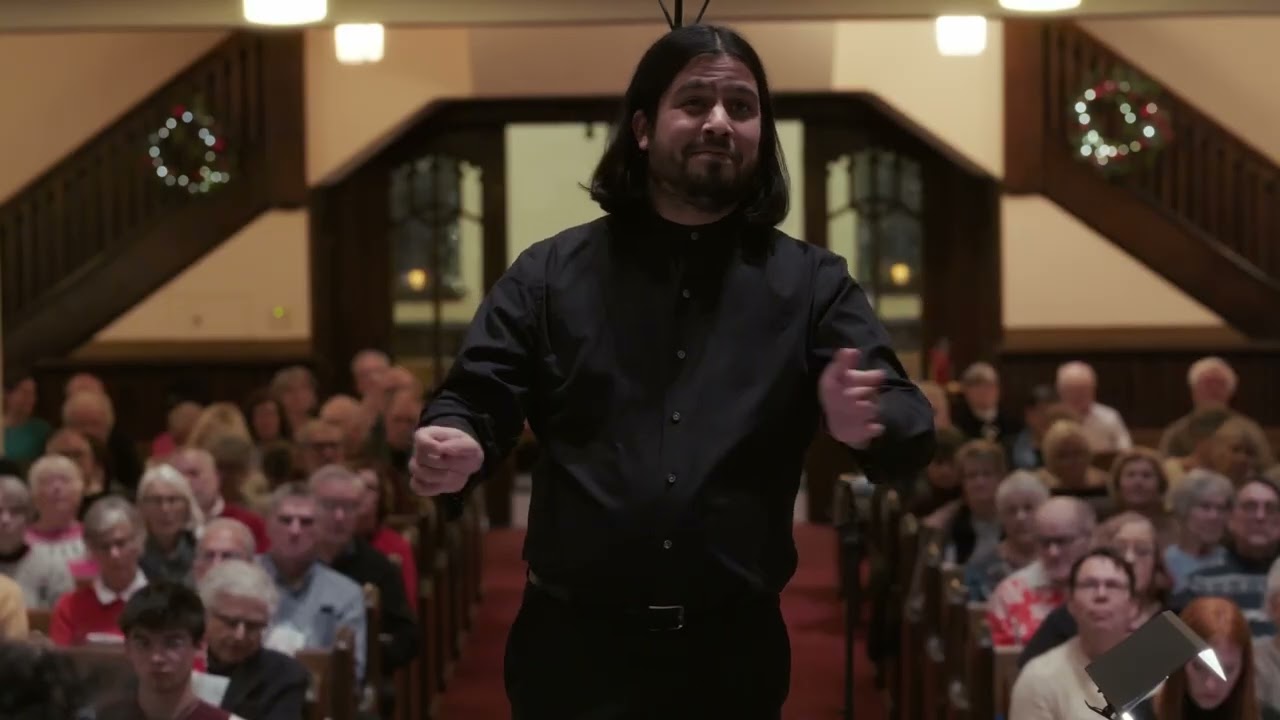
Performed by Westminster Presbyterian Church, Grand Rapids MI.
Robert Ragoonanan, director.
Full Program Note
Settings of the Magnificat text have been some of my favorite choral works since I had the
opportunity to study Bach’s Magnificat BWV 243 as a high school student. The haunting delicacy
of Pärt’s setting, the frightening opening of Vivaldi’s, and the fragile beauty of Bach’s “Quia
Respexit” have all been formative works toward my own style as a composer.
The Magnificat text is taken from the New Testament, Luke 1:46-55. Mary, pregnant with Jesus,
visited Elizabeth, who was at the time pregnant with John the Baptist, and was greeted by
Elizabeth with a question: “why am I so favored that the Mother of my Lord should come to
me?” Mary’s response is this:
“My soul magnifies the Lord,
and my spirit rejoices in God my Savior,
for he has looked with favor on the lowly state of his servant.
Surely from now on all generations will call me blessed,
for the Mighty One has done great things for me,
and holy is his name;
indeed, his mercy is for those who fear him
from generation to generation.
He has shown strength with his arm;
he has scattered the proud in the imagination of their hearts.
He has brought down the powerful from their thrones
and lifted up the lowly;
he has filled the hungry with good things
and sent the rich away empty.
He has come to the aid of his child Israel,
in remembrance of his mercy,
according to the promise he made to our ancestors,
to Abraham and to his descendants forever.”
(NRSV Translation).
This prayer haunts me as I consider our modern social justice failures. I was baptized and raised
in the Presbyterian Church, and it’s particularly difficult for me to wrap my head around those
who claim the Bible as a justification to other, as motivation for ignoring the humanity of
marginalized communities, or even as carte blanche to demonize. I wrote this piece as a call back
to the social justice and compassion for others that I believe is at the very core of the New
Testament’s message.
This Magnificat is set using the traditional Latin translation. One section, however, the “Dispersit
Superbos,” is also set in chanted and spoken English, and functions as the center of the work.
The surrounding six movements are loosely palindromic in musical content: the first is like the
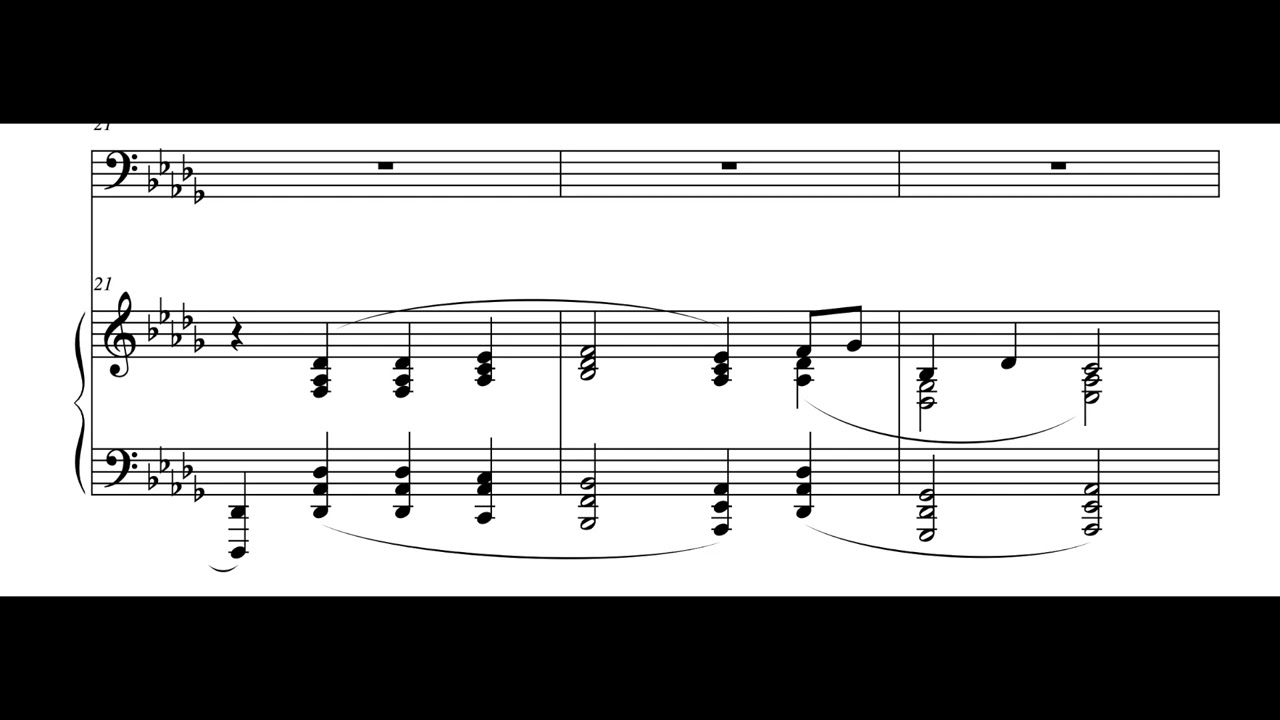
sixth, the second like the fifth, and the third like the fourth. The work is based on just two motives: the first is the thin, dissonant motive heard
in the viola solo that opens the work; the second is the repetitive bass motive that begins when
the full orchestra first enters and gradually shifts from defiant in Movement 1 (“Magnificat anima
mea Dominum”) to promising and hopeful in Movement 6 (“Sicut erat in pricipio…”). Movements 2 and 5 are set simply, responding to the humility Mary expresses in her prayer.
Movements 3 and 4 are set to the darkest music of the set, accompanying Mary’s charges against
the rich and powerful.
Whether or not you hear this work as strictly religious, loosely spiritual, or neither, it is my hope
that you can hear it as a call toward the messages of kindness, humility, gratitude, and empathy
that I believe the Bible teaches. These things still mean something in our daily interactions and
activism, and we will all benefit from more of each.
Social Justice Magnificat was commissioned by Robert Ragoonanan and Westminster Presbyterian
Church of Grand Rapids, Michigan. Many thanks also to Drs. Eric Reyes and Nicole Mattfeld
for their support and feedback as I wrote this work.
Доступные форматы для скачивания:
Скачать видео mp4
-
Информация по загрузке: