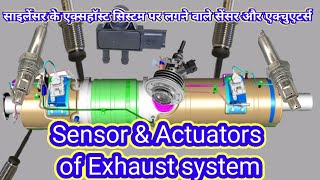
Bs6 TATA 1512 Urea Nozzle Damage || ये जानना बहुत जरूरी है कि इस यूरिया नोजल को कैसे बदलेंगे |
Автор: The Mechanical Tricks
Загружено: 2022-02-15
Просмотров: 63053
Urea dosing systems must ensure injecting the precise amount of urea for the SCR reactions and uniform mixing of urea and ammonia with the exhaust gas. Better atomization and smaller droplet size of injected urea allow a more complete conversion to ammonia and can minimize the risk of fouling by solid deposits. Many commercial urea injection systems utilize compressed air to improve atomization, but airless systems have also been developed. The urea dosing system components include pumps, injectors, mixers, and urea tanks
Commercial deployment of urea-SCR systems depended on the development of not only the catalyst, but also the urea dosing and injection system. The increase in NOx conversion efficiency of SCR systems that has been seen since the launch of SCR technology on diesel engines around 2005 is largely owed to advances in SCR control and urea injection. The main functions of the urea dosing and injection system include:
Dosing of the precise amount of urea necessary for the SCR reactions with NOx, and
Mixing urea and ammonia thoroughly with the exhaust gas.
The amount of injected urea must match the ammonia demand corresponding to the amount of NOx entering the catalyst and the NOx conversion efficiency at given operating conditions (catalyst temperature and space velocity). If the amount of ammonia is insufficient, a fraction of NOx that otherwise could be reduced will remain unconverted, resulting in a NOx conversion penalty. If the amount of injected ammonia is more than can be consumed in the SCR reactions, it will cause an unacceptably high ammonia slip. In systems that include an ammonia slip catalyst, some of the ammonia may be oxidized back to NO, thus decreasing the effective NOx conversion.

Доступные форматы для скачивания:
Скачать видео mp4
-
Информация по загрузке: