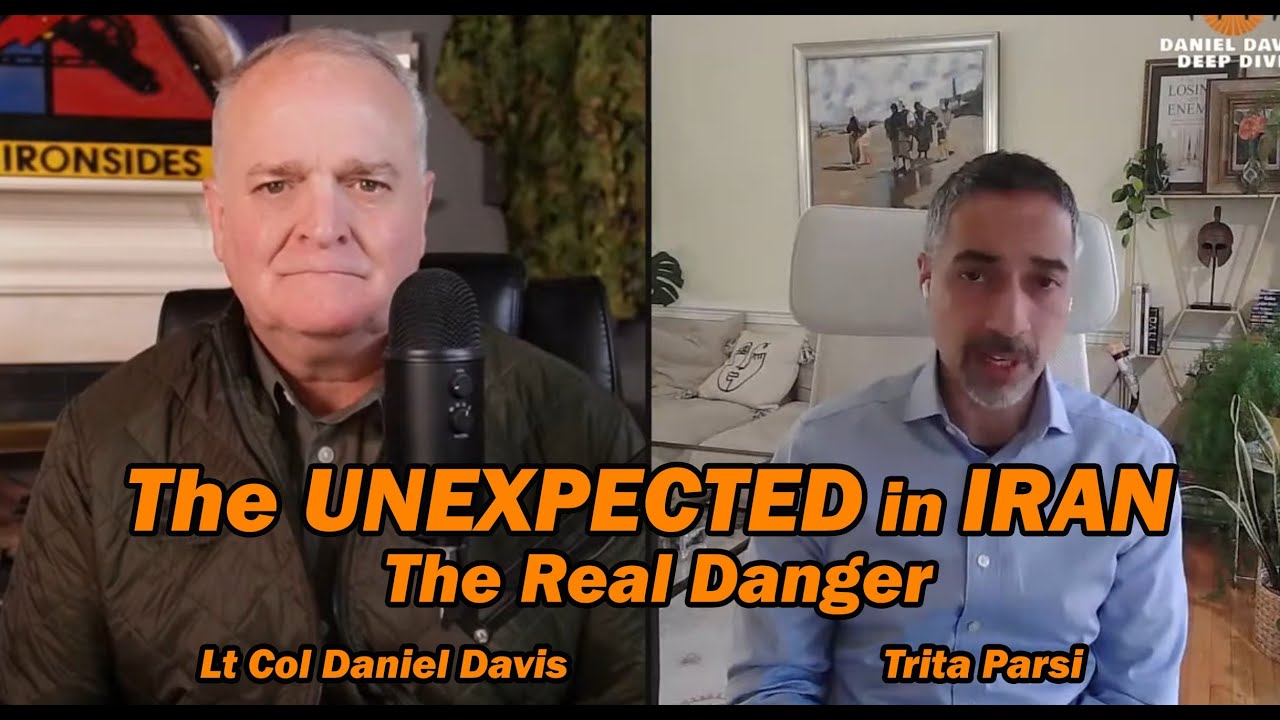
The Real Danger in Iran: The Unexpected /Trita Parsi & Lt Col Daniel Davis
Автор: Daniel Davis / Deep Dive
Загружено: 2026-01-19
Просмотров: 15068
** NEW MERCH ** Jackets & Sweatshirts, Thermo Mugs!!
Daniel Davis Deep Dive Merch: Etsy store
https://www.etsy.com/shop/DanielDavis...
Iran’s red line for major retaliation:
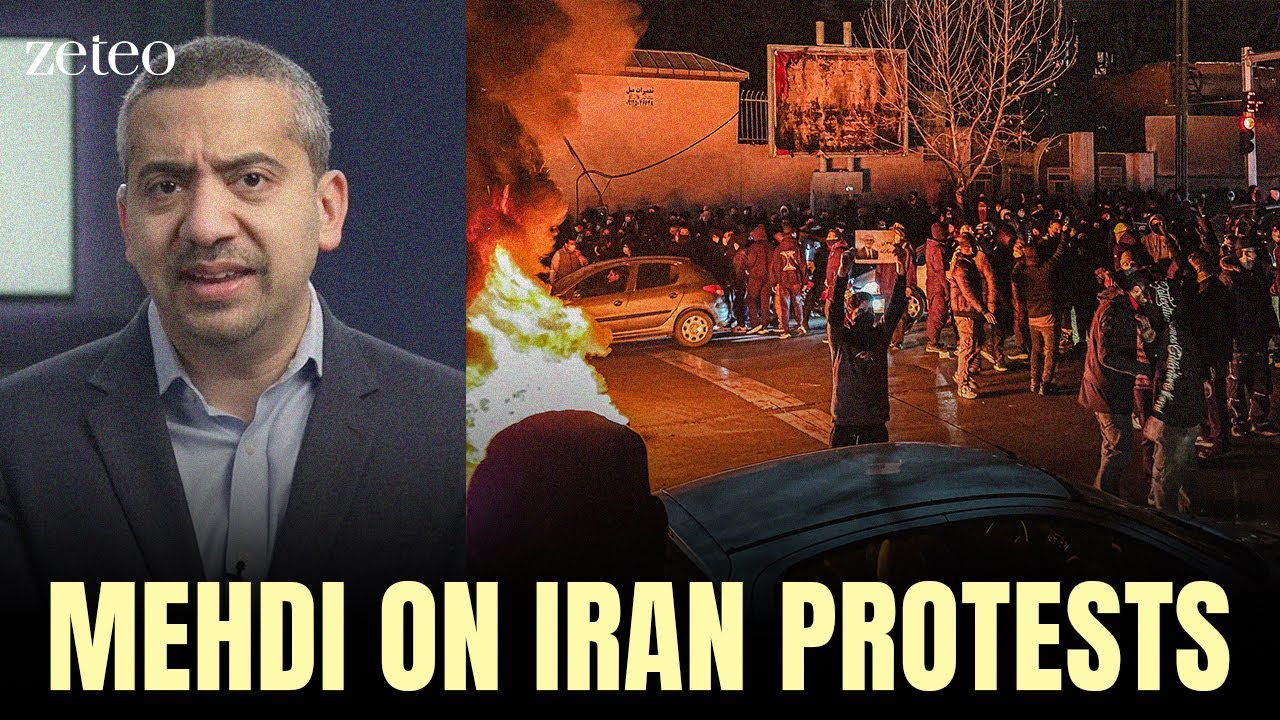
Iran has the military capability to inflict serious harm on U.S. forces but has so far restrained itself for political reasons. The key trigger for abandoning “polite” retaliation would be an attack Iran interprets as regime change, especially targeting the Supreme Leader. However, even attacks below that threshold could provoke harsher responses if Iran concludes restraint only invites more strikes.
Iran’s strategic calculus:
Iran knows it cannot win a full war with the U.S., but it defines success differently: inflicting enough pain and disruption to make a U.S. president—particularly Trump—back down politically. The Houthis are cited as a model: persistent, costly resistance eventually led Trump to disengage.
Past damage and resilience:
In the June conflict, Iran suffered heavy losses, including over a thousand civilians and dozens of senior military and nuclear officials, yet its command-and-control recovered within hours and it resumed retaliation within 12 hours. This shows the regime is entrenched and built to survive severe shocks, making quick collapse unrealistic.
Risk of miscalculation:
A major danger is misunderstanding intent. Iran may interpret a limited U.S. strike as a regime-change effort and respond accordingly, triggering full-scale war. Alternatively, Iran may escalate deliberately to break a cycle where U.S. attacks continue because Iran’s past responses were restrained.
Limits of airpower:
Regime change through missiles and airstrikes alone is seen as implausible. History suggests overthrowing governments requires ground forces, especially against a state like Iran that can still retaliate. While Israel may favor airpower-heavy degradation or chaos, it is unlikely to produce stable regime change.
Israeli objectives:
Israel’s goal is not necessarily a new Iranian regime, but the long-term degradation of Iran’s military power. Even civil war or chaos would be acceptable if it removes Iran as a regional competitor. Some Israeli commentary openly advocates massive bombing after regime collapse to neutralize Iran for decades.
Prospects for diplomacy:
Stable Israeli–Iranian relations are unlikely under current Israeli doctrine, which defines threats purely by capability, not intent. As long as Iran retains the ability to challenge Israeli regional dominance, Israel will not accept coexistence—only subjugation, dependence, or total defeat.
Broader pattern:
This threat-based mindset shifts targets as geopolitics change: Iran replaced Arab states after 1991; Turkey is now increasingly framed as a major threat following Assad’s fall. Under this logic, diplomatic normalization does not resolve the problem—capability itself becomes the threat.
Доступные форматы для скачивания:
Скачать видео mp4
-
Информация по загрузке: