Mirtogenol (Pycnogenol + Bilberry) and Eye Pressure: A Critical Appraisal
Автор: Glaucoma, Vision & Longevity: Supplements Science
Загружено: 2025-12-22
Просмотров: 8
This audio article is from VisualFieldTest.com (https://visualfieldtest.com) .
Read the full article here: https://visualfieldtest.com/en/mirtog...
Test your visual field online: https://visualfieldtest.com
Excerpt:
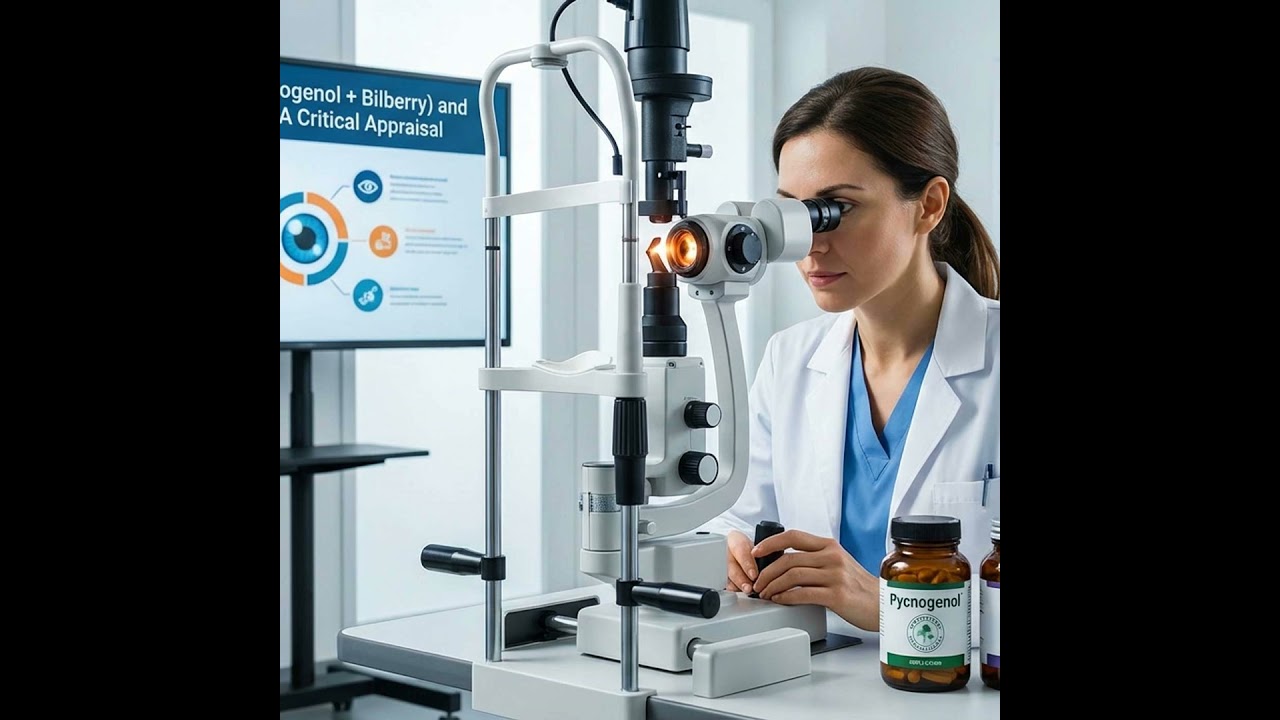
Introduction Glaucoma – a leading cause of irreversible blindness – is primarily driven by elevated intraocular pressure (IOP) in the eye. Lowering IOP delays or prevents optic nerve damage (). In recent years, interest has grown in natural supplements for eye health. Mirtogenol is one such supplement, a combination of bilberry extract (rich in anthocyanins) and French maritime pine bark extract (Pycnogenol). It is marketed to improve circulation and lower IOP. We critically review the clinical evidence on Mirtogenol and its components (bilberry anthocyanins and Pycnogenol) for reducing IOP and improving ocular blood flow. We examine study designs, results (effect sizes), and mechanisms (e.g. blood vessel function, nitric oxide) – as well as author conflicts, reproducibility, safety, and practical cost-effectiveness.What Is Mirtogenol? Mirtogenol® is a proprietary supplement blend containing two main ingredients: Mirtoselect®, a standardized bilberry fruit extract (Vaccinium myrtillus) with ~36% anthocyanins, and Pycnogenol®, a French maritime pine bark extract rich in procyanidins (). Typical “Mirtogenol” doses in clinical studies are about 80 mg bilberry + 40 mg pine bark taken twice daily (total ~240 mg daily) (), though some trials used lower dosing (e.g. 90 mg/40 mg once daily ()). Bilberry anthocyanins are thought to strengthen capillaries and improve microcirculation, while Pycnogenol has known antioxidant and vascular effects. Both ingredients have been used individually for diabetic retinopathy and circulatory disorders. Mirtogenol is sold over-the-counter (not regulated as a drug) for ocular health and lowering “ocular hypertension,” but its clinical utility needs close scrutiny.Clinical Trials: IOP and Blood FlowSeveral small clinical trials have tested Mirtogenol’s effects on IOP and eye blood flow. Key trials include Steigerwalt et al. (2008, 2010), Gizzi et al. (2017), and Manabe et al. (2020). Across studies, the sample sizes were relatively modest (tens of patients), and study quality varied (often open-label or registry-based rather than placebo-controlled). Results generally suggest some IOP reduction and improved ocular circulation, but with caveats.Steigerwalt et al. 2008 (Mol Vis) was a six-month open-label trial in 38 healthy adults with ocular hypertension (IOP 22–26 mmHg). Twenty subjects took Mirtogenol (80 mg Pycnogenol + 160 mg bilberry per day) and 18 were untreated controls (). By 3 months, the Mirtogenol group’s mean IOP dropped from about 25.2 to 22.0 mmHg – a reduction of ~3.2 mmHg (≈13%) (). In contrast, untreated controls’ pressure changed very little. Nineteen of 20 treated patients had lowered IOP at 3 months, versus only 1 of 18 controls (). Color-Doppler imaging showed significant increases in blood flow (both systolic and diastolic velocities) in key eye arteries after 3–6 months on Mirtogenol (). No side effects were reported. This study suggests Mirtogenol can modestly reduce elevated IOP and improve ocular perfusion over a few months () ().Steigerwalt et al. 2010 (Clin Ophthalmol) was a randomized trial in 79 patients with very high ocular hypertension (baseline IOP ≈37–38 mmHg, no glaucoma). Patients were assigned to three groups: Mirtogenol alone (one tablet daily, containing 40 mg pine + 80 mg bilberry), latanoprost eye drops alone, or both combined () (). After 16–24 weeks, all groups showed large IOP drops. Mirtogenol alone reduced mean IOP from ~38.1 to 29.0 mmHg after 16 weeks (a drop of ~
Доступные форматы для скачивания:
Скачать видео mp4
-
Информация по загрузке: