Muslaman Mujahid Ep56 | Hazrat Umar's Foresight in the Battle of Jalula Against Persians
Автор: Tareekh
Загружено: 2022-01-08
Просмотров: 131434
The Muslim victory was key to the conquest of Asorestan (Iraq), and was followed by major engagements at Jalula and Nahavand. The battle also saw the alleged alliance of Emperor Yazdegerd III with Byzantine emperor Heraclius, who married his granddaughter Manyanh to Yazdegerd as a symbol of alliance.
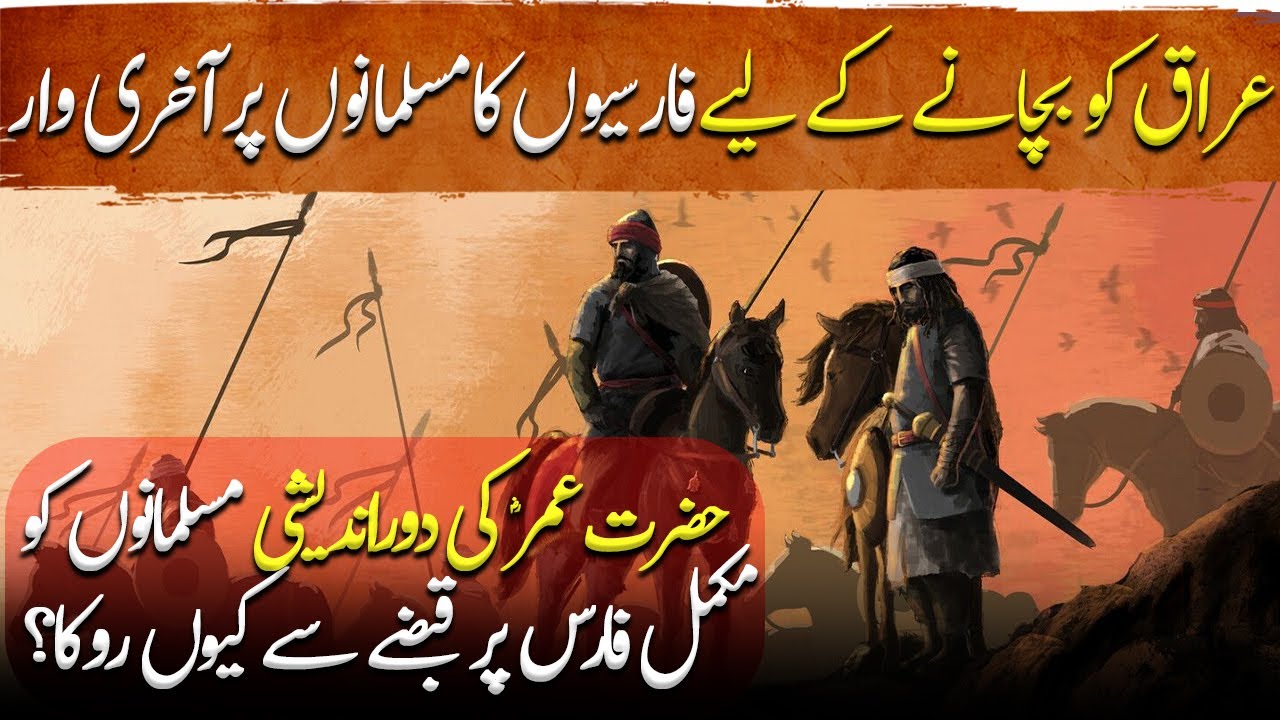
The Battle of Jalula was fought between Sassanid Empire and Rashidun Caliphate soon after conquest of Ctesiphon. After the capture of Ctesiphon, several detachments were immediately sent to the west to capture Qarqeesia and Heet the forts at the border of the Byzantine empire. Several strong Persian armies were still active north-east of Ctesiphon at Jalula and north of the Tigris at Tikrit and Mosul. The greatest threat of all was the Persian concentration at Jalula. After withdrawal from Ctesiphon, the Persian armies gathered at Jalula north-east of Ctesiphon, a place of strategic importance from where routes led to Iraq, Khurasan and Azerbaijan. The Persian forces at Jalula were commanded by General Mihran. His deputy was General Farrukhzad a brother of General Rostam Farrokhzād, who had commanded the Persian forces at the Battle of Qadisiyyah. As instructed by the Caliph Umar, Saad ibn Abi Waqqas reported all the matter to Umar. The Caliph decided to deal with Jalula first; his plan was first to clear the way north before any decisive action against Tikrit and Mosul. Umar appointed Hashim ibn Uthba to the expedition to Jalula. Some time in April 637, Hashim marched at the head of 12,000 troops from Ctesiphon and after defeating the Persians at the Battle of Jalula, laid siege to Jalula for seven months, until it surrendered on the usual terms of JizyaAfter capturing Ctesiphon, several detachments were immediately sent west to capture Qarqeesia and Heet, forts at the border of Byzantine empire. Strong Persian garrisons north-east of Ctesiphon at Jalula and north of Tigris at Tikrit and Mosul, posed a threat to Muslim invaders. The greatest threat of all was the Persian concentration at strategic fort of Jalula. The Persian forces at Jalula were commanded by general Mihran Razi. His deputy was General Farrukhzad a brother of General Rostam Farrokhzād, who commanded Persian forced at Battle of Qadisiyyah. Jalula was a town of great strategic importance, a bottle-neck to Northern Iraq. To have Jalula under the rule meant to have the gate to Northern Iraq. Persians therefore expected an attack on Jalula. Defense of Jalula was also very important for the strength of Empire and maintain order in the far flung frontiers of the Persian Empire. As instructed by the Caliph Umar, Saad ibn Abi Waqqas, Muslim commander in chief on the Persian front, reported all the strategic situation to Umar who decided to deal with Jalula first. His plan was to first clear his rear before any decisive action further north against Tikrit and Mosul. Umar appointed Hashim ibn Uthba to the expedition of Jalula. Some time in April 637, Hashim marched at the head of 12,000 troops from Ctesiphon and made contact with Persians outside Jalula fortAt Jalula, both the flanks of Persians and Muslims rested upon natural obstacles. Diyala River on east and broken ground on the west. Broken ground was unsuitable for cavalry and even the movement of infantry en masse was difficult and would have exposed them to Persian Fire-Power. The battle began with Muslim's frontal attack; after engaging for some time Muslims feint a retreat and fell back in an organized manner. Mihran, sensing the time is on hand to launch an offensive for him, ordered the entrenchments to be bridged. Once the Persian army had attained the battle formation he ordered a general attack. Up till now the battle had progressed as both commanders had planned. Once Mihran engaged his troops in an open battlefield, Hashim decided to carry out his manoeuvre. He dispatched a strong cavalry regiment under one of his most illustrious cavalry commanders; Qaqa ibn Amr, to capture the bridge over the entrenchments. The bridge was not heavily guarded as virtually all the Persian troops available were used to assault Muslim's main body. Qaqa manoeuvred around Persian right flank and quickly captured the bridge at their rear. The news of a strong Muslim cavalry detachment in their rear was a serious setback to Persian morale. Hashim launched a frontal attack with Muslim infantry while Qaqa stuck at Persian rear with his cavalry. Persian troops were trapped between the Muslim army and the natural barriers on the battlefield. Nevertheless, thousands of them managed to escape and reached the Jalula fortress.
The Persians suffered heavy casualties and the battle ended in a complete Muslim victory. After the battle Hashim laid siege to Jalula. Persian emperor Yazdegerd III was in no position to set a relief force to Jalula and the fortress surrendered to Muslims seven months later on the terms of annual payment of Jizya.
Доступные форматы для скачивания:
Скачать видео mp4
-
Информация по загрузке: