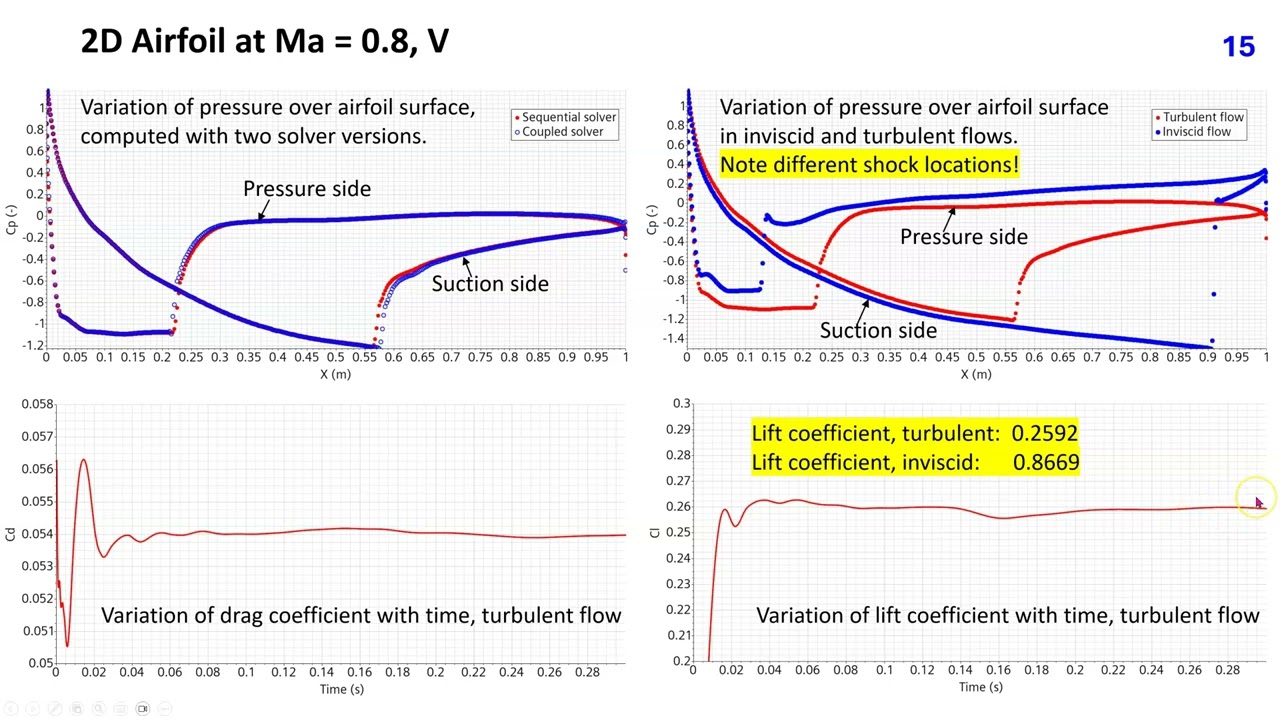
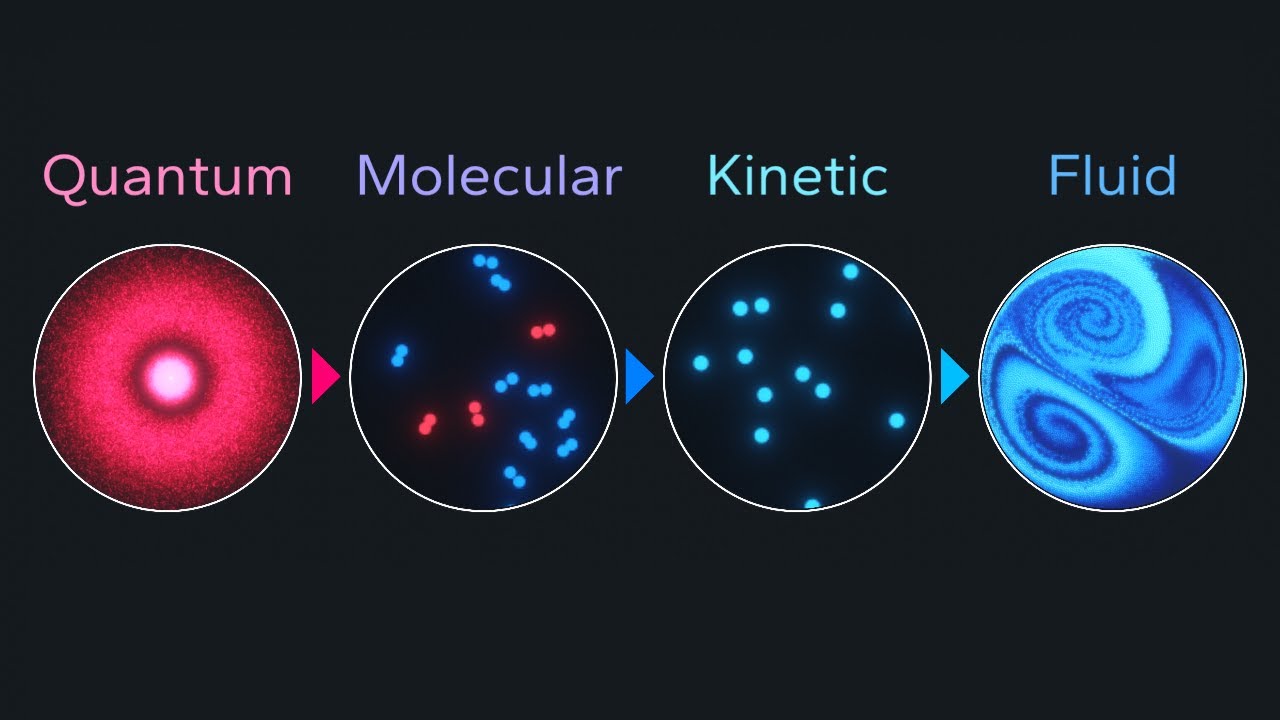
29. Features of turbulent flows and approaches to their simulation
Автор: Milovan Peric
Загружено: 2025-02-22
Просмотров: 467
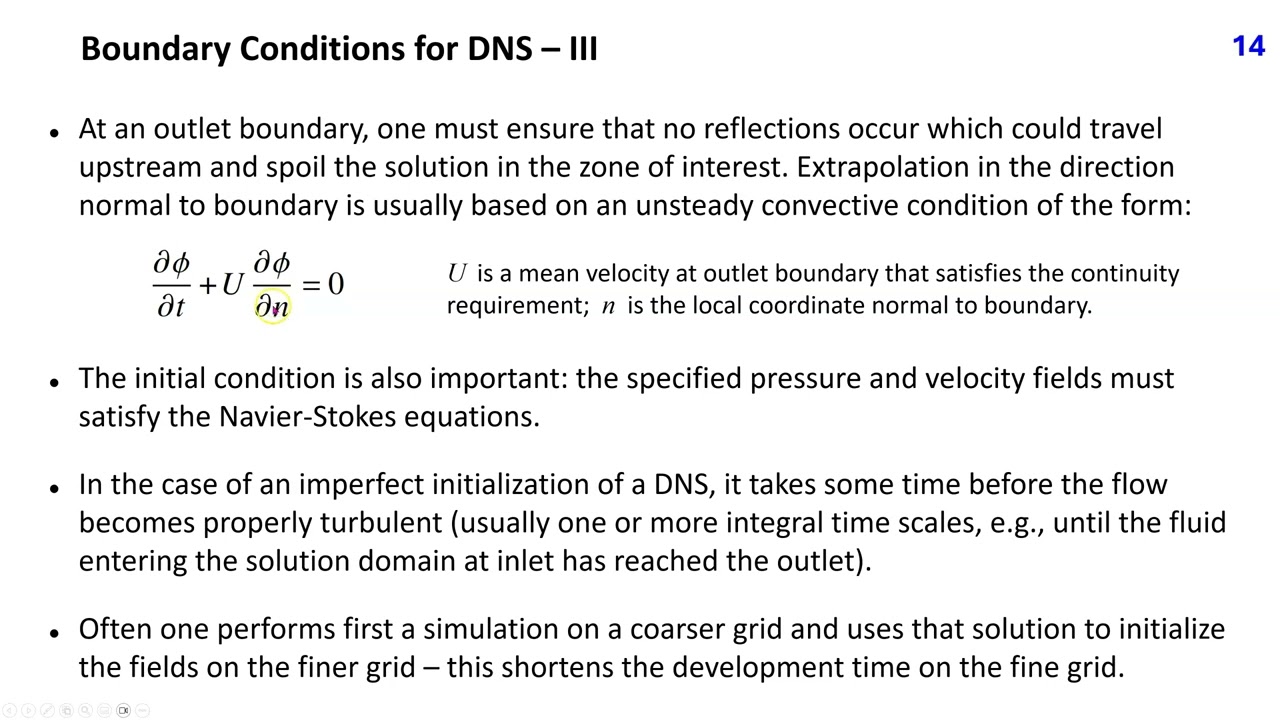
This lecture starts with a brief introduction to the main properties of turbulent flows: unsteadiness, three-dimensionality, vorticity, stirring, dissipation, coherent structures, broad range of length and time scales, and Reynolds-number dependence.
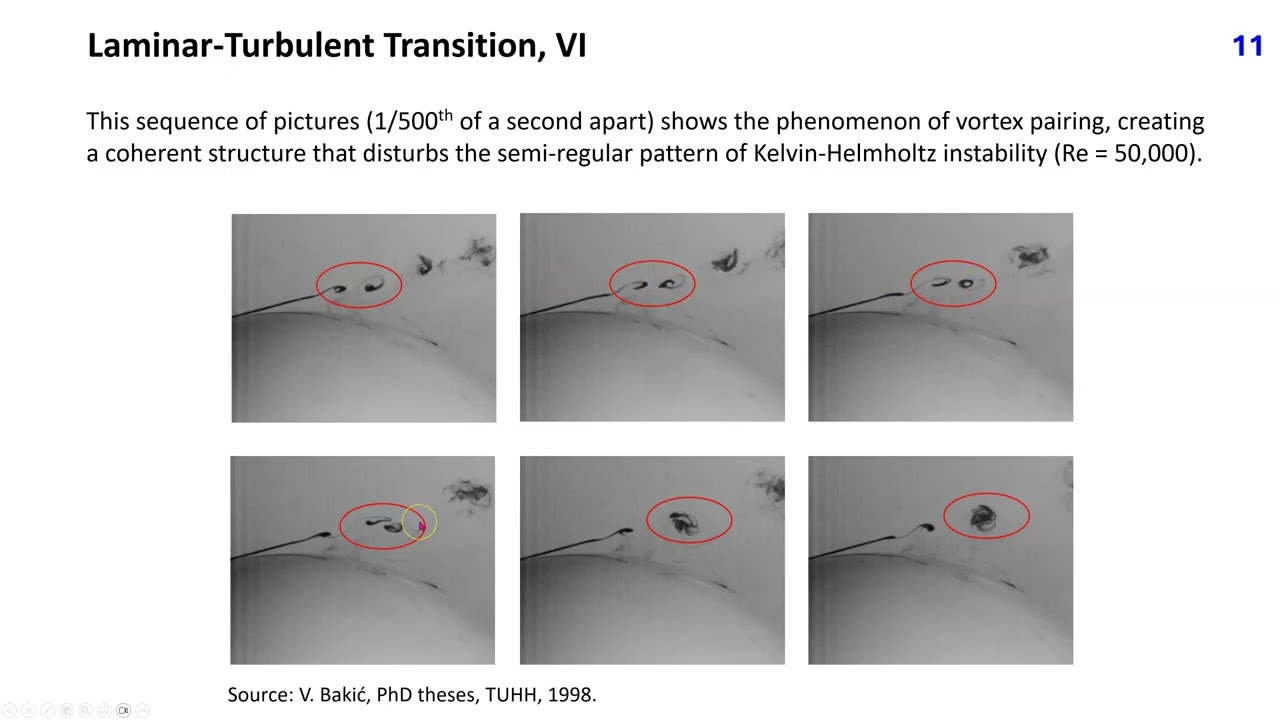
Next, the phenomena associated with the transition from laminar to turbulent flow regime are described: natural, bypass, and separation-induced transition. Examples from experiments and simulations are used to highlight the main features.
In engineering applications turbulence is sometimes desired (e.g., to improve mixing or heat transfer), but sometimes we try to avoid it, or at least to control it (e.g., to reduce noise or vibrations). Practical examples are used to emphasize the main points.
Finally, the main approaches to studying turbulence are described: empirical correlations, measurement techniques, and numerical simulations.
You can download this video, the transcript of its soundtrack, and the PowerPoint presentation file from this site: https://sie.ag/6a3r6J
You are also encouraged to participate in the discussion by posting comments, questions, and suggestions for improvements in the dedicated space for "The Perić Lectures on CFD" at the above site.
Доступные форматы для скачивания:
Скачать видео mp4
-
Информация по загрузке:





![[CFD] Eddy Viscosity Models for RANS and LES](https://imager.clipsaver.ru/SVYXNICeNWA/max.jpg)


![[CFD] The k-omega Turbulence Model](https://imager.clipsaver.ru/26QaCK6wDp8/max.jpg)