Cavitation Bubbles
Автор: Rogue Physics
Загружено: 2022-06-27
Просмотров: 10903
The formation and collapse of cavitation bubbles is an intensely studied subject in academia and beyond. In particular, in recent years, researchers have investigated cavitation during blending, underwater propelling, cleaning, focused-lasing, medical uses, and many others.
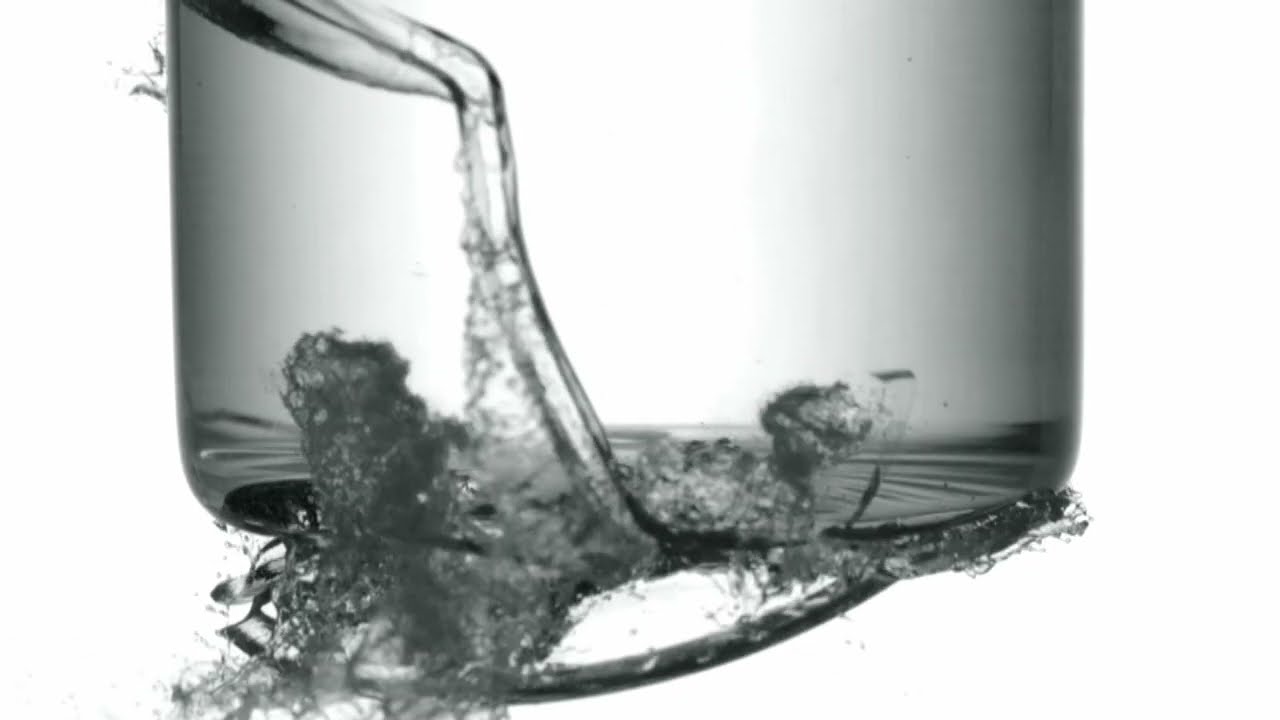
In this test, a small glass bottle was impacted from the top with a rubber mallet. In some cases, if the impact is hard enough, the bottle with crack, and the bottom with fall off. There are some very interesting oscillations in the bubble generation phase. The formation and collapse of the bubbles for this particular test took around 1.4 ms !
A short history from: Interface Focus. 2015 Oct 6; 5(5): 20150059.
"Although the word ‘cavitation’ was originally coined by R. E. Froude and first cited by Barnaby and Thornycroft in 1895, the phenomenon was conjectured much earlier by L. Euler in his theory of water turbines in 1754. However, actual cavitation was first discovered and investigated by Barnaby and Parsons in 1893 when they found that the formation of vapour bubbles on the propeller blades was responsible for the sea-trial failure in 1885 of a British high-speed warship HMS Daring. In 1895, Parsons established the first water tunnel for cavitation study and discovered the relationship between cavitation and the damage to the propeller. It was Rayleigh who, in 1917, laid the theoretical foundation for cavitation study by solving the problem of the collapse of an empty cavity in a large mass of liquid."
The shot was recorded with a Phantom TMX at 1280x800, 75 kfps. The data collectors were Saba Adabi and Kyle Gilroy :]
Доступные форматы для скачивания:
Скачать видео mp4
-
Информация по загрузке: