Resinotype - Parrot
Автор: Robert Tarczyński
Загружено: 2020-04-14
Просмотров: 1537
Resinotype - Parrot
The resinotype, the procedure was discovered and patented in 1922 by Rodolfo Namias (1867-1938) and remained in use until the 1930s.
The lights are bright and satin, never perfectly white, while blacks are intense and opaque. This combination of two contrasting characteristics makes it a "unique" in the vast field of art printing.
Characteristic of the resinotypic print is the very slight general glaze that it presents, making the image feel velvety.
Currently you can proceed by following the following steps:
Resin pigment preparation: dissolve a mixture of pigment and rosin (Greek pitch) approximately 25-30% by weight. Grind the molten mass and sift the powder. The diameter of the particles is fundamental, because the finer particles are able to adhere even to whites, and the larger particles give a grainy appearance. The characteristics of the powder obtained also depend on the concentration and type of pigment.
Paper preparation: choose a medium weight paper and apply an 8-10% gelatin solution. Once dried, it will be ready to be sensitized.
The paper intended to provide the resinotypical image must have a hard gelatin layer suitable for swelling in water.
Sensitization of the paper: make a solution of 4% chromium in water or 4% ammonium dichromate in 50% ethyl alcohol (to be prepared at the moment) to apply with a brush. The sensitized paper can also be used after a few days, taking care to keep it in the dark.
Exposure: the matrix for resinotypic printing consists of a positive image. Exposure occurs on contact, in the sun or in artificial light, until a brown image forms in the illuminated areas.
Washing: after washing the sheet in cold water, the gelatin will swell in the parts not affected by light.
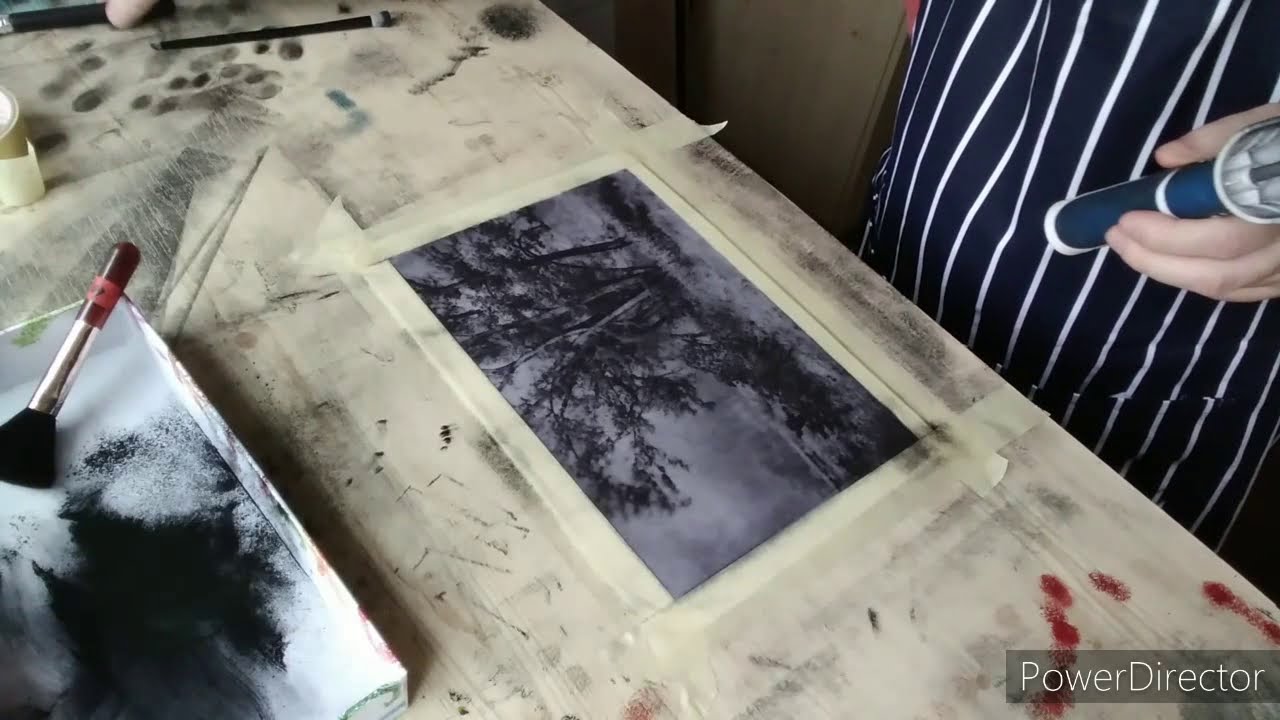
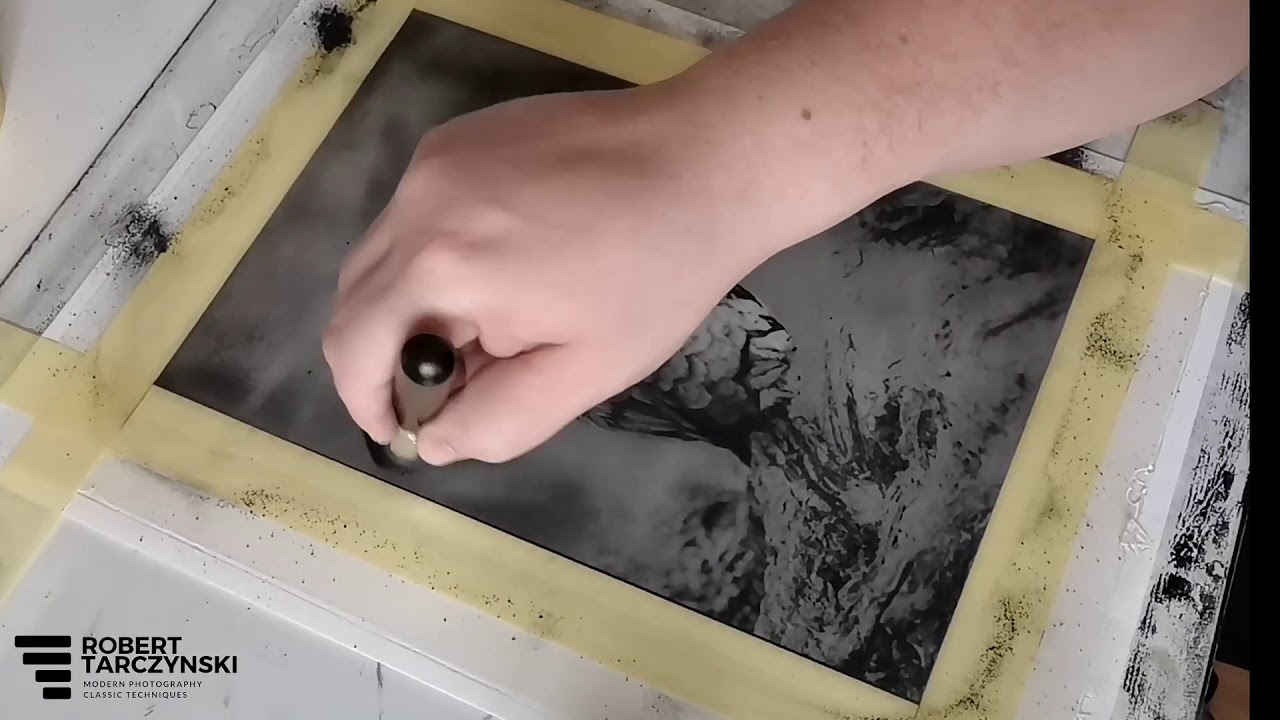
Unveiling the image: distribute the resinous pigment abundantly on the surface of the print, helping it to adhere with a very soft brush, then remove its excess by gently tilting the print.
The pigment is retained by the soluble gelatin and much less by the insoluble gelatin.
The powder is spread with a brush in order to cover the image, lighten the shadows and reinforce the whites, until the desired image is obtained.
Each phase of the realization is customizable.
https://it.wikipedia.org/wiki/Resinot...
The print was made on Farbiano 5 300 g/m2 paper in 20×30 cm format. The number of prints is limited to 10.
Доступные форматы для скачивания:
Скачать видео mp4
-
Информация по загрузке: