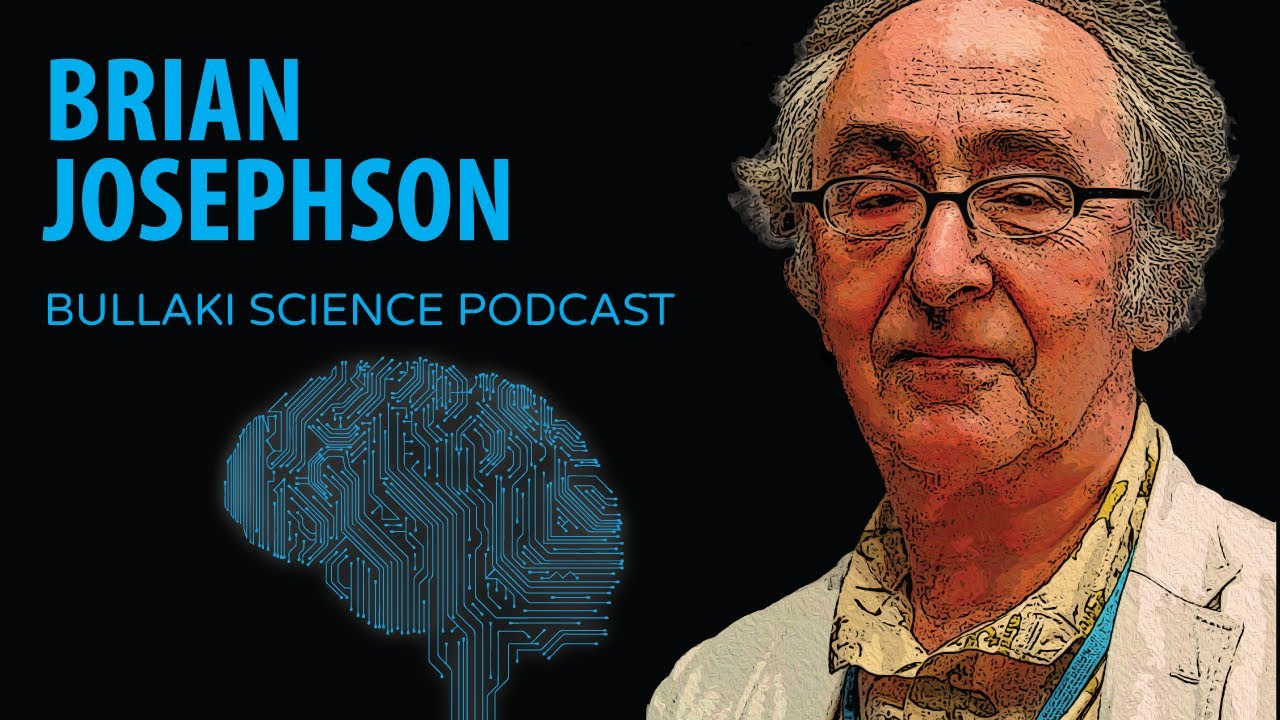
Mind–Matter Unification Project | Bullaki Science Podcast with Brian Josephson
Автор: BULLAKI
Загружено: 2020-07-17
Просмотров: 5085
Prof. Josephson talks about the Josephson Effect, transcendental meditation, the Mind–Matter Unification Project, intelligence, science orthodoxy, paranormal, water memory, the publication process, cold fusion and LENR, understanding quantum mechanics, coordination dynamics, biosemiotics, artificial intelligence, cymatics, and intelligent design.
#bullaki #science #podcast
Summary:
0:04 Josephson Junction, Josephson Effect
1:44 Cavendish Laboratory in the ‘60s-‘70s
2:59 Start-ups, entrepreneurship
4:09 Electronic devices using the Josephson Effect (SQUID)
5:07 Cavendish Laboratory Nobel Prizes
6:14 Transcendental Meditation (TM)
7:00 What is intelligence?
9:07 Orthodoxy in science
10:17 Paranormal, ESP, Declassified CIA documents
11:04 Role of the publication process in discrediting scientific research
12:56 Gatekeepers of science
18:16 Scientific Method, Karl Popper
22:07 Commercial research in academia
23:20 A new scientific paradigm (mind, biosemiotics, coordination dynamics)
26:18 Quantum mechanics and biology
27:16 Understanding quantum mechanics
30:04 Mind–Matter Unification
34:01 Winograd language and Artificial Intelligence (AI)
35:53 Circular Theory
37:25 Cymatics
40:37 Homeopathy
41:15 How these concepts fit together
42:49 The role of the scientist in society
43:24 Cold Fusion, LENR, Andrea Rossi’s E-cat
46:24 The Vedic and the Quantum
49:44 Intelligent Design
***
SL. I saw your talk was at the Trinity College last November where you talked about the “New Scientific Paradigm”. So there are some areas in which physics seems to be stuck, it's not really progressing. What sort of field are you trying to address? What sort of aspect do you want to address with this “New paradigm”?
BJ. Well I don't like the term “New paradigm” and I think it's just extending physics by realizing that there's some directions it's not looked into. Like you might have something new, like magnetism, which was introduced by Faraday and you recognize that there's some limitations in what the physics community addresses.
The way I see it, the problem is mind and intelligence. The point is you asked about some biological systems, the conventional picture is that ordinary physics covers it all. We know what biological systems are composed of. We know other things like chemical reactions. So it's all explained. But in fact it is not really all explained because there are points of detail, coordination and things like that, which are important in determining behaviour. So for a start you need to put in coordination, which is something that biologist scientists fit in. Also semiosis, which is about meaning. That's another direction in biology called biosemiosis.
My point is that there are really two cultures. Some biologists study these significant aspects of biology, but physicists don't know about them, it's not regular physics. The reason why it's important is, I think it's important at the fundamental level because the mysteries of quantum mechanics in fact could be understood in these terms. Some of people like Karen Barad particularly emphasized parallels and suggested we can understand quantum physics if we take into account things like agency and the way … coordination again.
So in other words we are not understanding the quantum domain probably because we… our theories don't take mind into account and therefore we end up with statistical theories. But the theories don't have to be statistical. I think it'll be great advance in physics when this is acknowledged and we start to do theories which take into account things like meaning and coordination. That’s the thing I'm interested in doing.
SL. Yeah, so from one side we have a quantum mechanics that does sort of quantitative measurements, and on the other side we have biology that does qualitative measurements. You're trying to get ideas from biology from biosemiotics so that you might use this qualitative description into quantum mechanics so that we can understand it, right?
BJ. Yes, that’s an important point. Physics tends to insist that you have quantitative theories. But you can perfectly well use modelling to test the theory.
My other point is in the biological side you have great variability so your quantitative theory will not apply in general. So you need a different kind of theory. Biology has come up with different kind of theories. So it needs a kind of synthesis and I think the quantitative sides have come out of some kind limit when shaping factors lead to precision.
***
Further reading:
Fleischmann denied due credit: https://www.nature.com/articles/49003...
***
COPYRIGHT BULLAKI LTD
CONNECT:
Subscribe to this YouTube channel
LinkedIn: / samuele-lilliu
Website: www.bullaki.com
Support on Patreon: / bullaki
Доступные форматы для скачивания:
Скачать видео mp4
-
Информация по загрузке: