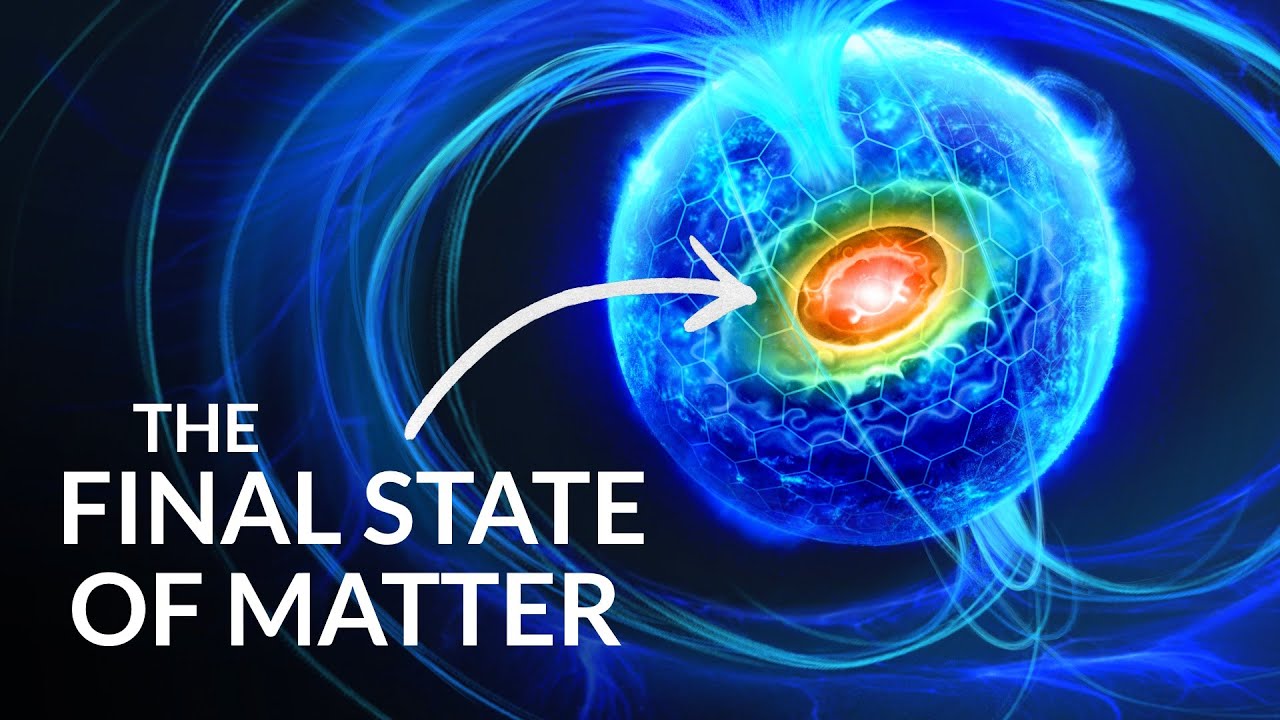
Unveiling Supernovae: The Cataclysmic Death of Massive Stars
Автор: Jason Kendall
Загружено: 2024-05-07
Просмотров: 23117
This video is part of a comprehensive series initially developed for William Paterson University and CUNY Hunter, aimed at supporting online classes and course materials for introductory astronomy. By engaging with all the videos within this series, you will effectively complete a full undergraduate course in astronomy, equipping yourself with the knowledge and skills necessary to navigate the night sky with confidence, learning all the basics and many advanced topics!
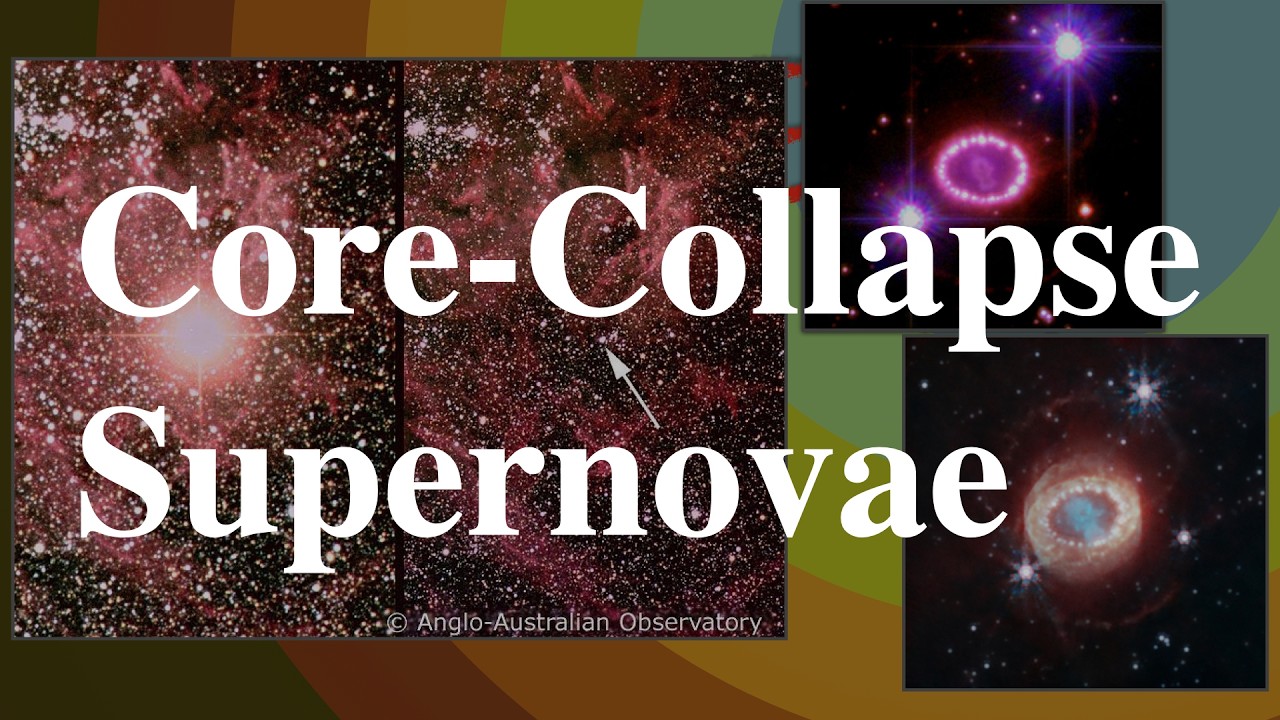
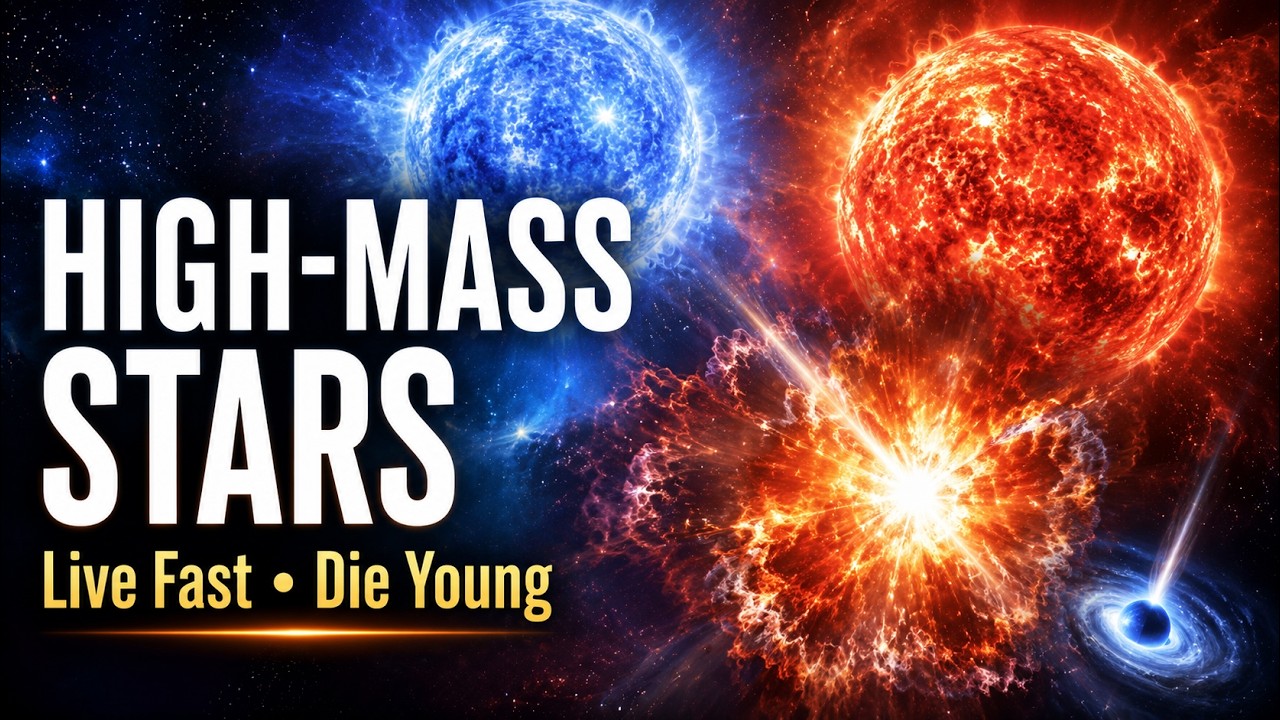
I explore the captivating realm of supernovae, the colossal explosions that signify the final stages of massive stars. Previously, we examined the life cycle of large stars; today, our focus shifts to their explosive demise and the mechanics of supernovae, seamlessly integrating intricate astrophysical concepts with user-friendly visuals. We commence by revisiting the life cycles of various stars, ranging from those with less than 8% of the Sun’s mass—which metamorphose into brown dwarfs and never initiate hydrogen fusion—to those with up to 25% of the Sun’s mass, which ultimately evolve into helium white dwarfs. For the colossal stars, exceeding 12 times the Sun’s mass, their trajectory is characterized by rapidity and intensity. They undergo the combustion of hydrogen and helium over millions of years, significantly shorter than the Sun’s billion-year lifespan. As these massive stars progress, they undergo a series of fusion processes, progressively converting lighter elements into heavier ones. This fusion chain culminates in the formation of an iron core. Unlike lighter elements, iron is incapable of undergoing fusion to release energy, leading to the accumulation of energy and pressure until the core succumbs to its own gravitational force. This core collapse triggers an explosion, commonly referred to as a supernova. During the collapse, protons and electrons fuse into neutrons, emitting neutrinos that transport vast quantities of energy. The ensuing shockwave propels the outer layers of the star into interstellar space at extraordinary velocities. The underlying mechanics encompass intricate nuclear physics, including binding energy per nucleon and photodisintegration, demonstrating the interplay between energy and matter under extreme conditions. We delve into stellar nucleosynthesis, the process through which elements heavier than iron are generated during supernova explosions. These elements, dispersed throughout the universe, become integral components of new stars, planets, and even life forms. The cyclical nature of star formation, evolution, and demise enriches the cosmic environment, making supernovae indispensable for the continuation of the universe’s evolution. One notable case study we will explore is Supernova 1987A, the closest observed supernova in recent history. This explosion provided unprecedented data, including a burst of neutrinos detected hours before the light from the explosion reached Earth. This event marked a significant milestone in neutrino astronomy, demonstrating how these elusive particles can offer insights into the core of stellar explosions. Through meticulous observations and imaging, including NASA’s Hubble Space Telescope, we will witness the aftermath of these colossal explosions and their enduring impact on the cosmos. The remnants of supernovae, such as neutron stars or black holes, are investigated for their contribution to our understanding of stellar phenomena. Furthermore, I will elucidate the various types of supernovae—Type I and Type II—and their distinct light curves and compositions. Type II supernovae, or core-collapse supernovae, are characterized by hydrogen lines in their spectra and a distinctive luminosity plateau. Conversely, Type I supernovae lack hydrogen lines and exhibit varying luminosity patterns. Lastly, we will observe how supernova remnants, in conjunction with interstellar gas, contribute to the formation of new stars and planets. These remnants enrich the interstellar medium with heavy elements, catalyzing the birth of new stellar generations.
Stellar Evolution: http://chandra.harvard.edu/edu/formal...
Supernovae: https://en.wikipedia.org/wiki/Supernova
Type II Supernova: https://en.wikipedia.org/wiki/Type_II...
Iron Peak: https://en.wikipedia.org/wiki/Iron_peak
Binding Energy: https://en.wikipedia.org/wiki/Nuclear...
Supernova 1987a : https://en.wikipedia.org/wiki/SN_1987A
AAVSO Light Curve for SN 1987a: https://www.aavso.org/vsots_sn1987a
SNR 2014j in M82: https://en.wikipedia.org/wiki/SN_2014J
The Lund/LBNL Nuclear Data Search: http://nucleardata.nuclear.lu.se/toi/
Live Chart of Nuclides: https://www-nds.iaea.org/relnsd/vchar...
Stellar Nucleosynthesis: https://en.wikipedia.org/wiki/Stellar...
#Astronomy #Supernova #CosmicExplosions #Astrophysics #StarLifecycle #SpaceScience #StellarEvolution #Universe #Neutrinos #StarFormation
Доступные форматы для скачивания:
Скачать видео mp4
-
Информация по загрузке:






![Неожиданная правда о 4 миллиардах лет эволюции [Veritasium]](https://imager.clipsaver.ru/Unxh6MnVIWc/max.jpg)