Creating a View in SQLite3 for Unique Paths through a Tree-Like Database Structure
Автор: vlogize
Загружено: 2025-10-06
Просмотров: 1
A comprehensive guide on how to create a SQLite3 view listing unique paths in a hierarchical database structure, particularly for parts and variations in assembly.
---
This video is based on the question https://stackoverflow.com/q/54468832/ asked by the user 'Beezum' ( https://stackoverflow.com/u/1549983/ ) and on the answer https://stackoverflow.com/a/64033279/ provided by the user 'Beezum' ( https://stackoverflow.com/u/1549983/ ) at 'Stack Overflow' website. Thanks to these great users and Stackexchange community for their contributions.
Visit these links for original content and any more details, such as alternate solutions, latest updates/developments on topic, comments, revision history etc. For example, the original title of the Question was: Create a view in SQLite3 that lists all unique paths through tree-like database structure
Also, Content (except music) licensed under CC BY-SA https://meta.stackexchange.com/help/l...
The original Question post is licensed under the 'CC BY-SA 4.0' ( https://creativecommons.org/licenses/... ) license, and the original Answer post is licensed under the 'CC BY-SA 4.0' ( https://creativecommons.org/licenses/... ) license.
If anything seems off to you, please feel free to write me at vlogize [AT] gmail [DOT] com.
---
Navigating SQLite3: Creating a View for Unique Paths in a Hierarchical Database
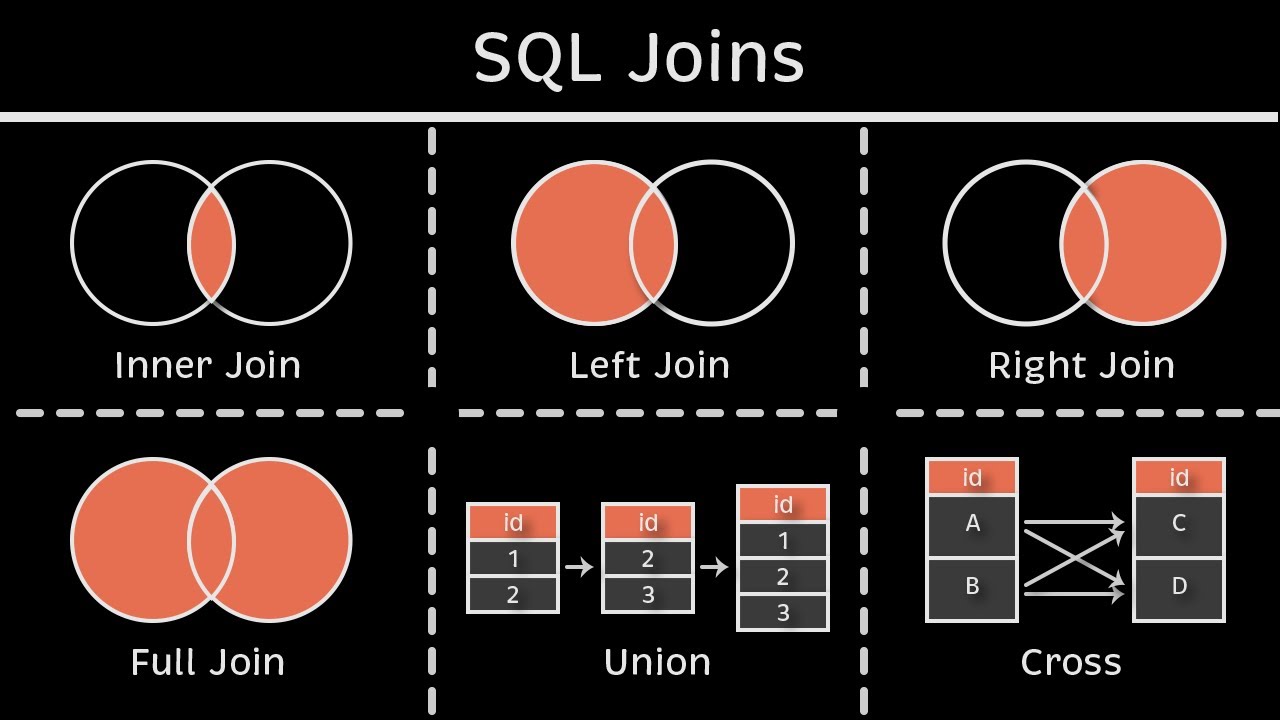
When dealing with complex data structures such as parts within an assembly in a SQLite3 database, you may encounter a challenge: how to extract every unique combination of variations for a given assembly. If you find yourself asking how to efficiently create a view that lists all unique paths in a tree-like hierarchy, then you’re in the right place.
The Task at Hand
You have a database with two main tables: one for parts and another for variations. Each part can have multiple variations, and they are organized in a hierarchical manner. The objective is to produce a list of every unique combination of variations for a specific assembly.
Here is a simplified version of your table structure:
Table Structure
PARTS
PART_IDPART_NAMEPARENTASSEMBLY1'Foo'NULL12'Bar'113'Thing'11VARIATIONS
VAR_IDPART_IDPROPERTY_1PROPERTY_2PROPERTY_3113.141590.630213.243590.681Your goal is to generate a comprehensive view of all possible combinations of parts and their variations for a specified assembly.
The Solution
While SQLite3 does not directly support creating a flat view that lists all combinations across multiple related tables easily, there are alternative methods to achieve the desired results through Python scripting.
Step-by-Step Solution
Define the Assembly:
Start by determining which assembly you're interested in querying.
[[See Video to Reveal this Text or Code Snippet]]
Build a Hierarchy:
Use a recursive Common Table Expression (CTE) to organize parts in their hierarchical relationships.
[[See Video to Reveal this Text or Code Snippet]]
Retrieving Parts:
Fetch parts from the current assembly in hierarchical order.
[[See Video to Reveal this Text or Code Snippet]]
Create SQL-friendly Column Names:
Prepare the dynamically created column names from the list of part IDs.
[[See Video to Reveal this Text or Code Snippet]]
Establish Parent Relationships:
Generate a mapping of parent parts for each part to facilitate joins.
[[See Video to Reveal this Text or Code Snippet]]
Construct Joins:
Create the query to successively join tables for combinations while managing temporary tables.
[[See Video to Reveal this Text or Code Snippet]]
Finalizing the Script:
Execute the final script to store the combinations in a new table for each assembly variation.
[[See Video to Reveal this Text or Code Snippet]]
Conclusion
While creating a direct view in SQLite3 for unique paths in a hierarchical database may sound daunting, leveraging a combination of recursive queries and Python scripting makes the task manageable. This structured approach not only offers insights into your assembly variations but also positions you to potentially refactor your database for future efficiency.
Utilize this guide to streamline your own SQLite3 queries, ensuring that every unique assembly combination is just a script away!

Доступные форматы для скачивания:
Скачать видео mp4
-
Информация по загрузке: