George Fr. Handel - Violin Sonata in G major, HWV 358 (c. 1710)
Автор: Bartje Bartmans
Загружено: 2025-01-22
Просмотров: 5369
George Frideric (or Frederick) Handel (born Georg Friedrich Händel 23 February 1685 (O.S.) [(N.S.) 5 March] – 14 April 1759) was a German, later British, baroque composer who spent the bulk of his career in London, becoming well known for his operas, oratorios, anthems, and organ concertos. Handel received important training in Halle and worked as a composer in Hamburg and Italy before settling in London in 1712; he became a naturalized British subject in 1727. He was strongly influenced both by the great composers of the Italian Baroque and by the middle-German polyphonic choral tradition.
Please support my channel:
https://ko-fi.com/bartjebartmans
Violin Sonata in G major, HWV 358 (c. 1707-10)
1. [Allegro] (0:00)
2. [Adagio] (1:45)
3. [Allegro] (2:28)
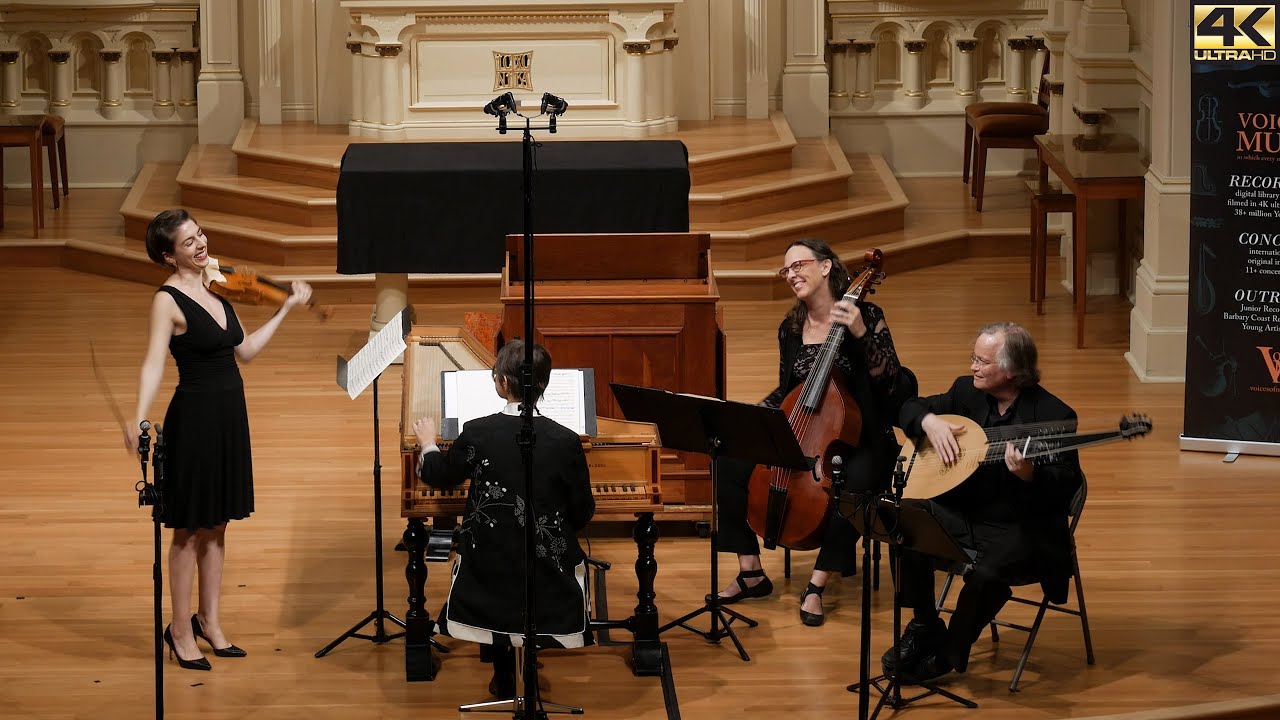
Andrew Manze, violin and Richard Egarr, harpsichord
The instruments used:
Violin by Joseph Gagliano, Naples, 1782
Bow by Gerhard Landwehr, Heemstede, 1986
Harpsichord by John Phillips, 1993, after Nicolas Dumont, 1707
Pitch: A = 415 Hz
Temperament: French ordinaire, early eighteenth century
The Sonata is written for an unspecified instrument and keyboard (harpsichord). The work is also referred to as HHA iv/18,3 (There is no HG designation for the work.)
For an unknown reason, Handel did not indicate the instrumentation or the tempo markings on the movements. In fact, the original manuscript does not even mention that it is a "sonata". The tessitura is high for a violin, and the work does not fall below G4 (which is a whole octave above the violin's lowest note). For this reason (although the violin is the most likely instrument), the recorder is sometimes used for performance.
The work is referred to as one of the Fitzwilliam sonatas.

Доступные форматы для скачивания:
Скачать видео mp4
-
Информация по загрузке:







![Amy Beach - Three Pieces for Violin and Piano, Op. 40 (1898) [Score-Video]](https://imager.clipsaver.ru/JPLo_B5uw4U/max.jpg)