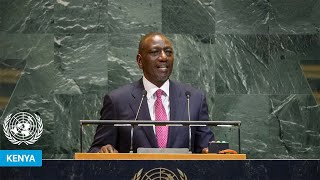
The United Nations Organization
Автор: UNITED NATIONS SOCIAL JUSTICE
Загружено: 2025-12-16
Просмотров: 3
History Grade 12 Unit 5 The United Nations Organization (the UN).
The United Nations (UN) is an international organization of nation-states based on the sovereign equality of its members. The UN is forbidden to intervene in the internal affairs of states. It was established with the major aims of maintaining international peace and security; developing friendly relations among nations; and achieving international cooperation in solving economic, social, cultural, or humanitarian problems. All member states are pledged to fulfill the obligations they have assumed, to settle international disputes by peaceful means, to refrain from the threat or use of force. On December 10, 1945, the United States Congress invited the UN to establish its headquarters in New York, in US. The General Assembly of the UN meets annually in New York.
The Organizational Structure of the United Nations
The six principal organs of the United Nations are: the General Assembly, the Security Council, the Economic and Social Council, the Trusteeship Council, the International Court of Justice, and the Secretariat. The General Assembly is the main organ of the UN. It represents all member states. But it has less power than the Security Council. The General Assembly appoints many standing as well as temporary ad hoc committees to carry out its recommendations. To mention some of the most important ones: the United Nations Development Program (UNDP), and the United Nations
Children’s Fund (UNICEF).
The second principal organ of the United Nations is the Security Council. This organ is primarily responsible for maintaining international peace and security. The council has fifteen members, of which five are permanent members (the US, Russia, Great Britain and France, and China). Each of the countries that has a permanent seat in the Security Council has the right to veto any decision.
The third principal organ of the United Nations is the Economic and Social Council (ECOSOC). Today, the problems of developing nations are its major concern. ECOSOC coordinates the economic and social activities of the UN and its specialized agencies, such as the World Health Organization (WHO); the United Nations Educational, Scientific, and Cultural Organization (UNESCO); the Food and Agriculture Organization (FAO); and the International Labor Organization (ILO).
The Trusteeship Council is the fourth principal organ of the United Nations. It was responsible for the supervision of territories that were under the international trusteeship system, which included former colonies of Germany, Italy, and Japan, and League of Nation mandates that had not gained independence by the end of World War II in 1945. It was charged with helping these areas to achieve independence.
The fifth principal organ of the United Nations is the International Court of Justice. Situated in The Hague, the Netherlands, it is the judicial body of the UN. The court hears cases referred to it by UN members. Fifteen judges sit as members of the court; they are elected for nine-year terms by the General Assembly and the Security Council.
The last, but not least, principal organ of the United Nations is the Secretariat. According to the United Nations Charter, it is the administrative organ of the UN and is composed of a secretary general. The secretary general, appointed for a five-year term by the General Assembly on the recommendation of the Security Council, is the chief administrative official of the UN.
@ethioforum @OBNoromiyaa @HISTORY @EBCworld @Geezism @Oromia979 @abelbirhanu1 @Oromia979 @donkiytube7398 #history #knowledge #stitch #currentaffairs #catmemes #ww2 #education #upsc #dothingsyoudontwanttodo #education #Ethiopia

Доступные форматы для скачивания:
Скачать видео mp4
-
Информация по загрузке: