Liberal School of International Relations — Concepts & Critiques | UPSC PSIR Optional
Автор: Dialectical IAS
Загружено: 2026-01-12
Просмотров: 3
For Short Notes, Quotes compilation and Keywords for easy revision join us on our telegram channel - https://t.me/DialecticalIAS
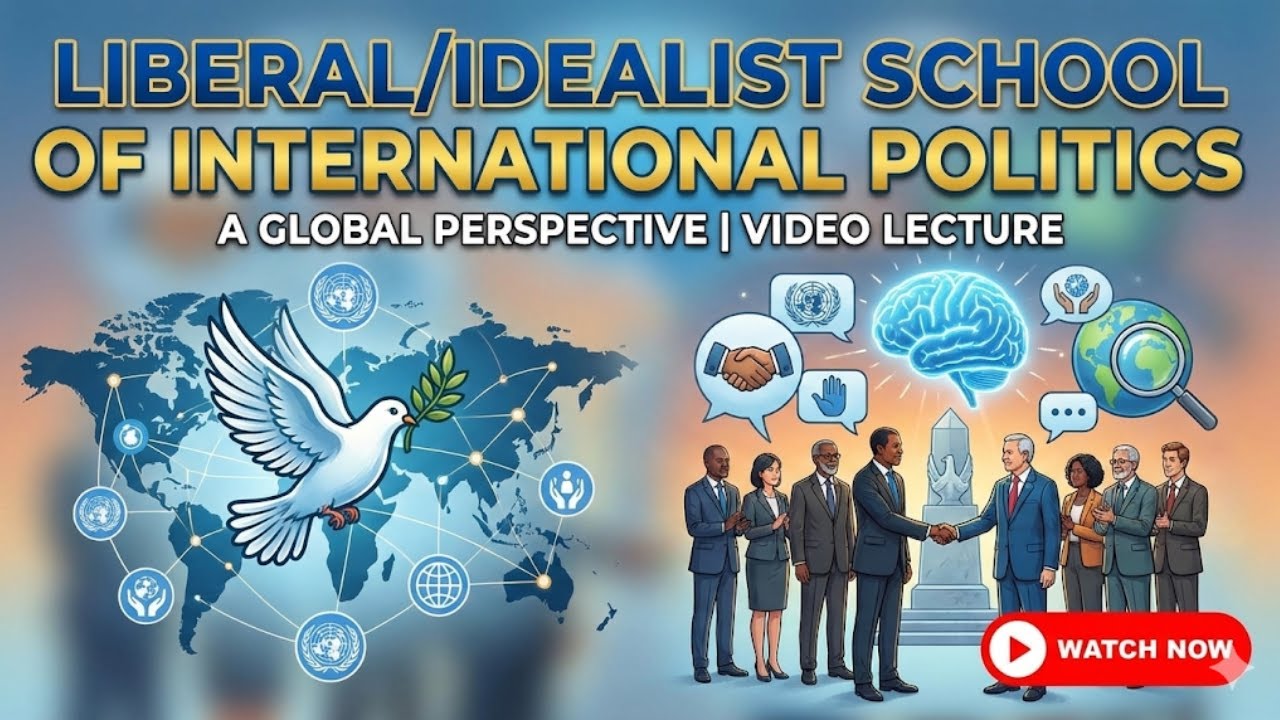
This lecture explores the liberal (or idealist) school of international politics, which emphasizes cooperation, peace, and the role of international institutions in shaping global order. Emerging after World War I, idealism sought to replace power politics with law, morality, and collective security.
You’ll learn:
Core principles: human nature is essentially good, war is avoidable, cooperation is possible.
Key thinkers: Woodrow Wilson (League of Nations, 14 Points), Immanuel Kant (Perpetual Peace), Norman Angell.
Mechanisms: international law, diplomacy, collective security, institutions (League of Nations, UN).
Strengths: promotes peace, highlights institutions, moral dimension of politics.
Critiques: Realists argue it is too idealistic, ignores power politics, failed in interwar years.
Contemporary relevance: UN, WTO, EU, climate change cooperation, human rights regimes.
This lecture includes clear diagrams, real‑world examples, and UPSC/PSIR exam tips to help you frame answers with definitions, thinkers, examples, and balanced evaluation.
#LiberalSchool #IdealistSchool #InternationalRelations #IRExplained #GlobalPolitics #PoliticalScience #ComparativePolitics #UPSC #PSIR #IAS #MainsPrep #ExamPrep #StudyNotes #LectureNotes #WoodrowWilson #ImmanuelKant #LeagueOfNations #UnitedNations #CollectiveSecurity #PoliticalTheory #WorldPolitics
Доступные форматы для скачивания:
Скачать видео mp4
-
Информация по загрузке: