B-Cell Receptors vs T-Cell Receptors - Structural Variations
Автор: sqadia.com
Загружено: 2025-01-31
Просмотров: 309
Welcome, students!
Today, we are going to dive into the fascinating world of the immune system and explore two extraordinary molecules known as BCRs and TCRs.
Imagine your body as a fortress, constantly under attack from sneaky invaders called pathogens. And then consider as, these BCRs (B cell receptors) and TCRs (T cell receptors) are the guardians of this fortress, standing tall on the surface of specialized immune cells called B cells and T cells, respectively.
So, Here in this video, we have made a comparison between the characteristics and features of these vital receptors that are BCRs and TCRs. Watch it till the end, to get the detailed concept.
▬ Receptors ▬▬▬▬▬▬▬▬▬▬
If we look at the intricate world of molecular communication, we can define Receptors as the “Gatekeepers”. stationed on the surface of cells, eagerly awaiting signals from their surroundings. They possess the extraordinary ability to detect and respond to specific molecules, much like a lock that can only be opened by a specific key.
So, this specificity makes the Receptors very efficient in their role.
Thus the two categories of receptors that we will investigate in detail in this video are the B-Cell receptors, and the T-Cell receptors.
▬ B-Cell Receptors ▬▬▬▬▬▬▬▬▬▬
B cell receptors (BCRs) are remarkable and sophisticated molecules that lie at the forefront of our immune defenses, acting as the guardians of our bodies against the ever-evolving world of pathogens.
BCRs are the transmembrane proteins that adorn the surface of B cells, one of the key cell types of the immune system, and serve as the gateway to unlocking the full potential of B cells.
B-cell receptors resemble the secreting antibodies and are known for their efficient Antigen recognition role over the surface of B-cells.
Let’s dive into the marvels of BCRs!
👉 Structure of BCRs
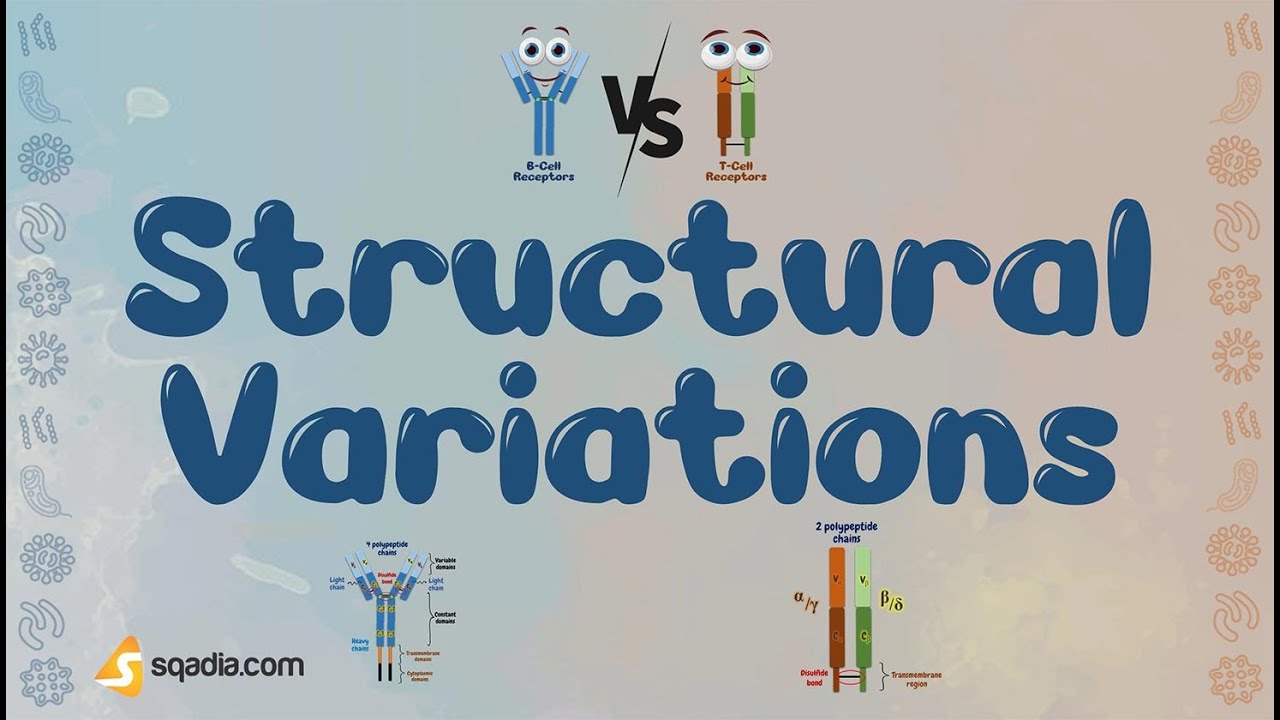
B-Cell receptors are the Membrane-bound immunoglobulins, that are anchored over the surface of B Lymphocytes. Structurally, BCRs consist of two major components: heavy and light chains, intricately intertwined to form a dynamic and precise receptor configuration.
👉 Function of BCRs
The true marvel of BCRs lies in their ability to recognize and bind with utmost specificity to a vast array of foreign molecules, known as antigens.
Similar is the role of TCRs as well, but the mechanism varies in both these receptors.
Upon encountering their cognate antigens, BCRs engage in elegant molecular communication.
And this binding event then triggers a cascade of intracellular signaling events, transmitting the message to the B cell's core, where the intricate machinery of the immune response is set into motion.
👉 BCR’s Antigenic diversity
We know that the majesty of BCRs lies in their ability to recognize and bind with utmost specificity to a vast array of antigens.
But how do they exhibit such huge diversity?
Through a process called somatic recombination, and genetic rearrangement, B cells generate an extensive repertoire of BCRs, each with a distinct antigen-binding site.
This diversity thus allows BCRs to detect and respond to an immense spectrum of antigens, from viral proteins to bacterial carbohydrates.
▬ T-Cell Receptors ▬▬▬▬▬▬▬▬▬▬
In the captivating world of immunity, we can call T cell receptors (TCRs), the masters of recognition and defenders of the immune system.
Just like BCRs, these TCRs possess a remarkable ability to identify and engage with a diverse range of antigens, acting as the key to unlocking the secrets of cellular immunity.
Let’s explore further!
👉 Structure of TCRs
Structurally, TCRs are composed of two chains—alpha and beta- that are intricately intertwined together.
A carefully crafted antigen-binding site is produced by this symphony of molecular architecture, which is then perfectly adjusted to recognize the distinct signals given off by pathogens and infected cells.
👉 Function of TCRs
The true wonder of TCRs lies in their ability to navigate the complex landscape of antigen presentation.
They can recognize antigens when they are presented in the context of specialized molecules called major histocompatibility complex (MHC) molecules.
This dynamic interplay between TCRs and MHC molecules is akin to a delicate lock and key mechanism, requiring precise alignment for successful binding. Thus this binding causes an intracellular signaling cascade, to initiate an appropriate response by T-Lymphocytes.
👉 TCR’s Antigenic diversity
Just like BCRs, TCRs are also known for their ability to bind a vast number of antigenic molecules. And the answer to the question, that How does this diversity come? is similar to BCRs, that is “Genetic rearrangement”.
In TCRs, VDJ Recombination occurs in variable domains, but there is no class switching as BCRs.
I tried to put this video in a Nutshell, but for detailed conceptual learning, you’ll have to watch the full video!
So, get ready to Enjoy the comparison between B-Cell receptors and T-Cell receptors.
Доступные форматы для скачивания:
Скачать видео mp4
-
Информация по загрузке: