What's Happening to Railroad Tracks When They Lose Their STONES ?
Автор: The Curious Mechanism
Загружено: 2026-01-23
Просмотров: 16
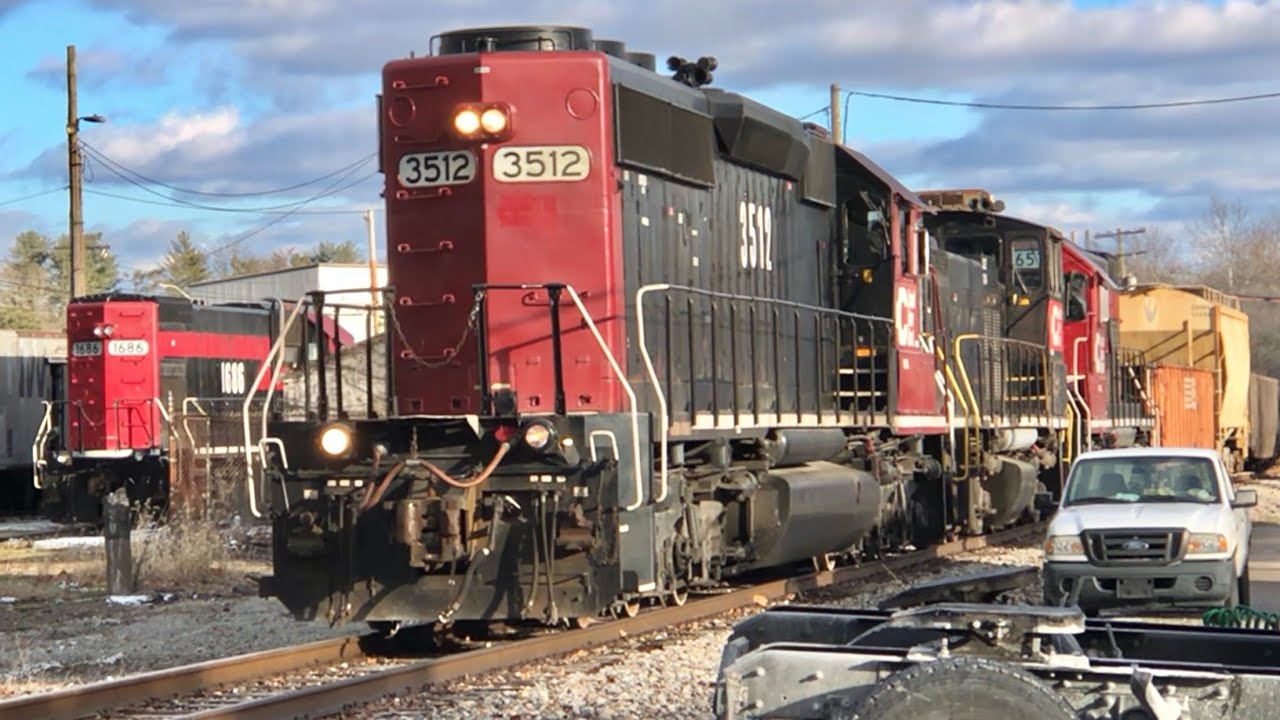
It looks like a pile of loose, gray stones, but it is the only thing stopping a 200-ton train from sinking into the earth. If you replaced these jagged rocks with smooth river stones or a solid concrete slab, the results would be catastrophic. This is the hidden engineering of "Track Ballast."
In this first episode of The Curious Mechanism, we dig into the 200-year-old struggle between heavy steel and soft dirt. We explore why modern high-speed rail systems still rely on technology that dates back to the golden age of sailing ships.
In this video, we uncover:
The Physics of "Interlocking": Why jagged edges are stronger than concrete during a heatwave.
The "Mud Vacuum" Effect: How water can swallow a locomotive whole without proper drainage.
The Maritime Secret: How early engineers stole a safety feature from old sailing ships to save the railroads.
The Vibration Problem: Why train tracks need to "breathe" to avoid shattering like glass.
The stones you see on the tracks aren't just gravel—they are a sophisticated suspension system that keeps the global economy moving.
🔔 Subscribe to The Curious Mechanism for more stories about the hidden systems that shape our world: [ / @thecuriousmechanism ]
#RailroadBallast #Engineering #CivilEngineering #Trains #Science #HowItWorks
00:00 The 200-Ton Problem
01:00 Heavy Steel vs. Soft Dirt
01:21 Why Not Use Concrete?
01:36 The Physics of "Interlocking"
02:34 The Railroad's Worst Enemy
03:49 A Secret From Sailing Ships

Доступные форматы для скачивания:
Скачать видео mp4
-
Информация по загрузке:







![🇬🇱 Nuuk - Copenhagen 🇩🇰 Air Greenland Airbus A330neo [FULL FLIGHT REPORT] Snowy landing](https://imager.clipsaver.ru/DA_EkYemWC4/max.jpg)


