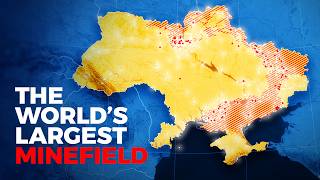
Panel 3: Securing the Ground: Demining Ukraine for Recovery and Reconstruction
Автор: NATOCanada
Загружено: 2025-06-02
Просмотров: 127
Conference summary report: https://natoassociation.ca/safeguardi...
The third panel was moderated by Lesya Granger, CEO & Chair of Mriya Aid, a Canadian NGO specializing in mine action in Ukraine. It brought together Canadian and Ukrainian experts, including H.E. Egidijus Meilūnas, Ambassador of Lithuania to Canada, Yulia Koba, Senior Program Officer at Global Affairs Canada, Alexander Landry, former CAF and NATO, Tymur Pistriuha, Head of the Ukrainian Deminers Association, and Markian Kchik, UNOPS Operations Advisor.
Ambassador Meilunas opened the conversation with a keynote speech contextualizing mine action in Ukraine in the broader Allied efforts to achieve just and long-lasting peace within its borders. The International Demining Capability Coalition, launched in February 2024, now includes 23 countries, mostly EU and NATO members, as well as global partners like Taiwan. In just one year, member states have donated over €473 million in equipment to Ukraine, from armoured transport to mechanical demining vehicles and protective gear. A coalition fund launched in August 2024 aims to support long-term planning through 2034, with anticipated expenditures of over €700 million. Despite progress, combat demining remains significantly underfunded and requires more attention from international partners.
Meilūnas also underlined Lithuania’s unwavering support to Ukraine, noting that although a small country, it has provided aid to Ukraine worth over €1 billion — more than 1.5% of its GDP, half of which is military assistance. “Ukrainians are not only fighting for their own freedom — they are fighting for the freedom of all of us,” he said.
Markian Kchik, who joined the panel from Ukraine, highlighted Ukraine’s unique demining challenges, shaped by three key factors: the ongoing nature of the war, the ever-changing and complex explosive threats, and the rapid scale-up of Ukraine’s demining capabilities. He explained that Ukraine now conducts three types of mine action: tactical demining on the frontlines; operational demining within roughly 20 km of the front; and broader humanitarian clearance in civilian areas by services like the State Emergency Service and the State Special Transport Service.
Tymur Pistriuha, also joining from Ukraine, explained how mine action is structured in the country and clarified the national standards for certification. “In Ukraine, a mine action operator can be many types of entities — state agencies, military units, social or professional associations, commercial companies, NGOs, both international and domestic, like ours. What matters most is not the type of organization, but whether it has successfully passed the certification process to become a recognized national operator,” he noted.
Alexander Landry, while serving at NATO Allied Land Command, observed a dramatic shift in the nature of explosive threats. Traditional unexploded ordnance (UXO) is now being replaced by high-tech systems, including drones, sensor-based mines, and weapons enhanced by artificial intelligence. These technologies represent a fundamental transformation in modern warfare. They are often more precise, but also potentially more dispersed in their effects. He stressed that the scale and complexity of these evolving threats are growing exponentially, often outpacing the operational capacity of those working on the ground. This is particularly challenging given that mine action in Ukraine is occurring alongside ongoing active combat.
Yulia Koba, representing Global Affairs Canada’s Peace and Stabilization Operations Program (PSOPs), reaffirmed Canada’s long-term commitment to Ukraine’s mine action. Since 2022, Canada has contributed over $18 million to support Ukraine’s own capacity. Assistance is delivered through various channels — humanitarian aid, security cooperation, and development programming — and is coordinated through platforms such as the Sectoral Working Group on Humanitarian Demining and the new Centre for Humanitarian Demining in Ukraine.
Through PSOPs, Canada supports the training and equipping of state actors and NGOs working on risk education, surveys, and clearance. Canada’s Department of National Defence complements these efforts by assisting combat demining units. Targeted support since 2022 has included rapid-response funding for HALO Trust operations, donations of specialized equipment to Ukraine’s National Guard, and procurement of over $5 million in new gear paired with training. In 2023 and 2024, Canada committed an additional $65 million to mine action, including new bilateral funding under the Canada–Ukraine security partnership. These efforts ensure Ukraine is better equipped to clear its land, protect civilians, and rebuild safely.

Доступные форматы для скачивания:
Скачать видео mp4
-
Информация по загрузке: