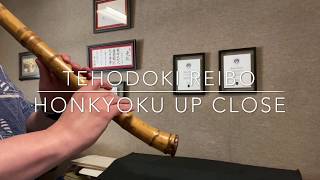
Honkyoku Up Close: San’an
Автор: Steven Casano - Kōchiku Shakuhachi 光竹
Загружено: 2020-03-05
Просмотров: 826
San'an is one of the pieces belonging to the group known as Sanya which forms a part of the classical honkyoku associated with the Fuke sect. The origins of the word sanya, which can be written with several combinations of Chinese characters, are not altogether clear. The etymologies variously attributed to the word include, first, the Sanskrit word samaja meaning 'gathering'; second, the Japanese Buddhist term sanmai (Sanskrit, samadhi), meaning concentration of the mind on a single object; third, the three (san) 'undulations' (ya) which appear in the pieces; and fourth, a place name. Another theory assumes that the pieces are intended to presage safe childbirth. These pieces are thought originally to have been performed at ceremonies of the Fuke sect. With their subtle and complex ornamentation, they are considered to be amongst the most technically demanding in the repertoire.
San'an is an improvisational arrangement made by Wadatsumidoso of an earlier piece entitled Jinbo sanya which was itself an arrangement by Jinbo Masanosuke, a komuso master of the Meiji era, of a version of Sanya transmitted in northeastern Japan. The pieces composed and arranged by Wadatsumidoso are known as dokyoku. Three of these belong within the sanya category, and each has its own distinctive features.
San'an is the most brilliant of the three. Subtle, technically difficult ornamentation is featured throughout, and the fingerings are also of considerable complexity. In accordance with one of the theories concerning the etymology of the genre, a distinctive passage in the upper register appears three times.
-International Shakuhachi Society

Доступные форматы для скачивания:
Скачать видео mp4
-
Информация по загрузке: