Fixing the line 1: syntax error near unexpected token 'newline' Issue in Bash Scripts
Автор: vlogize
Загружено: 2025-10-10
Просмотров: 13
Learn how to resolve the `line 1: syntax error near unexpected token 'newline'` issue when working with bash scripts, particularly on case functions and command outputs.
---
This video is based on the question https://stackoverflow.com/q/68418850/ asked by the user 'kittygirl' ( https://stackoverflow.com/u/7936836/ ) and on the answer https://stackoverflow.com/a/68418906/ provided by the user 'Socowi' ( https://stackoverflow.com/u/6770384/ ) at 'Stack Overflow' website. Thanks to these great users and Stackexchange community for their contributions.
Visit these links for original content and any more details, such as alternate solutions, latest updates/developments on topic, comments, revision history etc. For example, the original title of the Question was: `line 1: syntax error near unexpected token `newline'` when run bash `case` function
Also, Content (except music) licensed under CC BY-SA https://meta.stackexchange.com/help/l...
The original Question post is licensed under the 'CC BY-SA 4.0' ( https://creativecommons.org/licenses/... ) license, and the original Answer post is licensed under the 'CC BY-SA 4.0' ( https://creativecommons.org/licenses/... ) license.
If anything seems off to you, please feel free to write me at vlogize [AT] gmail [DOT] com.
---
Troubleshooting Bash Script Errors: Resolving the Syntax Error with Case Functions
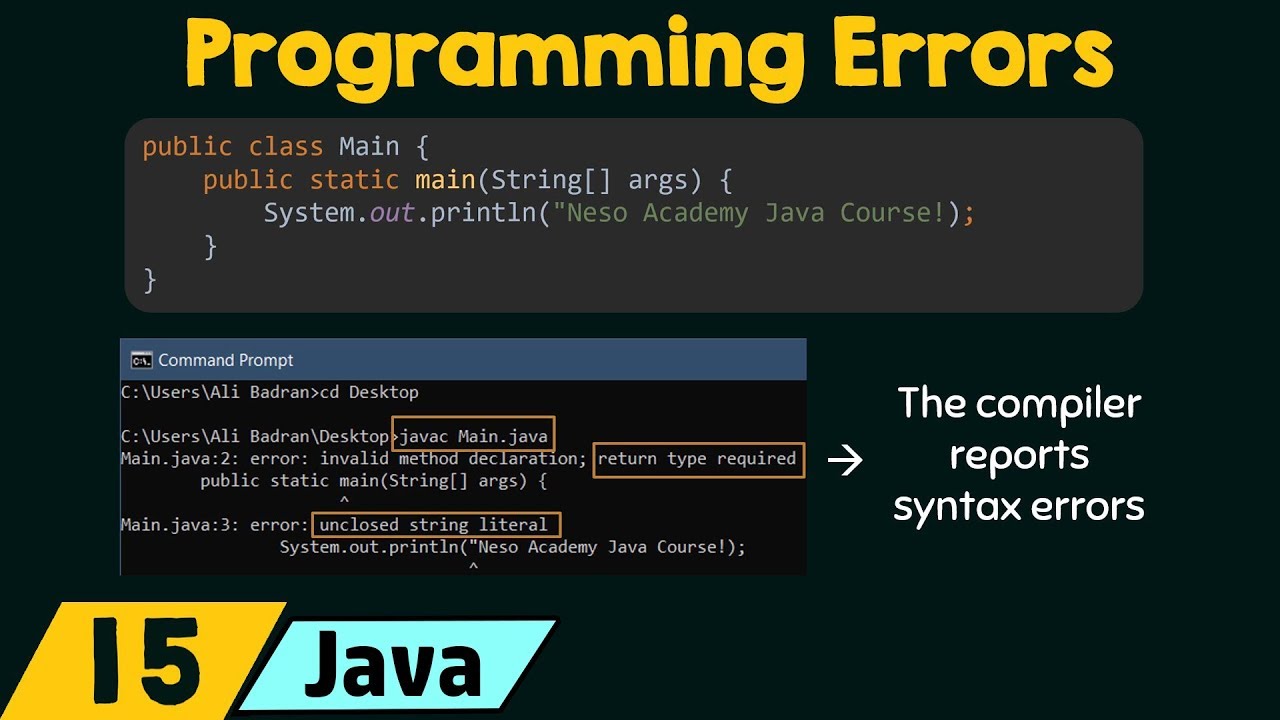
When writing bash scripts, encountering errors is quite common, especially involving syntax issues. One common error is the line 1: syntax error near unexpected token 'newline'. This particular problem can arise for multiple reasons, such as improper command substitution. In this article, we’ll unpack this issue and provide solutions to help you resolve it efficiently.
Understanding the Problem
You might have an intention to execute a command and store its output in a variable, but instead, you may inadvertently create a syntax error in your script. For example, your script may read:
[[See Video to Reveal this Text or Code Snippet]]
This line aims to store the result of md5sum $deb into variable md5. Unfortunately, this brings about a syntax error. Instead, the proper syntax should use parentheses for command substitution:
[[See Video to Reveal this Text or Code Snippet]]
To make your script even more reliable, consider enclosing the variable in quotes:
[[See Video to Reveal this Text or Code Snippet]]
Common Issues in the Script
Here are a couple of issues worth noting in the provided script:
Command Substitution Misuse: As previously explained, avoid assigning command output incorrectly.
Misleading if Statements: If you have an if statement with a misleadingly placed else, it can cause confusion and incorrect output.
Breaking Down the Fixes
1. Proper Command Substitution
Each time you want to execute a command and store its output, use the following format:
[[See Video to Reveal this Text or Code Snippet]]
For your specific case, change:
[[See Video to Reveal this Text or Code Snippet]]
to
[[See Video to Reveal this Text or Code Snippet]]
This change captures the output of the commands as intended, preventing syntax errors and ensuring proper functionality in your bash script.
2. Restructuring the if Statement
If you have a conditional statement that includes an else, ensure it’s correctly structured to prevent confusion. For instance, the original line:
[[See Video to Reveal this Text or Code Snippet]]
should instead be structured to clarify the flow:
[[See Video to Reveal this Text or Code Snippet]]
Adding a semicolon or a line break before else helps clarify its purpose in the script.
3. Debugging Your Script
Consider running your script with debugging turned on to observe variable values during execution. This can be done by inserting set -x at the top of your script. It will print commands and their arguments as they are executed, which significantly helps in troubleshooting.
Conclusion
Errors in bash scripts can be daunting, but breaking them down into manageable pieces makes them easier to understand. By ensuring command substitution is correctly implemented and creating clear conditional statements, you can solve issues like the line 1: syntax error near unexpected token 'newline'. Keep these tips in mind to enhance your bash scripting skills and reduce frustration in future projects.
By following these structured approaches, you can streamline your scripting process and tackle errors head-on, paving the way for scripts that run as intended.

Доступные форматы для скачивания:
Скачать видео mp4
-
Информация по загрузке: