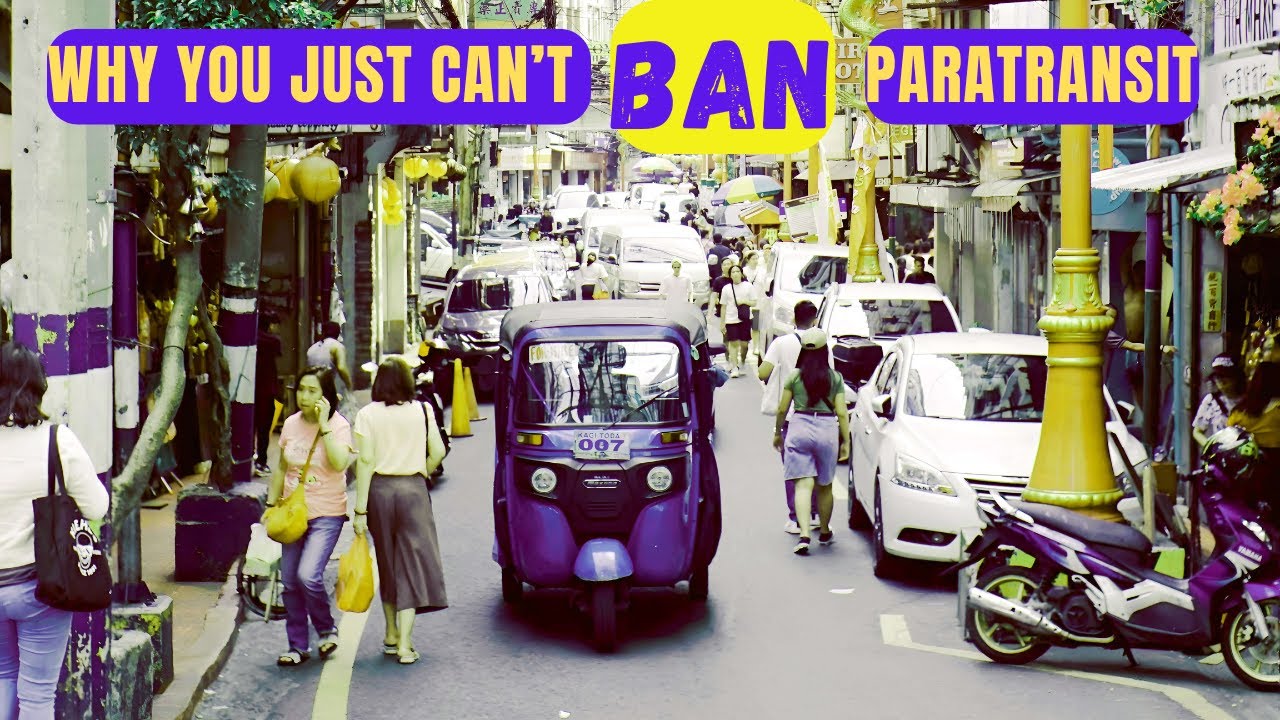
The economics of informal mobility: Why governments cant just ban it - C1M2E3
Автор: UrbanHistory
Загружено: 2025-12-29
Просмотров: 28
1️⃣ Informal Transport Moves More People Than Anything Else
In most African and Asian cities…informal transport carries more passengers than the formal system—BY FAR.
Examples:
Nairobi: Matatus move 60%+ of all daily trips.
Cairo: Microbuses carry 40–50% of commuters.
Lagos: Danfo minibuses handle 12 million daily trips.
Manila: Jeepneys serve over 40% of commuters.
Jakarta: Angkot minibuses fill the transit gaps beyond BRT.
Now ask:If you “ban” these vehicles, what replaces them tomorrow morning?
2️⃣ Formal Transit Is Expensive. Informal Transit Is Cheap.
Governments often forget this, but reality doesn’t:
Formal transit = expensive to build and expensive to run.
Think about costs:
A single metro line can cost between $100 million & $300 million per Km.
A new BRT system requires stations, buses, depots, staff, maintenance, lane reconstruction.
Operating subsidies typically cover 30–70% of running costs.
Now compare with informal systems:
Informal transit COSTS GOVERNMENTS almost nothing.
Operators buy the vehicles.Operators maintain them.Operators fuel them.Operators pay themselves.
Government cost?Close to zero.
3️⃣ Informal Mobility Creates Millions of Jobs
A metro creates jobs—yes.But informal transport creates far more, and far more rapidly.
Examples:
Manila: Jeepneys sustain 600,000 jobs.
Nairobi: Matatu industry employs over 350,000 people.
Lagos: Danfo sector provides livelihoods for almost 500,000.
Cairo: Microbus drivers + fare collectors = hundreds of thousands.
This industry absorbs:
migrants from rural areas,
people without formal education,
low-income workers,
youth in need of income,
and entire families who depend on one vehicle’s daily revenue.
4️⃣ Informal Systems Thrive Because They’re Flexible, Fast, and Profitable
Why do matatus, tuk-tuks, and minibuses dominate?
Because they operate according to demand, not schedules.
They go where people actually live.
Not where a master plan imagined people would live.
They adjust instantly to peak hours.
More vehicles appear when demand rises.
They serve low-density areas profitably.
Public buses can’t cover those areas without subsidies.
They adapt to congestion.
Take shortcuts. Change routes. Improvise.
5️⃣ Banning Informal Mobility Increases Poverty
This point often gets ignored.
A typical commuter in:
Nairobi
Jakarta
Cairo
Manila
Dhaka
spends 10–30% of income on transport.
Informal transport is often the cheapest option.
If you ban it, commuters must shift to:
ride-hailing
formal buses
or walking
6️⃣ Informal Transport Fills the Gaps of Urban Sprawl
Cities like:
Cairo
Nairobi
Johannesburg
Jakarta
Lagos
Manila
grew horizontally, unpredictably, chaotically.
No planned transit corridors.No structured feeder networks.No grid.
Informal transit developed to meet people exactly where they are:
deep in informal settlements
far from main roads
in expanding suburbs
beyond metro stations
beyond BRT lines
7️⃣ The State Doesn’t Control Demand — People Do
Commuters choose:
whatever is available,
whatever is cheap,
whatever is close,
whatever arrives fastest.
Informal transport succeeds because it satisfies real demand.
Governments can announce, plan, and declare anything.But demand is created by:
people’s homes
people’s jobs
people’s wallets
geography
street networks
daily movement patterns
8️⃣ Transitioning Away from Informal Transport Is Extremely Hard
Let’s look at countries that tried banning or replacing informal modes:
1. Manila attempted to phase out jeepneys → Nationwide protests.
2. South Africa tried formalizing minibuses → Mixed results.
3. Cairo attempted microbus regulation → Widespread evasion.
4. Jakarta replaced some angkot routes with BRT → Many angkots still operate.
5. Rwanda tried regulating moto-taxis → Only partial compliance.
9️⃣ Why Governments Still Want to Ban Informal Transport
Let’s be fair.Governments aren’t evil—they face real challenges:
Safety problems
Old vehicles, reckless driving.
Traffic chaos
Stopping anywhere, competing aggressively.
Pollution
Old diesel engines.
Revenue loss
Informal operators pay little tax.
Urban image
Cities want modern aesthetics.
🔟 The Real Solution: Modernization, Not Elimination
Most successful strategies around the world include:
1. Fleet Modernization
2. Digitalization
3. Cooperatives & Associations
4. Moving to Semi-Formal Status
5. Integrating with BRT/MRT
6. Electrification
E-tuk-tuks, e-minibuses, e-motorcycles → lower emissions + lower fuel cost.
7. Designated stops and corridors
8. Incentives, not punishments
1️⃣1️⃣ Key Idea: Informal Mobility Is Public Transport
Governments often treat informal modes as:
temporary
undesirable
primitive
illegal
chaotic
#paratransit #informaltransportation #matatu #microbus #lagos #manila #jeepney #publictransport #sustainablemobility #urbanplanning #urbanhistory #urbanization #urbandesign #tuktuk #economicimpact #economy #humangeography #cairo #urbantransport #socialinequality #socialjustice #socialinclusion
Доступные форматы для скачивания:
Скачать видео mp4
-
Информация по загрузке: