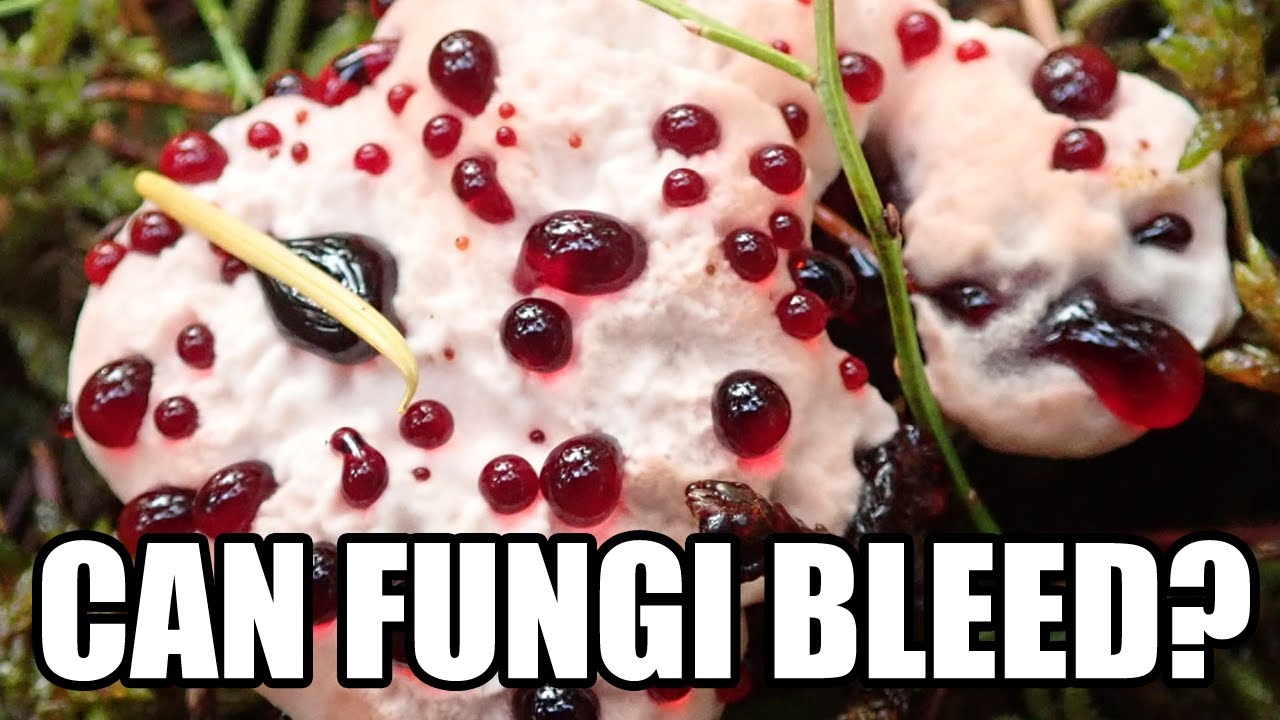
Hongo bistec - Fistulina hepatica - Beefsteak Fungus
Автор: The wonderful world of mycology
Загружено: 2025-10-25
Просмотров: 295
Hoy presentamos una especie muy común en nuestros robledales y muy fácil de identificar, tiene forma de hígado, y al cortarla tiene la apariencia de filetes de carne de vaca, es comestible incluso en crudo, y la podemos encontrar en los meses de septiembre y octubre.
Fistilina hepatica (Schaeff.) With. 1792
Descripción
-Cuerpo fructífero: con forma de hígado o lengua de buey, más o menos semicircular, cuando es adulto llega a medir hasta 20 cm de diámetro y 4 cm de espesor. La superficie al principio es de color rosado y después adquiere un color rojo hígado, de textura viscosa, verrugosa, áspera. El margen es redondeado
-Himenio: formado por tubos y poros cilíndricos de unos 0,3 mm de diámetro, no están unidos entre sí, al contacto se tiñen de rojo
Pie: grande, corto, lateral y en ocasiones inexistente
Carne: blanda, maciza, fibrosa, con venas intercaladas, que al corte desprende un líquido rojizo, de sabor salado y un poco ácido y olor destacable y con aspecto de filete de carne de vaca
-Comestibilidad: Comestible de calidad media
Hábitat: principalmente en la base de los troncos de frondosas, en este caso en Roble (Quercus robur)
-Lugar: muy común en nuestros bosques
-Época: Principalmente en septiembre y octubre
Confusiones: Con Hapalopilus nidulans más pequeño y coriáceo, el Pycnoporus cinnabarinus de carne coriácea y más pequeño.
English
Today we present a very common species in our oak forests and very easy to identify. It is liver-shaped and, when cut, resembles beef steak. It is edible even raw, and we can find it in the months of September and October.
Description
Fruiting body: shaped like a liver or ox tongue, more or less semicircular. When adult, it can measure up to 20 cm in diameter and 4 cm thick. The surface is initially pinkish and later turns liver-red, with a slimy, warty, and rough texture. The margin is rounded.
Hymenium: Made up of cylindrical tubes and pores about 0.3 mm in diameter, they are not connected to each other and turn red upon contact.
Stem: Large, short, lateral, and sometimes absent.
Flesh: Soft, solid, fibrous, with interspersed veins. When cut, it releases a reddish liquid with a salty, slightly acidic taste and a distinct odor, resembling beef steak.
Edibility: Medium-quality edible.
Habitat: Mainly at the base of trunks of broadleaved trees, in this case, oak (Quercus robur).
Location: Very common in our forests.
Season: Mainly September and October.
Confusions: With the smaller, leathery Hapalopilus nidulans, and the smaller, leathery Pycnoporus cinnabarinus.
Euskera
Gaur egun, gure hariztietan oso ohikoa den espezie bat aurkezten dugu, identifikatzeko oso erraza, gibel-forma du, eta ebakitzean behi-haragiaren xerren itxura du, gordinik ere jan daiteke, eta irailean eta urrian aurki dezakegu.
Deutsch.
Heute stellen wir eine in unseren Eichenwäldern sehr verbreitete und leicht zu identifizierende Art vor. Sie hat die Form einer Leber und ähnelt im aufgeschnittenen Zustand Rindersteaks. Sie ist auch roh essbar und wir finden sie in den Monaten September und Oktober.
Français
Aujourd'hui, nous présentons une espèce très commune dans nos forêts de chênes et très facile à identifier. Elle a la forme d'un foie et, une fois coupée, ressemble à des steaks de bœuf. Elle est comestible même crue et on la trouve en septembre et octobre.
Italiano
Oggi presentiamo una specie molto comune nei nostri boschi di querce e molto facile da identificare. Ha la forma di un fegato e, al taglio, assomiglia a bistecche di manzo. È commestibile anche cruda e la possiamo trovare nei mesi di settembre e ottobre.
Nederlands
Vandaag introduceren we een veelvoorkomende soort in onze eikenbossen die heel gemakkelijk te identificeren is. Hij heeft de vorm van een lever en lijkt, wanneer gesneden, op biefstuk. Hij is zelfs rauw eetbaar en we vinden hem in de maanden september en oktober.
Čeština.
Dnes vám představíme druh, který se v našich dubových lesích vyskytuje velmi často a je velmi snadno identifikovatelný. Má tvar jater a po rozkrojení připomíná hovězí steak. Je jedlý i syrový a můžeme ho najít v září a říjnu.
Русский.
Сегодня мы представляем очень распространённый в наших дубовых лесах вид, который очень легко узнать. Он по форме напоминает печень, а в разрезе напоминает говяжьи стейки. Он съедобен даже в сыром виде и встречается у нас в сентябре и октябре.
日本語。
今日は、私たちのオークの森にとてもよく見られる、識別しやすい種をご紹介します。レバーのような形をしており、切ると牛肉のステーキのような見た目になります。生でも食べられ、9月から10月にかけてよく見かけます。
한국어.
오늘은 참나무 숲에서 매우 흔하고 식별하기 쉬운 종을 소개합니다. 간처럼 생겼으며, 자르면 소고기 스테이크와 비슷합니다. 날것으로도 먹을 수 있으며, 9월과 10월에 발견할 수 있습니다.

Доступные форматы для скачивания:
Скачать видео mp4
-
Информация по загрузке: