Multiple alleles | UG,PG,SET,NET,NEET | By: Dr. R. N. Chavhan
Автор: Rajendra Chavhan
Загружено: 2021-05-29
Просмотров: 111
Dear all, Please do like, share & subscribe my You Tube channel. It is purely academic and free educational channel. Multiple type questions may be asked frequently on multiple alleles, so watch my video then reply and comments on it.
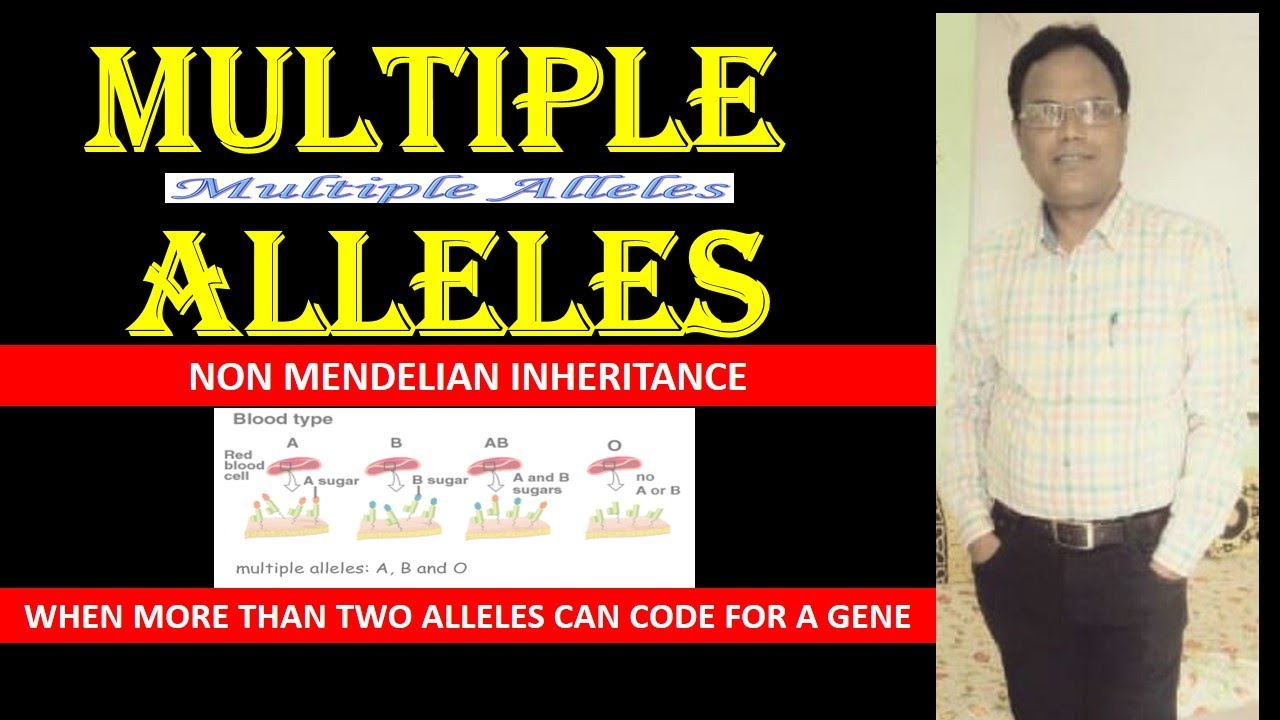
Multiple alleles exist in a population when there are many variations of a gene present. In organisms with two copies of every gene, also known as diploid organisms, each organism has the ability to express two alleles at the same time. They can be the same allele, which is called a homozygous genotype. Alternatively, the genotype can consist of alleles of different types, known as a heterozygous genotype. Haploid organisms and cells only have one copy of a gene, but the population can still have many alleles.
In both haploid and diploid organisms, new alleles are created by spontaneous mutations. These mutations can arise in a variety of ways, but the effect is a different sequence of nucleic acid bases in the DNA. The genetic code is “read” as a series of codons or triplets of nucleic acid bases that correspond to individual amino acids. A mutation causes the sequence of amino acids to change, either in a simple or drastic way. Simple changes that only affect a few amino acids can produce multiple alleles in a population, all of which function in almost the same way, just to a different degree. Other mutations cause large changes in the protein created, and it will not function at all. Other mutations give rise to novel forms of protein which may allow organisms to develop new pathways, structure, and functions.
Most of the time, scientists focus on the phenotypes that are created by certain alleles, and all alleles are classified by the phenotypes they create. However, a given phenotype can be caused by a large number of mutations. While humans have thousands of genes, they have over 3 billion base pairs. This means each gene consists of many, many base pairs. A mutation in any base pair can cause a new allele.
Multiple alleles combine in different ways in a population, and produce different phenotypes. These phenotypes are caused by the proteins encoded for by the various alleles. Although each gene encodes for the same type of protein, the different alleles can cause high variability in the functioning of these proteins. Just because a protein functions at a higher or lower rate does not make it good or bad. This is determined by the sum of the interactions of all the proteins produced in an organism and the effects of the environment on those proteins. Some organism, driven by multiple alleles in a variety of genes, do better than others and can reproduce more. This is the basis of natural selection, and as new mutations arise and new lines of genetics are born the origin of species takes place.
Доступные форматы для скачивания:
Скачать видео mp4
-
Информация по загрузке: