Why Nietzsche Hated Socrates
Автор: Weltgeist
Загружено: 2022-03-09
Просмотров: 424302
SUPPORT US ON PATREON:
▶ / weltgeistyt
WATCH:
▶ How the Real World Became a Myth: • NIETZSCHE: How the Real World Became a Myt...
OUR ANALYSES:
▶ Beyond Good and Evil: • NIETZSCHE Explained: Beyond Good and Evil ...
▶ The Antichrist: • NIETZSCHE Explained: The Antichrist (Full ...
▶ Genealogy of Morals: • NIETZSCHE Explained: The Genealogy of Mora...
▶ Twilight of the Idols: • NIETZSCHE Explained: Twilight of the Idols...
▶ The Will to Power: • NIETZSCHE: Will to Power Explained (all pa...
▶ Daybreak: • NIETZSCHE Explained: DAYBREAK - Thoughts o...
Nietzsche’s problem with Socrates is a remarkably consistent feature in his philosophy. A sustained critique of Socrates already appears in The Birth of Tragedy, one of his earlier works. And unlike other ideas present in this work, which Nietzsche would later change or completely disavow, his damnation of the Socratic spirit in this work would later be expounded upon in works such as Twilight of the Idols.
As Twilight of the Idols is one of Nietzsche’s later works, and written in an attacking, vicious, perhaps radical style, we would do well to look at The Birth of Tragedy first and look at Nietzsche’s problem with Socrates in more detail. It will give us additional context for when we finally tackle his treatment of Socrates in that later work.
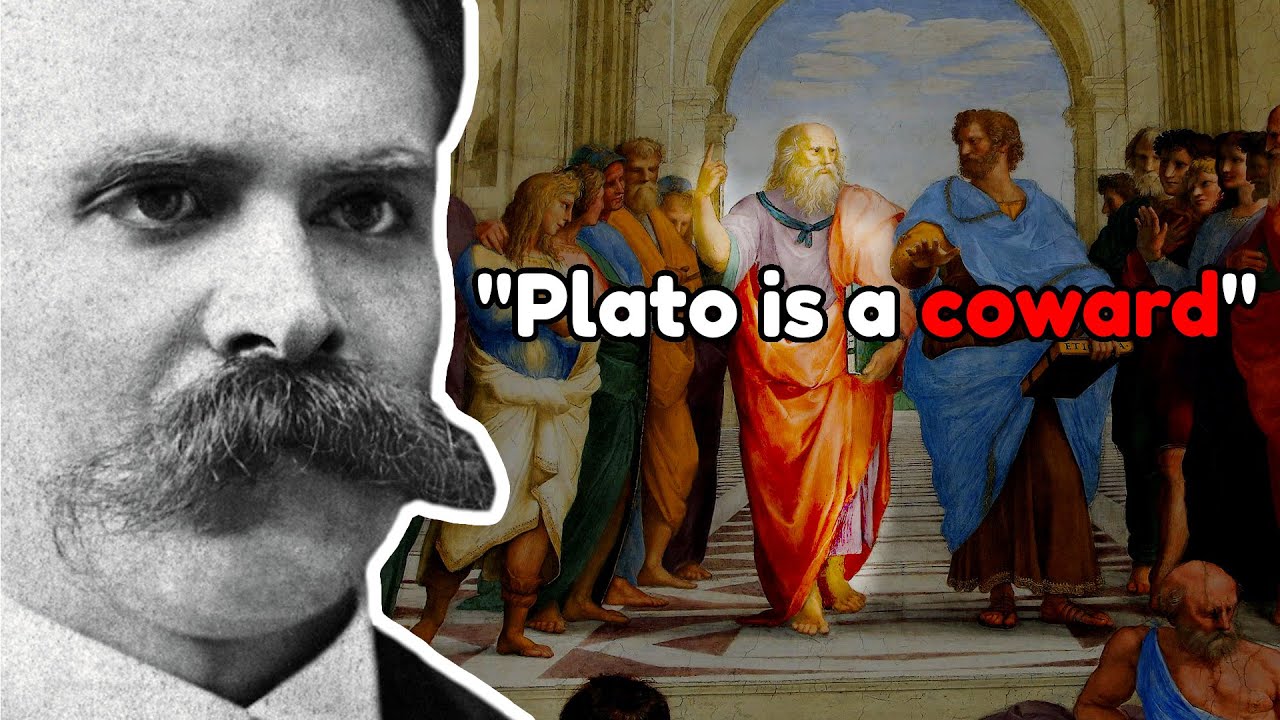
In The Birth of Tragedy, Nietzsche presents Socrates as a disruptive force in Athenian society. The arrival of Socrates signals a new era of Hellenism.
Socrates, of course, is famous for the Socratic method in which he presents himself as a curious questioner of the Athenians. To do so, Socrates uses his trademark Socratic irony, in which he feigns ignorance in order to elicit a certain response from his conversation partner. He then attacks that response and challenges him on his presuppositions. In the typical Socratic dialogue, his opponent will then be exposed: he has certain strongly held beliefs, but he soon discovers that he has no good reasons for having them.
This emphasis on having good reasons will be important.
The root of Nietzsche’s problem is this: he finds no fault in the presocratic Greeks. On the contrary, the presocratic culture was for him an ideal, a highpoint. For him, this was a world of greatness, a golden age which has become lost to us — in part because Socrates was successful in overthrowing the morals and aesthetics of the time. Socrates represents the victory of reason over instinct, and for Nietzsche, this signalled the decline of the culture, not the progress.
By the way, we can tie all this in to a discussion in Beyond Good and Evil where Nietzsche exposes the so-called Will to Truth of the philosopher as nothing more than a disguised form of Will to Power.
The philosopher, not having power in the conventional sense, needs to find his power elsewhere. In the case of the philosopher, in his words and theories and influence.
Socrates, being an outcast in Athenian society, has to resort to dialectics to affirm himself. He has no other means of doing so.

Доступные форматы для скачивания:
Скачать видео mp4
-
Информация по загрузке: