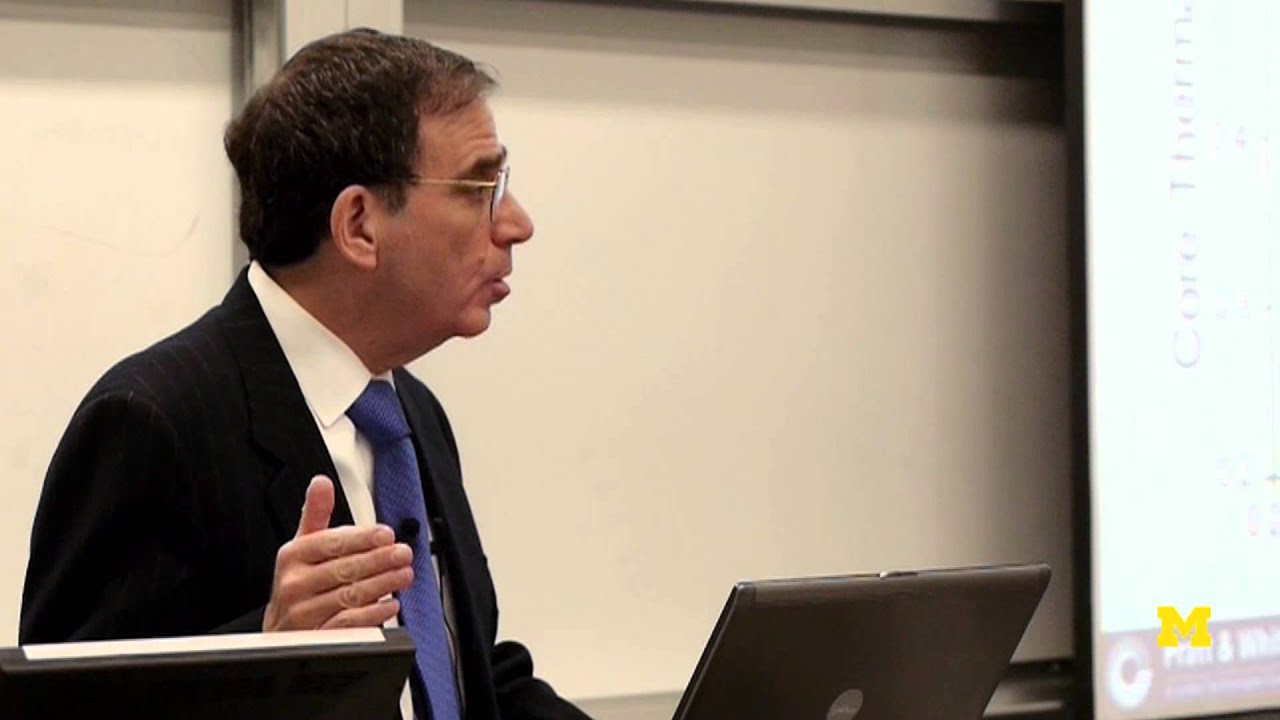
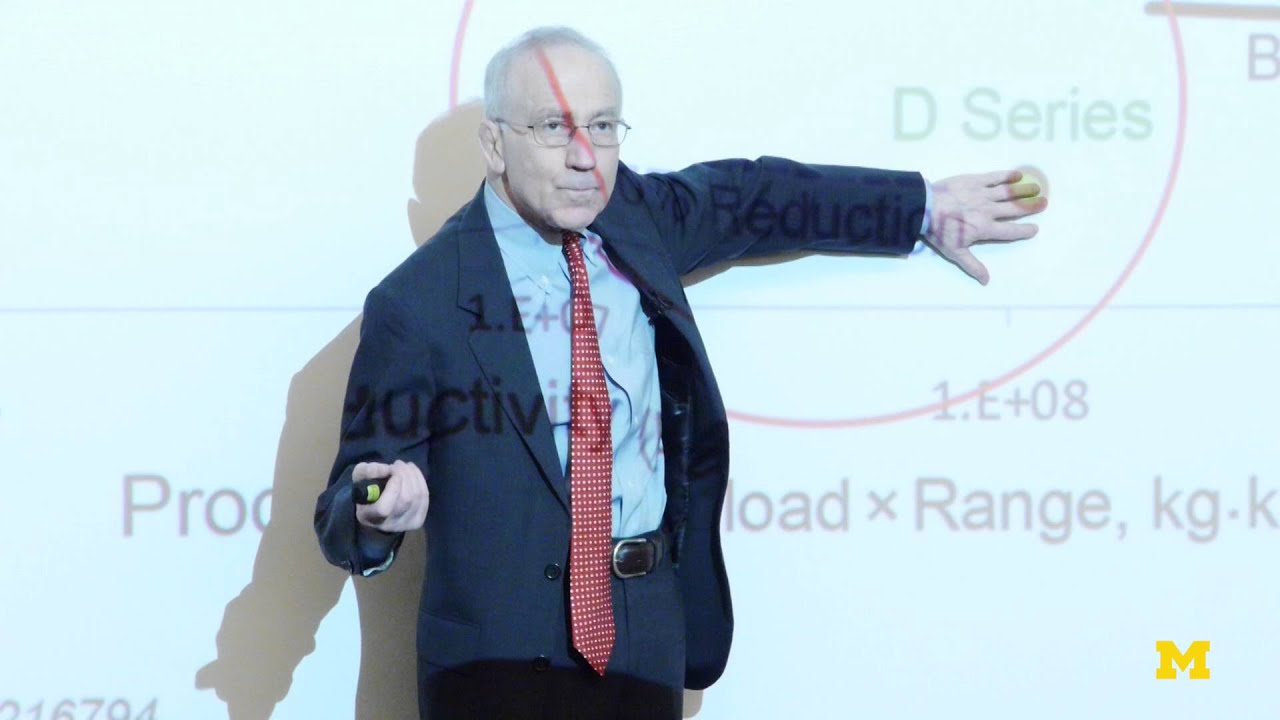
Edward M. Greitzer | Subsonic Civil Transport Aircraft For A 2035 Time Frame
Автор: Michigan Engineering
Загружено: 2016-04-05
Просмотров: 4653
9th Annual Gerard M. Faeth Memorial Lecture
Speaker Name & Title: Edward M. Greitzer, MIT Department of Aeronautics and Astronautics
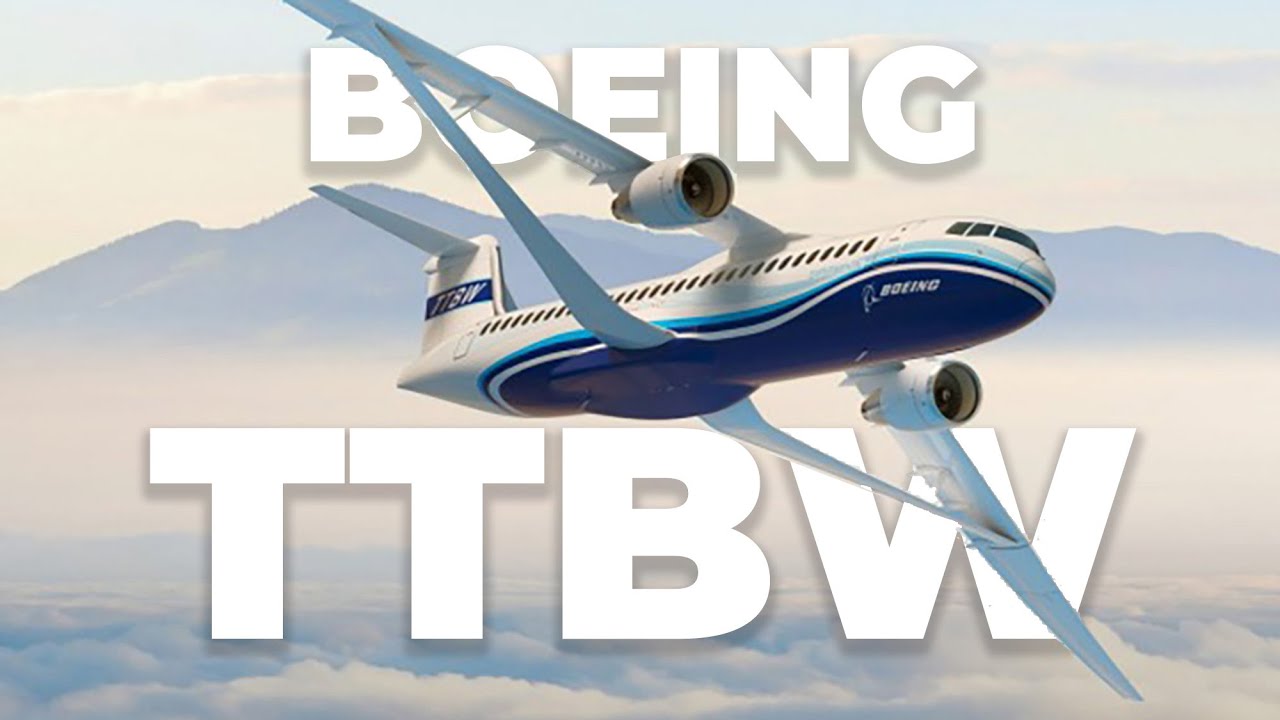
Lecture Title: Subsonic Civil Transport Aircraft For A 2035 Time Frame: An Industry-NASA-University Collaborative Enterprise
Speaker Bio: Edward M. Greitzer is the H. N. Slater Professor at MIT, where he has served as Director of the Gas Turbine Laboratory and Deputy Head of the Aeronautics and Astronautics Department. He received A. B., S. M. and Ph.D. degrees from Harvard University. Prior to joining MIT he was with the Pratt & Whitney Division of United Technologies Corporation and, more recently, Director, Aeromechanical, Chemical, and Fluid Systems at United Technologies Research Center. His research interests include gas turbines, turbomachinery, aircraft-propulsion system integration, vortex flows, active control of fluid systems, and industry-university collaboration.
Greitzer is the recipient of a number of awards including the American Society of Mechanical Engineers (ASME) Gas Turbine Award (four times), the ASME Freeman Scholar Award, the IGTI Aircraft Engine Technology Award, the Air Force Exceptional Civilian Service Award, the ASME R. Tom Sawyer Award, and MIT’s Everett Moore Baker Award for undergraduate teaching. Dr. Greitzer is lead author of the book Internal Flow: Concepts and Applications (Cambridge University Press, 2007). He is an ASME Fellow, member of the National Academy of Engineering, Honorary Fellow of AIAA, Honorary Professor at Beihang University, and International Fellow of the Royal Academy of Engineering.
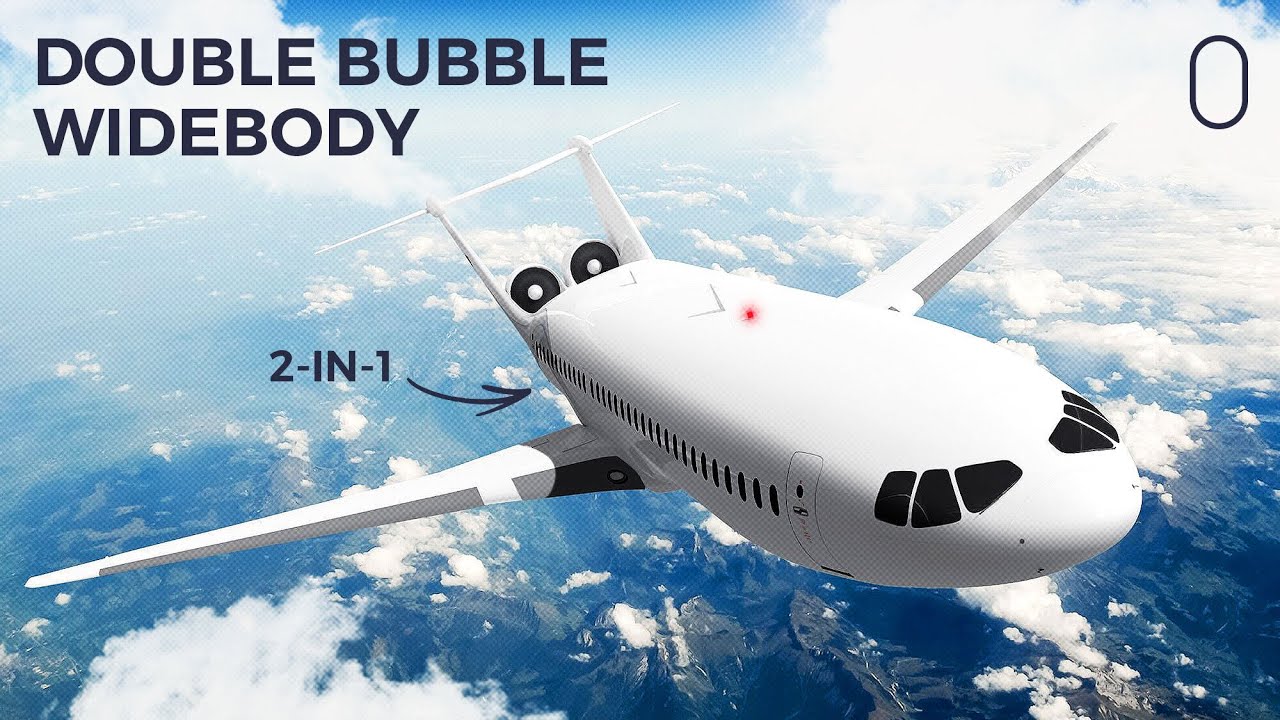
Lecture abstract: Aircraft and aeroengine design and development are inherently multidisciplinary and span organizational boundaries. For academia, as for industry, collaboration between individuals and between groups is critical in advancing technology in these fields. This lecture will describe one such collaborative enterprise, which brings together the complementary skills of industry, government, and university to team in the conceptual design of new aircraft configurations with step changes in performance. The project work scope combines experiments, computations, and analyses; the specific aircraft is the ‘double-bubble’, D8 civil transport, aimed at the 2035 time frame.
We first introduce the rationale for the conceptual design, carried out under Phase 1 of the NASA N+3 Program and estimated to yield a 70 per cent reduction in fuel burn, including explanation of the physical effects that lead to this dramatic change. We then describe the two major goals of the Phase 2 project: assessment of the propulsion-airframe integration, and benefits, associated with ingestion of the fuselage boundary layer in the D8 configuration, and definition of the high efficiency, high pressure ratio, small core engine technology needed for such aircraft. To illustrate this assessment we present performance and flow field results from back-to-back comparisons of 1:11 scale powered aircraft models, with and without boundary layer ingestion, in the NASA Langley 14 x 22 foot Subsonic Wind Tunnel. We conclude with a summary of the team’s achievements and of possible next steps.
Speaker Website:
http://web.mit.edu/aeroastro/sites/gr...
Доступные форматы для скачивания:
Скачать видео mp4
-
Информация по загрузке: