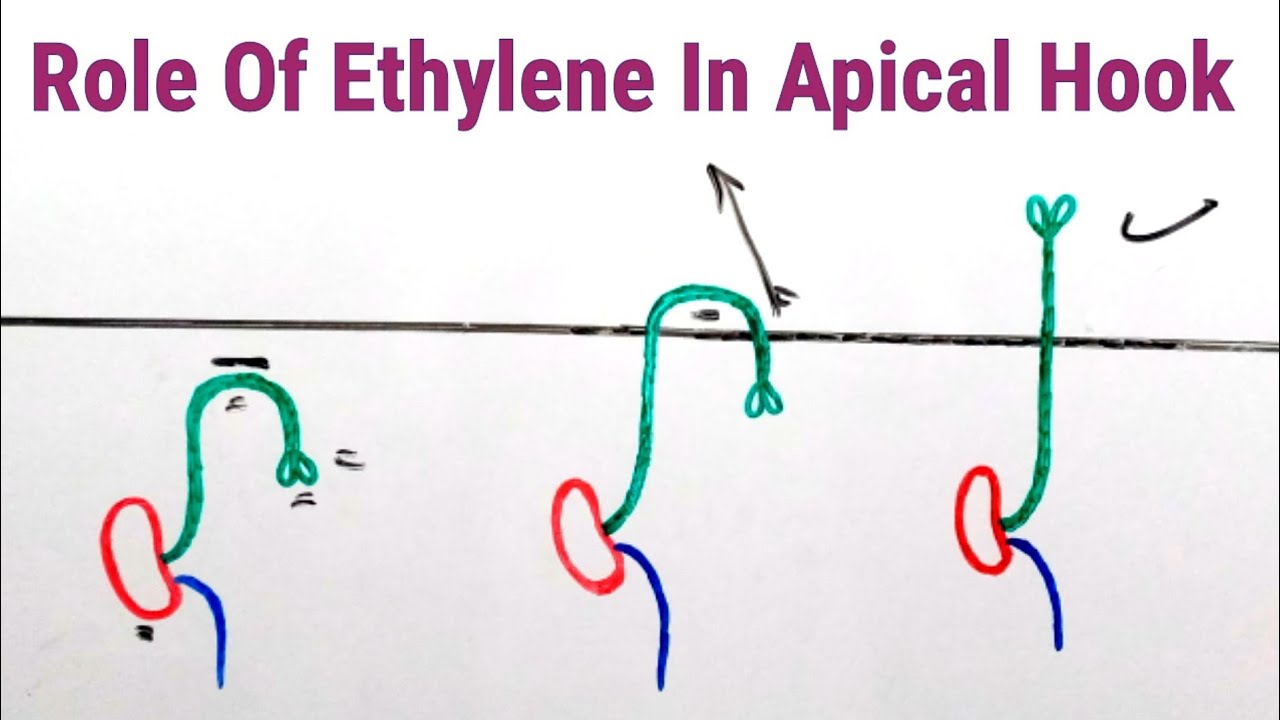
Role Of Ethylene In Apical Hook | Lec. 82 | Plant Physiology
Автор: Biology With Wk
Загружено: 2024-09-29
Просмотров: 304
Ethylene plays a critical role in the formation and maintenance of the apical hook, a structure found in the hypocotyls of dicot seedlings that protects the shoot apical meristem as it emerges from the soil.
Here’s how ethylene influences this process:
1. Promotion of Hook Formation: Ethylene enhances the curvature of the apical hook by regulating asymmetric growth. It promotes differential cell elongation between the inner (concave) and outer (convex) sides of the hypocotyl, which results in the hook formation.
2. Regulation of Growth Inhibition: Ethylene can inhibit cell elongation on the inner side of the hook, contributing to the maintenance of the hook structure. This ensures that the apical meristem is shielded from damage as the seedling pushes through the soil.
3. Interaction with Auxin: Ethylene modulates auxin distribution during apical hook development. Ethylene induces the accumulation of auxin at the concave side of the hook, further inhibiting cell elongation there. This interaction is essential for maintaining the asymmetric growth necessary for the hook structure.
4. Hook Opening: As the seedling reaches the soil surface and light becomes available, ethylene levels decrease, and the apical hook opens, allowing the cotyledons to spread. Other environmental signals, like light and gibberellins, work in conjunction with the reduced ethylene to trigger this process.
In summary, ethylene is a key regulator of the apical hook, balancing its formation, maintenance, and eventual opening through interactions with other hormones and environmental cues.
#roleofethyleneinapicalhook
#roleofethyleneinplants
#apicalhookformation
#ethylenehormone
#ethylene
#biologywithwk
Доступные форматы для скачивания:
Скачать видео mp4
-
Информация по загрузке: