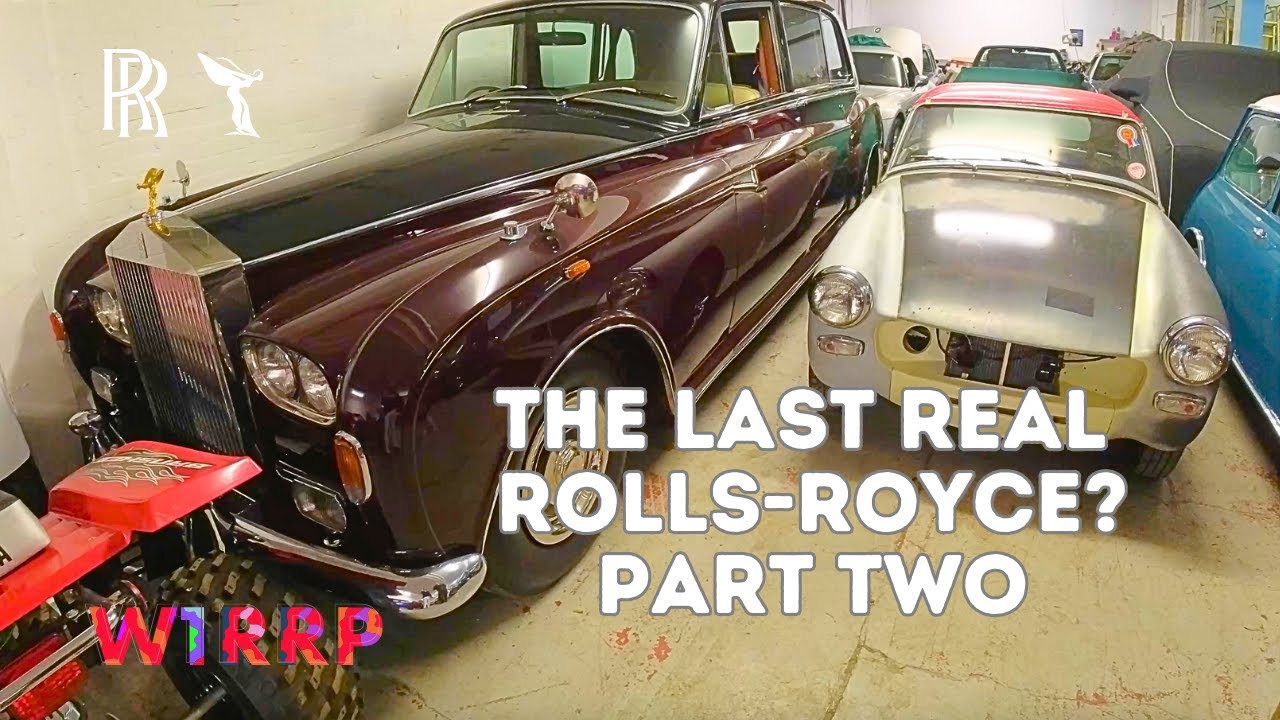
Part 2 The Last Real Rolls-Royce Phantom Mulliner Park Ward Lance McCormack 4K W1RRP RR Podcast
Автор: W1RRP Rolls Royce Podcast
Загружено: 2023-08-03
Просмотров: 1308
Part 2, the first part is here: • Building The Last Real Rolls-Royce Phantom... Is this the last true Rolls-Royce? Rolls-Royce has used the Phantom name on full-sized luxury cars over the past century, and is the second, longest-used automobile nameplate in the world after the Chevrolet Suburban. The Phantom is a low volume, hand-built limousine, which in earlier generations was custom built to the customers desires, and sometimes extravagant whims. As automobile manufacturing became more prolific, and vehicles from other manufacturers could be built in greater numbers and at reduced prices, the Phantom remained hand-built and production of individual models only began once the order was placed. The use of the name "phantom" is a long tradition of naming models after "ghosts".
Earlier versions from Rolls-Royce consisted of the chassis and engine, then arrangements were made to customize the body and interior to whatever the buyer requested. The Phantom is popular with wealthy business people, royalty and celebrities who desire the best of everything, and want a car with exclusivity and elegance.
During the years 1931-1998 when Rolls-Royce also manufactured Bentley vehicles, the Phantom was exclusive to Rolls-Royce and the approach to opulent vehicles wasn't shared with Bentley. When Bentley was an independent automaker, they did produce on a limited basis the Bentley 8 Litre limousine. When Rolls-Royce assumed operations and ownership, the 8 Litre was discontinued. Bentley would not manufacture a limousine until 2002 when the Bentley State Limousine was presented to Elizabeth II.
Rolls-Royce Phantom I, 1925–1931
Rolls-Royce Phantom II, 1929–1935
Rolls-Royce Phantom III, 1936–1939
Rolls-Royce Phantom IV, 1950–1956
Rolls-Royce Phantom V, 1959–1968
Rolls-Royce Phantom VI, 1968–1990
Rolls-Royce Phantom VII, 2003–2017
Rolls-Royce Phantom Drophead Coupé, 2007–2017
Rolls-Royce Phantom Coupé, 2008–2017
Rolls-Royce Phantom VIII, 2017–present
The Rolls-Royce Phantom V is a large four-door limousine produced by Rolls-Royce Limited from 1959 to 1968. Based on the Silver Cloud II, it shares a V8 engine and General Motors Hydra-Matic automatic gearbox with that model. Rolls-Royce assembled the cars' chassis and drivetrains with bodies made to standard designs by coachbuilders Park Ward and James Young, former vendors absorbed by Rolls-Royce.
The engine is a 6,230 cc 90-degree V8 with twin SU carburettors, coupled to a 4-speed automatic transmission. The car has massive drum brakes and a wheelbase of 3,683 mm. Power assisted steering was standard.
A shallow gear gave a walking speed which was suitable for ceremonies.[citation needed] From 1963 onward, the Silver Cloud III's 7% more powerful engine and new front wings (incorporating the latter's quad headlamps) were fitted.
Of the 832 total built between 1959 and 1968, James Young made 217 bodies. Park Ward, owned by Rolls-Royce, made 607 bodies. In 1962, H. J. Mulliner & Co. was merged by Rolls-Royce with Park Ward to form Mulliner Park Ward.[3] Prior to the merger, eight Phantom Vs had been made by H.J. Mulliner.
Beatle John Lennon bought a 1964 Mulliner Park Ward Phantom V, finished in Valentines black. Everything was black except for the radiator, even the wheels. Lennon asked for the radiator to be black as well, but Rolls-Royce refused.[5]
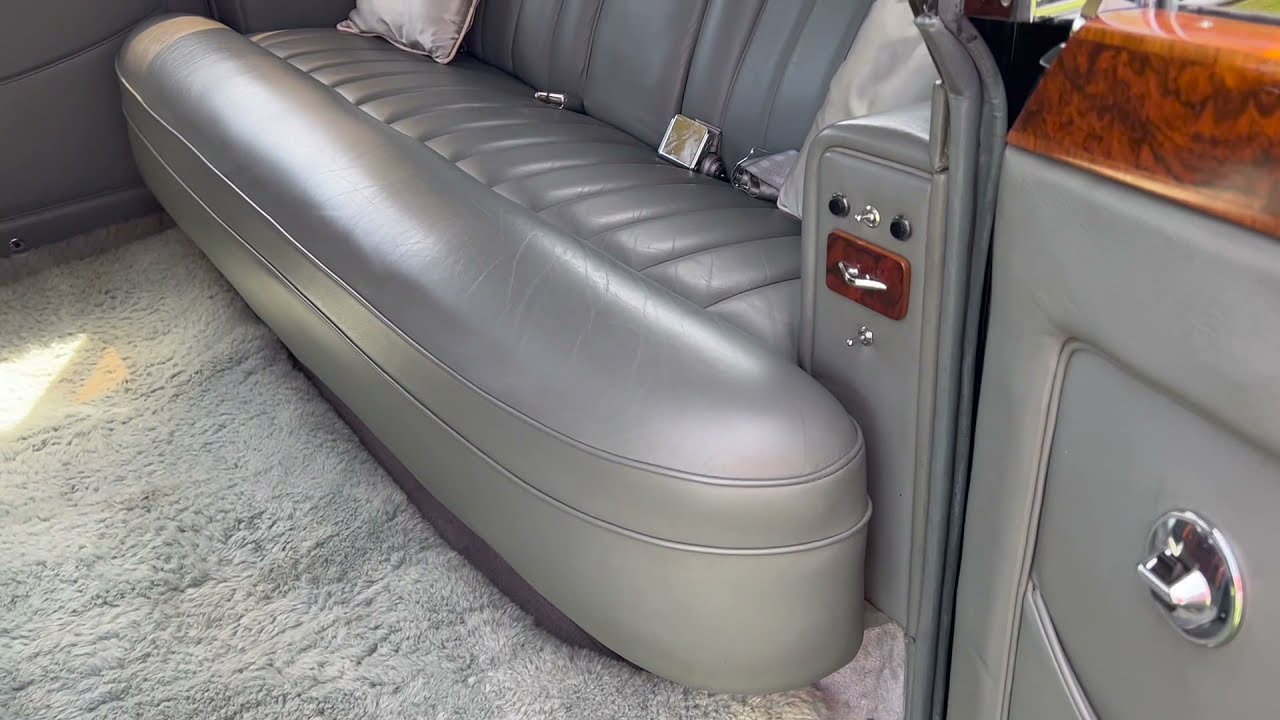
Originally the car was customised from Park Ward with black leather upholstery, cocktail cabinet with fine-wood trim, writing table, reading lamps, a seven-piece his-and-hers black-hide luggage set, and a Perdio portable television. A refrigeration system was put in the boot, and it was one of the first cars in England to have tinted windows. He probably paid £11,000 (nearly £210,000 in today's general inflation value). Lennon didn't know how to drive and didn't get his driving licence until 1965, at twenty-four years of age. He sometimes hired a 6'4" Welsh guardsman named Les Anthony as a chauffeur.
In December 1965, Lennon made a seven-page list of changes that cost more than £1900: the back seat could change into a double bed, a Philips Auto-Mignon AG2101 floating record player that prevented the needle from jumping, a Radio Telephone and a cassette tape deck were added.
The car needed repainting after Lennon used it in 1960s Spain during his filming in Richard Lester's How I Won the War. Lennon commissioned coachmakers J.P. Fallon Ltd. to do so in the style of a Romany gypsy wagon (not "psychedelic" as often referenced). Artist Steve Weaver produced red, orange, green and blue swirls, floral side panels and a Libra on the roof.
Lennon was in a 60s mood and wanted to make a statement to the English establishment. He loved telling a story about an elderly woman who hit the car with her umbrella.
W1RRP The Podcast About Rolls-Royce + Bentley. W1RRP is pronounced WURP and is a new entertainment podcast all about Rolls-Royce and Bentley.
#RollsRoyce #W1RRP #Podcast
Доступные форматы для скачивания:
Скачать видео mp4
-
Информация по загрузке:







![Презентация Rolls-Royce Phantom Centenary 2026 года — золотая дань уважения 100 годам роскоши [4K]](https://imager.clipsaver.ru/mbRrGOh44Ng/max.jpg)