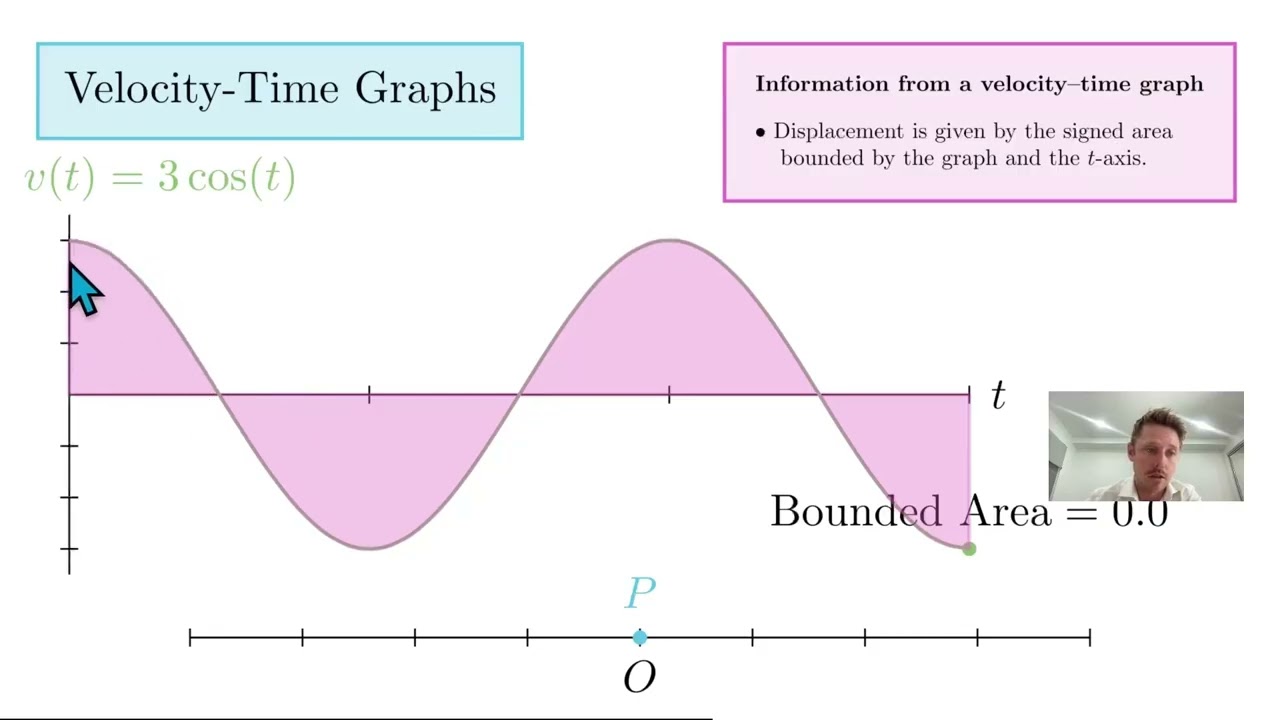
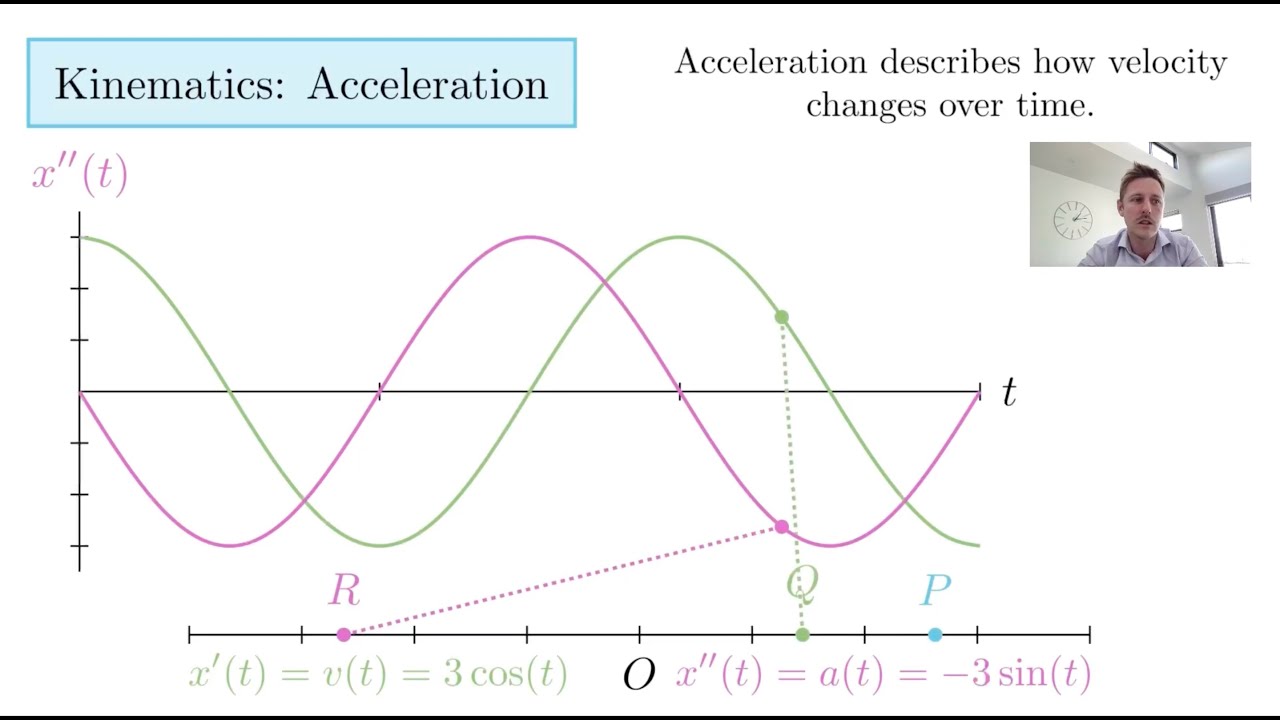
VCE SM3&4: Constant Acceleration Formula Derivations (Lect. 53/95)
Автор: WynEducation
Загружено: 2025-12-25
Просмотров: 48
00:00: A Taste of Idealism ( • Bernardo Kastrup - Consciousness and Life ... ) @CloserToTruthTV
01:00: Constant Acceleration Formula Cheat Sheet
03:29: Proof of v=u+at
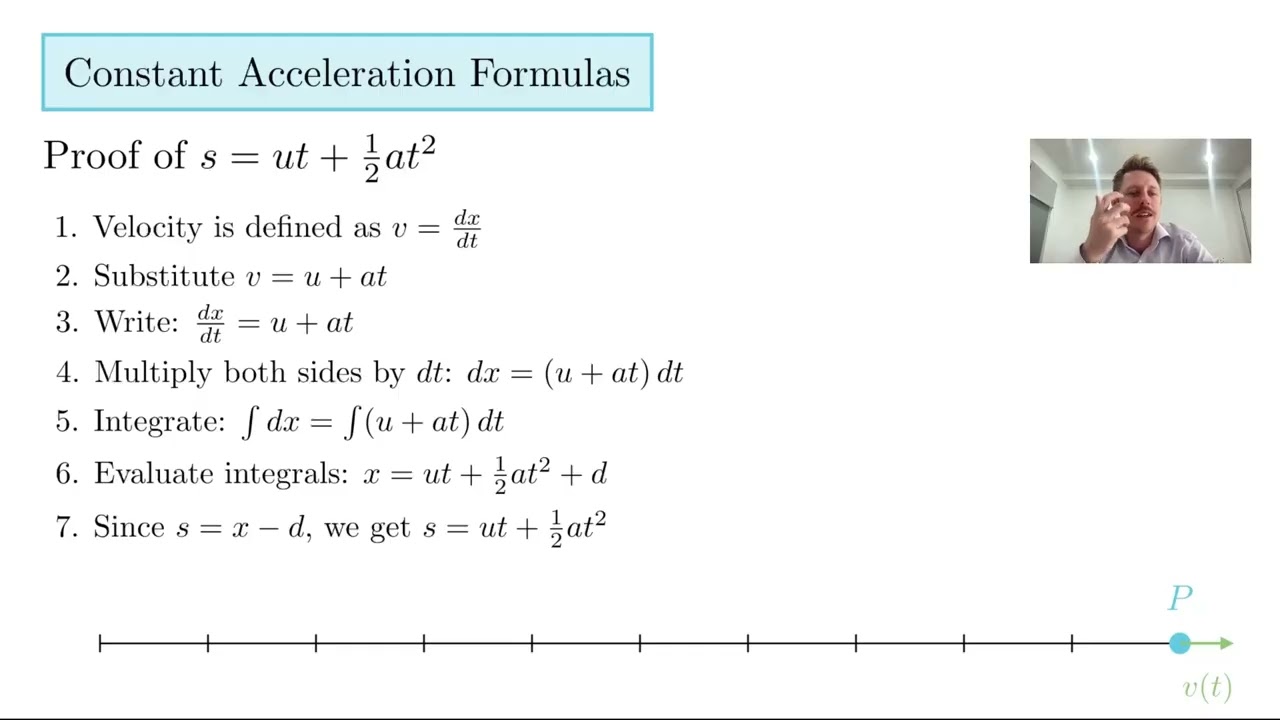
06:24: Proof of s=ut+1/2at^2
08:59: Proof of v^2=u^2+2as
Useful Prior Knowledge:
• VCE SM3&4: Intro to Kinematics (Lect. 52/95)
• Liebniz's Notation
• VCE SM3&4: Fundamental Theorem of Calculus...
For your consideration:
I should have mentioned that 'd' in the second formula proof represents the initial position because it is all that is left when we let t=0.
Chat GPT explains why s=x-d better than I can:
Why displacement equals position minus the starting point
In kinematics, position tells you where an object is relative to a fixed origin.
Displacement tells you how far the object has moved from where it started.
If the object begins at some initial position (call it the starting point) and later ends up at a new position, then the displacement is simply the difference between those two locations.
So:
Position = where you are
Displacement = where you are minus where you started
That’s why displacement is written as position minus the initial position. When equations for motion include an extra constant after integration, that constant represents the starting position. Subtracting it leaves only the distance actually travelled from the start.
Доступные форматы для скачивания:
Скачать видео mp4
-
Информация по загрузке: