How Do Docker Containers Share the Kernel When They Show Different Hostnames?
Автор: vlogize
Загружено: 2024-10-23
Просмотров: 25
Disclaimer/Disclosure: Some of the content was synthetically produced using various Generative AI (artificial intelligence) tools; so, there may be inaccuracies or misleading information present in the video. Please consider this before relying on the content to make any decisions or take any actions etc. If you still have any concerns, please feel free to write them in a comment. Thank you.
---
Summary: Explore how Docker containers share the host kernel while displaying different hostnames, and understand the differences between Docker containers and virtual machines.
---
How Do Docker Containers Share the Kernel When They Show Different Hostnames?
Docker has revolutionized the way we develop, deploy, and run applications. Its containerization technology facilitates creating lightweight, portable, and self-sufficient environments. But how do Docker containers manage to share the host's kernel while presenting themselves with distinct hostnames?
The Magic of Namespaces and Control Groups
Docker relies on Linux namespaces and control groups (cgroups) to achieve the isolation and resource management that is crucial for containerization.
Namespaces: Namespaces provide isolation for several aspects of a system, notably:
PID Namespace isolates the process IDs.
UTS (Unix Timesharing System) Namespace allows each container to have its hostname and domain name separate from the host and other containers.
Network Namespace isolates the network interfaces.
Mount Namespace isolates the filesystem mount points.
By leveraging these namespaces, Docker ensures that each container sees its own separate view of the system, including its unique hostname. This is why containers can have different hostnames despite sharing the kernel.
cgroups: Control groups manage the use of system resources, such as CPU, memory, disk I/O, and network bandwidth. This ensures that containers can only use the resources allocated to them, avoiding conflicts and ensuring fair distribution among containers.
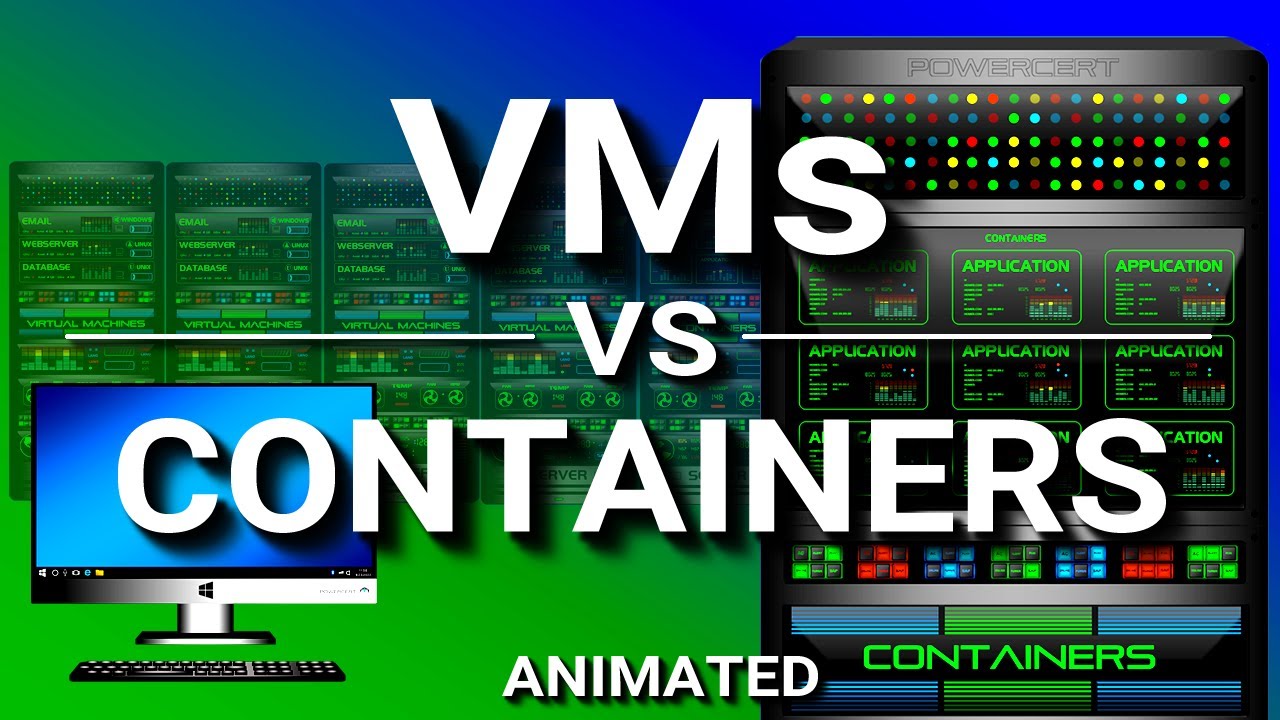
Docker Containers vs. Virtual Machines
Docker containers and virtual machines (VMs) are often compared because they both isolate applications for deployment. However, they achieve this isolation differently:
Kernel Sharing:
Containers: Share the host's operating system kernel, enabling faster start-up times and lighter resource usage. This kernel-sharing mechanism is managed through namespaces and cgroups.
VMs: Have their own guest OS and kernel, separate from the host. This allows them to run different OSes but at the cost of higher resource consumption and longer start-up times.
Performance:
Containers: Generally offer better performance due to lightweight nature and less overhead from sharing the OS kernel.
VMs: Can experience more overhead since they virtualize the entire hardware stack.
Portability:
Containers: Highly portable across different environments because they include only the application and its dependencies.
VMs: Less portable due to the inclusion of an entire OS in addition to the application and dependencies.
Isolation:
Containers: Typically offer less stringent isolation than VMs since they share the kernel, making them potentially more susceptible to kernel-level vulnerabilities.
VMs: Provide stronger isolation since they emulate separate hardware environments.
Practical Use Cases
Containers are ideal for:
Microservices architectures.
CI/CD pipelines.
Stateless applications and services.
VMs are better suited for:
Running different OSes on the same physical hardware.
Applications needing high security and stringent isolation.
Legacy applications that cannot be containerized easily.
Conclusion
Understanding how Docker containers share the host's kernel while displaying distinct hostnames provides valuable insights into the flexibility and efficiency of containerization. Leveraging namespaces and cgroups, Docker achieves impressive isolation and resource control, making it a powerful tool for modern application deployment. On the other hand, while VMs offer strong isolation and flexibility in OS choices, they come with higher resource costs.
By comprehending these technologies, developers and IT professionals can better choose the right deployment strategy to meet their specific needs.

Доступные форматы для скачивания:
Скачать видео mp4
-
Информация по загрузке: