Por qué das MAL las palmas | El contratiempo de la música Swing
Автор: EstiloSwing: Baile y cultura Swing
Загружено: 2025-12-18
Просмотров: 5263
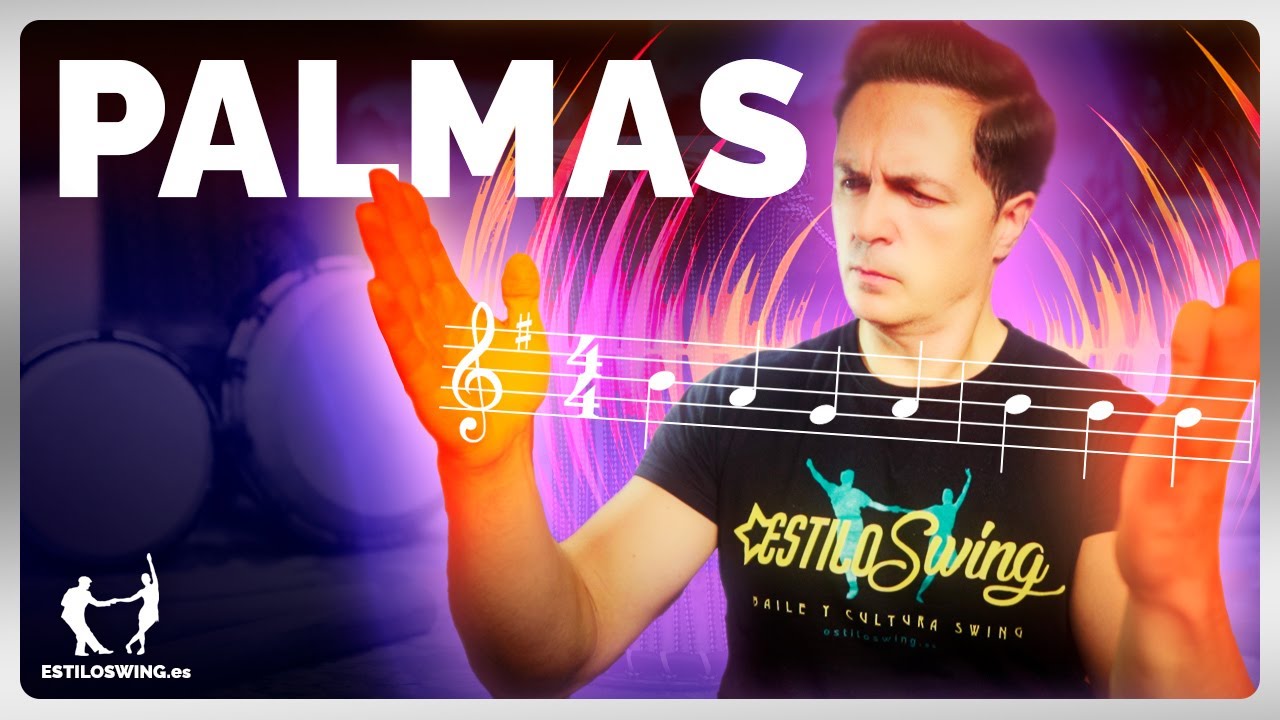
¿Cómo dar palmas en el Swing y la mayoría de la música comercial? La respuesta está en el contratiempo. Explicamos la manera correcta de dar palmas y por qué debemos hacerlo así al acompañar canciones Swing, Rock, Pop y otros estilos con linaje africano.
0:00 - Introducción
0:40 - Las palmas son un instrumento musical
1:46 - Música europea VS música africana
3:05 - El contratiempo y el sincopado
4:53 - Por qué mucha gente da mal las palmas
5:52 - Forma correcta de dar palmas
8:05 - Ejercicio para dar palmas
8:41 - Conclusión
*Referencias
**Enlaces:
https://www.ncbi.nlm.nih.gov/pmc/arti...
• Clap in time, you plonkers!
• Dawn Hampton in Herrang 1990s
http://www.ethanhein.com/wp/2013/the-...
http://www.ethanhein.com/wp/2013/frie...
https://en.wikipedia.org/wiki/Prehist...
https://www.musical-u.com/learn/rhyth...
https://www.scientificamerican.com/ar...
**Libros:
Story of Jazz
The African Imagination in Music, Kofi Agawu
Concise guide to jazz
Black dance from 1619 from today
World story of the dance, curt sachs
**Más:
Baraka, A. (1963). Blues people: Negro music in white America. New York: Quill.
Baur, S. (2012). Backbeat. The Grove dictionary of American music, 2nd edition.
Bispham, J. (2006). Rhythm in music: What is it? Who has it? And why? Music Perception, 24(2), 125–134.
Butterfield, M. (2011). Why do jazz musicians swing their eighth notes? Music Theory Spectrum, (33), No. 1, 3-26.
Butterfield, M. (2010). The power of anacrusis: Engendered feeling in groove-based musics. Music Theory Online 12(4).
Fitch, W. T., & Rosenfeld, A. J. (2007). Perception and production of syncopated rhythms. Music Perception, 25(1), 43–58.
Grahn, J. A., & Brett, M. (2007). Rhythm and beat perception in motor areas of the brain. Journal of Cognitive Neuroscience, 19(5), 893–906.
Greenwald, J. (2002) Hip-hop drumming: The rhyme may define, but the groove makes you move. Black Music Research Journal, 22(2) 259-271.
Huron, D. and Ommen, A. (2006). An empirical study of syncopation in American popular music, 1890–1939. Music Theory Spectrum, (28)2, 211-231.
Ladinig, O., Honing, H., Háaden, G. and Winkler, I. (2009). Probing attentive and preattentive emergent meter in adult listeners without extensive music training. Music Perception 26. 4 (Apr): 377-386.
Martens, P. (2011). The ambiguous tactus: Tempo, subdivision benefit, and three listener strategies. Music Perception 28. 5 (Jun 2011): 433-448.
McClary, S. (1989). Terminal prestige: The case of avant-garde music composition. Cultural Critique, No. 12, pp. 57-81.
McKinney, M. F., & Moelants, D. (2006). Ambiguity in tempo perception: What draws listeners to different metrical kevels? Music Perception, 24(2), 155–166.
Phillips-Silver, J., Aktipis, C. A., & A Bryant, G. (2010). The ecology of entrainment: Foundations of coordinated rhythmic movement. Music Perception, 28(1), 3–14.
Stewart, A. (2000). ‘Funky Drummer’: New Orleans, James Brown and the rhythmic transformation of American popular music. Popular Music, 19(3), 293-318.
Tamlyn, G. (1998). The big beat: Origins and development of snare backbeat and other accompanimental rhythms in rock ’n’ roll. PhD thesis, University of Liverpool.
Temperley, D. (2010). Modeling common-practice rhythm. Music Perception: An Interdisciplinary Journal, Vol. 27, No. 5, pp. 355-376.
Temperley, D. (1999). Syncopation in rock: a perceptual perspective. Popular Music, Volume 18/1.
Toiviainen, P.; Luck, G., & Thompson, M. (2010). Embodied meter: Hierarchical eigenmodes in music-induced movement. Music Perception 28(1): 59-70.
----------------------------------------------------------------------
👉 ¡Apoya nuestro trabajo!
► Hazte miembro: / @estiloswing
👉 Síguenos en redes:
► Web: https://estiloswing.es
► Facebook: / estiloswing
► Instagram: / estiloswing.es
► TikTok: / estiloswing
► Twitter: / _estiloswing
Доступные форматы для скачивания:
Скачать видео mp4
-
Информация по загрузке:


