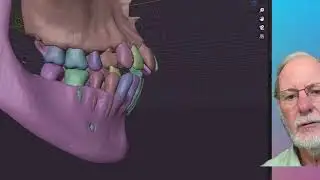
torque application in orthodontics
Автор: jean-marc retrouvey
Загружено: 2025-06-04
Просмотров: 683
Understanding Torque Application in Orthodontics
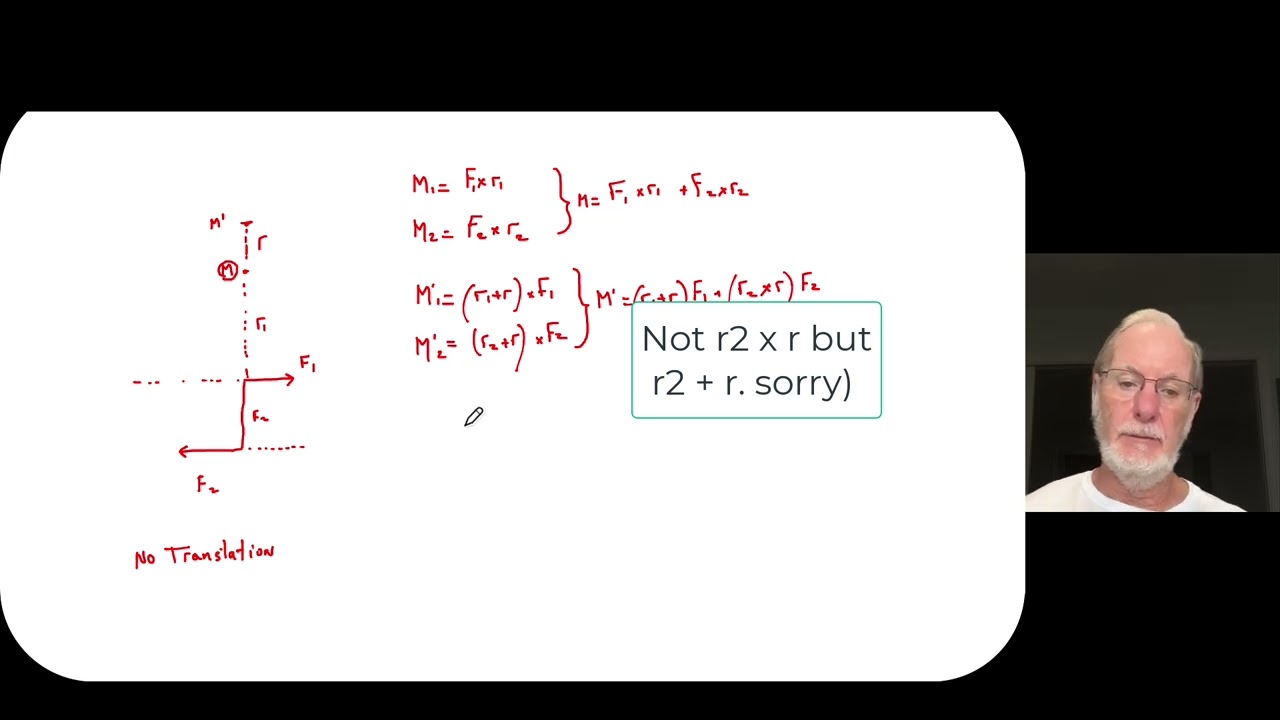
One commonly misunderstood biomechanical concept in orthodontics is the application of torque and the tooth's response to it. Unlike a single force, a force couple—which generates torque—does not have a specific point of application. In rigid body mechanics, a couple can be applied anywhere on a free body and will produce the same rotational effect.
However, a tooth is not a free body—it is constrained by the alveolar bone. This means torque must be understood in relation to the tooth’s center of resistance (Cres), which represents the point (or more accurately, region) around which the tooth tends to rotate under force systems.
In orthodontics:
Torque is defined as a moment created by a couple, often used to control root movement (e.g., lingual root torque).
Since a couple creates a pure rotational effect, its magnitude and direction determine whether the crown or root rotates and in which direction.
The center of resistance plays a critical role in determining the biological response—a torque that appears pure on paper may induce complex movements in vivo due to the tooth's constraints and surrounding structures.
To achieve specific movements (e.g., pure lingual root torque without unwanted crown tipping), a complete force system must be designed. This includes:
Proper couple magnitude and direction
Consideration of anchorage
Awareness of biomechanical side effects
This is why torquing motions are often biomechanically complex and associated with unintended consequences if not properly controlled. Mastery of torque application requires a solid understanding of constrained body mechanics, not just free body diagrams.
Доступные форматы для скачивания:
Скачать видео mp4
-
Информация по загрузке: