Build your own computer CPU using digital Logic & Memory before microprocessors: APOLLO181
Автор: Gianluca G.
Загружено: 2013-02-11
Просмотров: 299349
APOLLO181 Homemade 4-bit TTL CPU
http://apollo181.wixsite.com/apollo181
Copyright © 2012-2017 Gianluca G. Italy. All rights reserved.
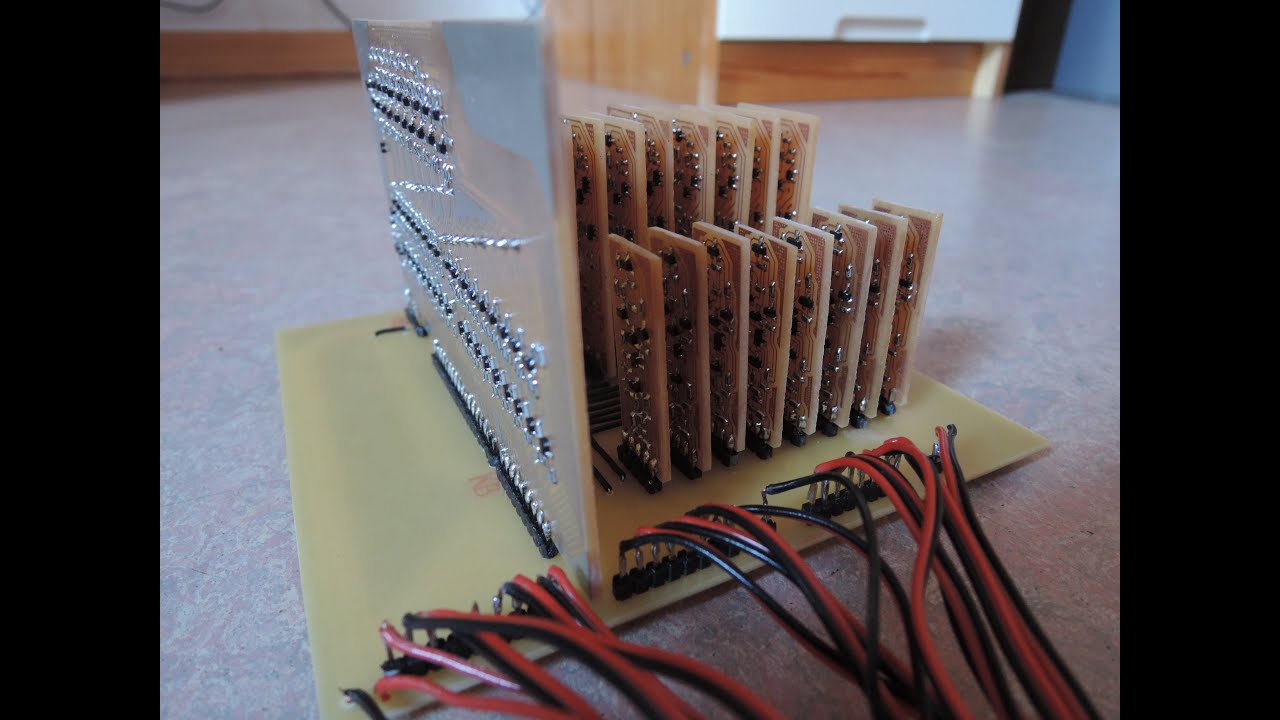
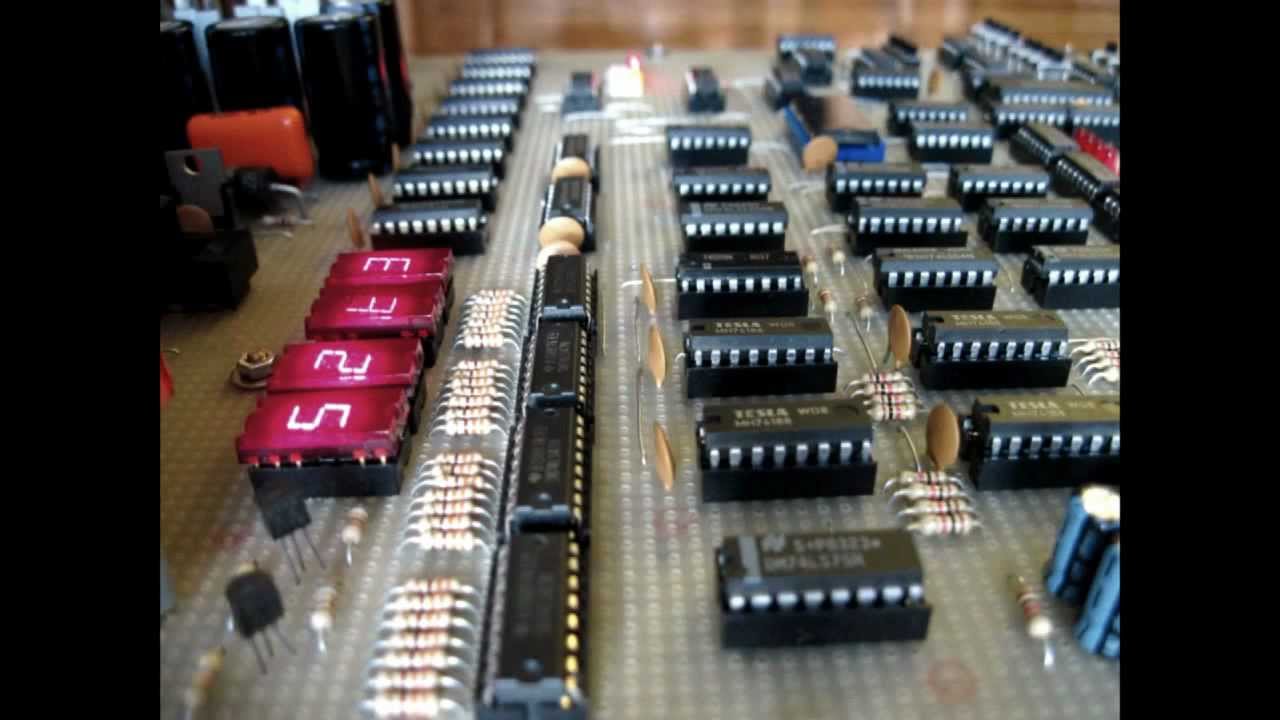
APOLLO181 is a homemade didactic 4-bit CPU made exclusively of TTL logics and bipolar memories. All employed chips are described in the Bugbook® I and II, in particular the 74181 Arithmetic and Logic Unit.
After having intensively explored the Z80 CPU, I decided to design and make a processor from scratch by myself, adopting early 1970s TTL technology and using original vintage components.
The Bugbooks® volumes written by Dr. Peter R. Rony in 1974, Virginia, (which were my first study books) inspired and encouraged me to realize this.
Peculiarity of APOLLO181 is the effective programmability: like real processors it can be instructed to perform high speed operations at different times and conditions, while exchanging data with the outside world.
You will be amazed to perceive how nowadays electronic devices are thousands of times smaller, faster, more integrated and cheaper, but you can still recognize in them many of the basic principles that you will find here.
I'm very delighted that Dr. Peter Rony, to whom I have recently communicated this project, has defined my APOLLO181 "a labour of love".
Gianluca G., May 2012, Italy
APOLLO181 Processor Specification
Type:didactic 4-bit RISC processor
Designer:Gianluca G., Italy
Style:retro-styled, 1970s minicomputer (TTL era)
First release date:June 2012
Technology:TTL 74S Schottky
Data word size:4-bit
Instruction word size:8-bit
On-board program RAM:256 byte, bipolar SRAM
On-board microcode ROM:1K-bit, bipolar fuse PROM
On-board output monitor:16 LED, 4 7-seg display (2 alphanumeric)
ALU type:74S181
Number of basic instructions:16 (plus 32 arithmetic-logic operations)
Addressable memory locations:256
Clock frequency:3 MHz
Processor speed:0,75 MIPS
Clock cycles per instruction:4
Time for register transfer:2,7 µs
Interrupt levels:256 (without RTI)
Number of internal registers:16 (expandable to 32 using I/O ports)
Number of I/O ports:16 plus 1 D/A Output (4-bit)
Audio:4-bit DAC with internal speaker
Number of integrated circuit:68 DIL with sockets
Board weight and size:3,2Kg (7,05lb); 300x300mm (11,8x11,8in)
On board Power Supply (V/I):5V regulated /3150mA (30VA transformer)
Everything you see in the video is the result of fifteen months of work (or fun?!). All data reproduced in the video are for educational and non-commercial purpose, following fair-use guidelines. Music is royalty-free for noncommercial. See license in the titles.
Text and images from original typewritten Bugbooks I and II in 1974 are permission courtesy of Dr. Peter R. Rony, the original author and sole copyright owner of the Bugbooks I, II, IIA, III, V, and VI.
Texas Instruments chip's data are Texas Instruments Copyright and reported by Courtesy of Texas Instruments.
Доступные форматы для скачивания:
Скачать видео mp4
-
Информация по загрузке:
![Первый запуск — сборка и программирование 16-битного макетного компьютера Intel x86 [часть 1]](https://imager.clipsaver.ru/VvyUAaRTsww/max.jpg)