How Do Stress Fractures Heal?
Автор: Nathan Carlson
Загружено: 2021-09-18
Просмотров: 101915
Stress Fracture Protocols
https://runningmatekc.com/stress-frac...
0:27 How Do Stress Fractures Heal?
2:11 When Can I Run?
2:43 Low vs High-Risk Injuries
4:41 RED-S and the Athlete Triad
6:29 How Do I Start Running After a Stress Fracture?
When we develop a bone stress injury, what happens is there's an imbalance between the damage that occurs and our body's ability to remove that damage. Then we begin to experience some pain, and eventually we get an image that says that we have a stress fracture. What's the process that our body goes through to heal that stress fracture, and what can we do to make sure that we heal it to the best of our abilities? There's two different processes that work together to allow our body to heal a stress fracture. The first one is called targeted remodeling. This happens through two different cells, our osteoblast and our osteoclast. Our osteoclasts break down the bone that has been damaged.
Now to envision this, let's zoom in on the fracture. We can envision the osteoblast and osteoclast acting like a small tube of superglue. Very, very precisely, it's going to go and it's going to fill in the specific injury site, it's going to make it super solid, but it's going to take some time to make sure we don't have superglue all over everything. Now, we have a second process that helps with this, and that's called global remodeling. It's a bigger process that's less specific. I want you to imagine I have some putty and I'm going to fill in this crack, but I'm not going to take my time. I just want this thing over with, I'm going to slap some putty down. It's going to heal. And then eventually over time, it'll get back to its normal formation. These two processes work together, very specific remodeling, and then more global remodeling that happens in a much quicker fashion.
This global remodeling, because it's faster, because it's not as specific, is part of the reasons why sometimes people will say, "Well, I had a stress fracture right here, and I still have a bump there." That's a normal thing. One of the downsides about global remodeling is that it is affected to a greater degree by our hormones. With many bone stress injuries, hormones are a component of why that injury happened in the first place. So if our hormonal function is not exactly where we want it to be, it could affect how that bone is going to heal from a global standpoint. All right, so that's a general process for how this happens. But how long is this going to take, because all I want to do is get back to running? We have two types of bone in our body. We have cortical bone and we have cancellous bone.
Cortical bone is more present at the end of long bones. It's more sturdy in nature. Cancellous bone, or spongy bone, is more present in our spine, in our pelvis and in the proximal aspect of our hips. It's important to designate these types of bone because we get stress fractures in both of these bone types and they heal at different rates. We categorize bone stress injuries into high, medium, and low risk. A big reason why we do that is because different bones are made up of different percentages of cortical and cancellous bone. Bones that are more cancellous or spongy in nature are generally higher risk because they have a harder time healing, they take longer, and often, there's more things that have gone into why that injury happened in the first place.
Injuries to cortical bone tend to heal a lot quicker. That's why someone with a metatarsal stress fracture or a stress fracture of their tibia tends to get back to running quicker than someone that has a sacral stress fracture or a femoral neck stress fracture. Cortical bone, we can return to running quicker. Spongy bone, we have to take a longer time. It takes between four weeks to three months for our cortical bone to completely turn over. That's a lot different than spongy bone. Spongy bone can take around 200 days to completely turn over and recover.
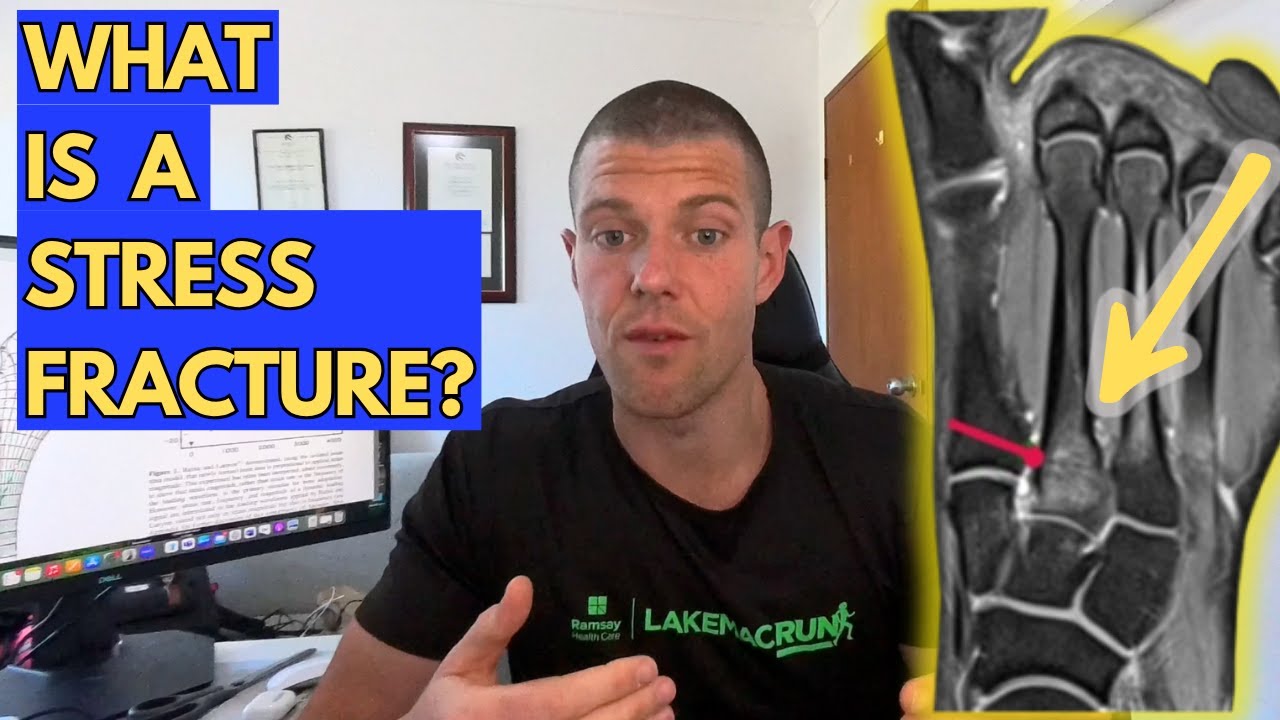
To get diagnosed with a stress fracture, you're going to need an MRI. On that MRI they're going to tell us the location of the stress fracture and they're going to grade it. There's a few different ways to grade stress fractures. This table is helpful here. If we have a stress fracture that is a higher grade, it's going to take longer for that bone to heal. If we have a stress fracture that is a lower grade, we're going to be able to return to running quicker. The grade of the image is going to affect when we can return to running. The bone that's affected is going to affect when we can return to running. We see that low-risk bone stress injuries tend to return to running at about 13 weeks after an injury. When we look at those high-risk sites, we see that it tends to be about 24 weeks to return to running.

Доступные форматы для скачивания:
Скачать видео mp4
-
Информация по загрузке: