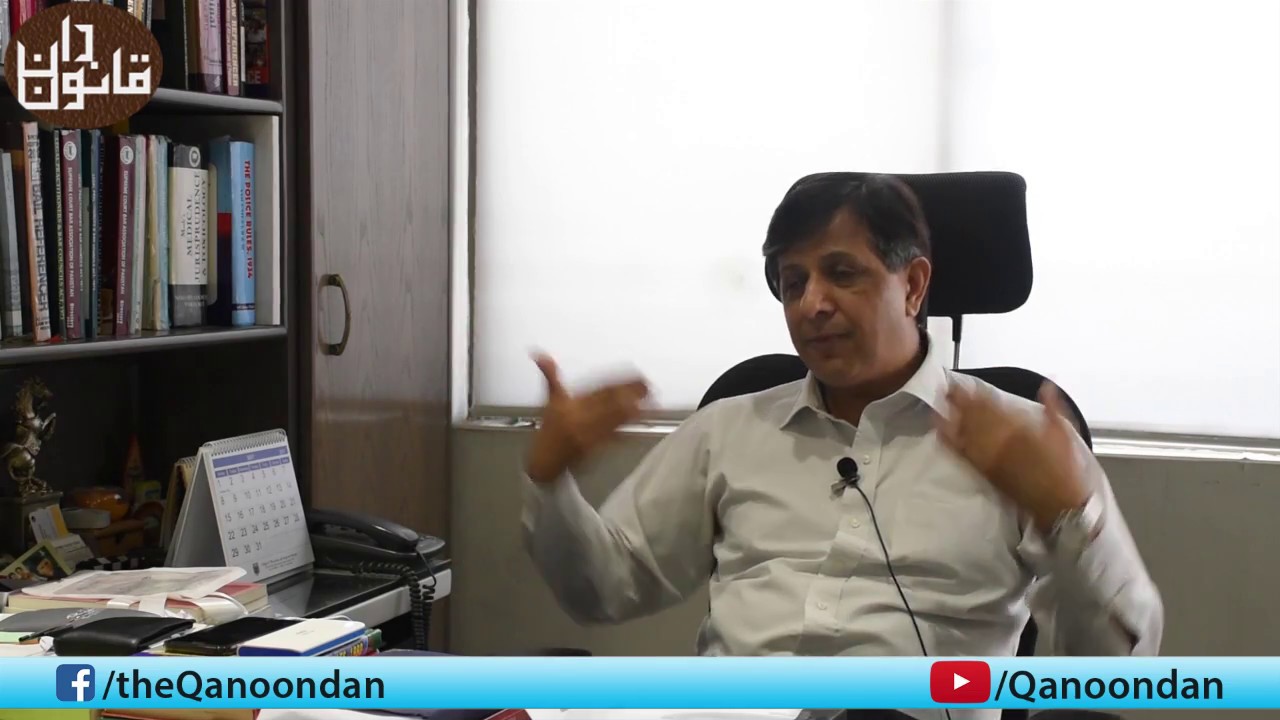
Criminal Trial Part One By Muneer Sadhana Advocate
Автор: Adv Muneer Sadhana
Загружено: 2017-07-18
Просмотров: 9275
Lecture on Criminal Trial Part one delivered by Muneer Ahmed Khan Sadhana Advocate President (2017-18) District Bar Association Jhang.
Trial before magistrate,trial before sessions judges
When any person is apprehended for committing any crime, after investigation – that is to be completed within 14 days u/Sec. 173 of Criminal Procedure Code (Cr PC) – he / she is subjected to rigorous trial in the prescribed criminal court that has jurisdiction in the said matter. Court before commencement of trial is duty bound to allow an alleged offender to appoint defence counsel of his / her choice under Article 10 of Constitution of Pakistan. Then Court pronounces a Charge against an alleged offender that describes the nature of offence and the nature of act or omission that constitutes a specific crime. Thereafter, prosecution is given an opportunity to present evidence that it has against the alleged offender. The defence counsel of alleged offender is given full opportunity to cross examine and object to the prosecution evidence, within the prescribed limits of law. Though prosecution being the duty of the state is to be conducted by the state appointed counsels but any person who being aggrieved by the offence can appoint his / her own prosecution counsel, in addition to the state counsels already duty bound to prosecute. After the prosecution concludes its evidence the presiding Judge put certain questions u/Sec. 342 Cr PC to the alleged offender. These questions are very crucial as presiding Judge gives an opportunity to alleged offender to explain incriminating evidence against him / her. Alleged offender is also given an opportunity to appear as his own witness. Moreover he / she is also given an opportunity to present documentary evidence and witnesses in his / her defence. After the conclusion of defence evidence the trial is concluded and the Presiding Judge pronounces judgment. Judgment could be of acquittal or punishment. In both cases prosecution and alleged offender has right to appeal against the judgment of the trial court. The appeal is made to the immediate superior court of the trial court.
Punishment is universally accepted mode of retribution and deterrence. Punishment varies with the nature of crime. Different punishment can be given for the same crime. But retrospective punishment and double punishment in any case is specifically prohibited by the Constitution of Pakistan. Article 12 states: “No law shall authorise the punishment of a person for an act or omission that was not punishable at the time of the act or omission”, similarly Article 13 states: “No person shall be punished for the same offence more than once”. Article 13(b) also states: “No person shall, when accused of an offence, be compelled to be witness against himself”.
Constitution of Pakistan specifically demarcates the contours of Criminal Law of Pakistan by stating unequivocally in Article 9: “No person shall be deprived of life or liberty save in accordance with law”. And the Law shall never be against the universally accepted Fundamental Rights, this is specifically and explicitly enshrined in Article 8 of the Constitution of Pakistan.
The fundamentals of criminal law are based on the principle of justice, equity and good conscience. They provide adequate guidelines for the formulation a rational penal policy. In order to be influential the criminal law must have four important elements, that is, politicality, specificity, uniformity and penal sanction. The functioning of the criminal justice system is wide enough to achieve its goals and objectives. Its ultimate goal is undoubtedly to make the society safer for its citizens. Most widely accepted aims of the criminal law include:
The enforcement of criminal law should reflect the society’s disapprobation for criminal activity through apprehending, convicting and punishing the offenders.
Description:
In this detailed lecture, *Muneer Sadhana Advocate* breaks down the intricacies of a *criminal trial* in Pakistan. This is the first part of a comprehensive series aimed at law students, legal professionals, and anyone interested in the criminal justice system. Learn about the stages of a criminal trial, from the initial investigation to the final judgment, and understand the roles of various participants in the trial process. This video is a valuable resource for those looking to gain a deeper understanding of criminal law and trial procedures.
Hashtags:
#CriminalTrial #MuneerSadhanaAdvocate #LegalEducation #LawStudents #CriminalLaw #PakistanLaw #LawLecture #TrialProcedure #LegalStudies #JusticeSystem #CourtProceedings #LawProfessionals

Доступные форматы для скачивания:
Скачать видео mp4
-
Информация по загрузке: