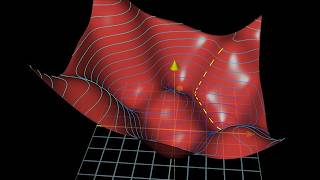
Transient Model of Signal Propagation
Автор: Mahsa Hassankashi
Загружено: 2025-11-11
Просмотров: 5
Transient Model of Signal Propagation
The signal propagation in the MLF networks is similar to that of the perceptron-like networks, described in Section 44.4.1. For each object, each unit in the input layer is fed with one variable of the X matrix and each unit in the output layer is intended to provide one variable of the Y table. The values of the input units are passed unchanged to each unit of the hidden layer. The propagation of the signal from there on can be summarized in three steps.
Wireless sensor networks for rehabilitation applications: Challenges and opportunities
4.2.4 Body impact on signal propagation
In rehabilitation supervision, sensor nodes are worn by the patient and the effect of human body on the wireless transmission must be understood. The signal propagation through the body is affected by the diffraction around the body and the reflection from the body (Chen et al., 2011). These phenomena affects the communication performance especially if sensors are placed on different side of the body (Taparugssanagorn et al., 2008) which is often the case in rehabilitation. Consequently, we need accurate and realistic propagation models in order to optimize or to develop new communication device and protocols. Developing propagation models is a key challenge because of the complexity of body structure (skin, bone, liquid) and especially because of the high degree of activity during rehabilitation exercises. Indeed, Di Franco et al. (2010) showed that even small involuntary movements along with respiration can cause significant signal fading. Beside the effect of human body on the wireless transmission, the adverse biological effect of radio transmissions on human body must be investigated too.
Mitigating security risk
6.3.2 Intra-building electromagnetic signal propagation
Reliable indoor propagation of radio signals is an important factor in operating wireless electronic communication devices. Remember that security professionals are in some sense at odds with network providers in terms of their respective goals. The former typically seek to contain such signals and reduce the probability of unauthorized signal detection, whereas network providers aim to maximize reliability and coverage. The problem with accurately characterizing this problem from a security perspective is that the results are highly scenario-dependent, which will be evident from the following discussion.
People have measured the attenuation of signals in buildings and have established ranges of values that can be used as a guide to evaluating vulnerability to unauthorized signal detection and resultant information loss. One should always keep in mind that these figures are approximate when assessing the vulnerability component of risk. It is useful to understand the general behavior of indoor and outdoor electromagnetic propagation to assess the effectiveness of mitigation strategies.
Measurements of propagation loss in “typical” office buildings at 914 MHz (i.e., the cell phone frequency band) reveal losses of between 50 and 90 dB for a 10 m separation.
* Study My Work For Knowledge Synergy*
** Mahsa Hassankashi **
Youtube: @MahsaHassankashi
Git Repository: @MahsaScript
• Transient Model of Signal Propagation

Доступные форматы для скачивания:
Скачать видео mp4
-
Информация по загрузке: