Winner: Mycofluidics: Math & Fungi
Автор: We Are Mathematics
Загружено: 2019-05-18
Просмотров: 317
We used mathematical models to show how fungi build highways that solve the problems of congestion -- on a fungal highway, the more traffic there is, the faster everyone gets to work!
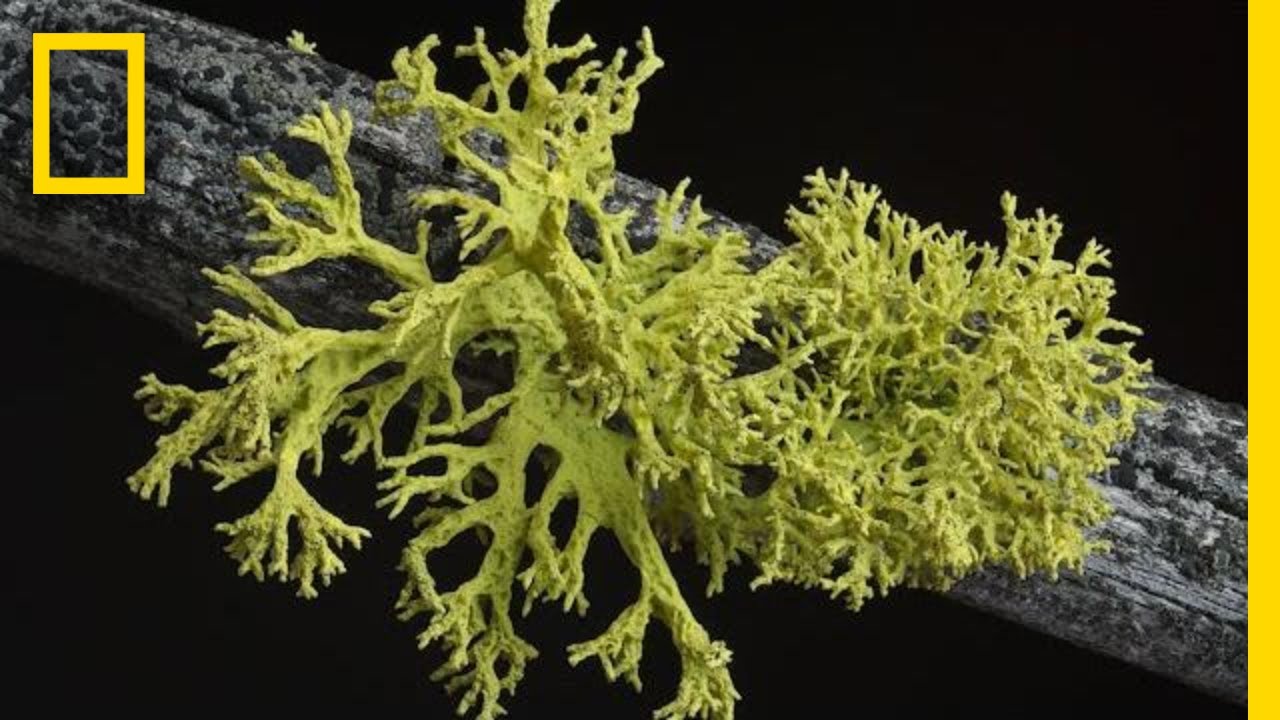
Over more than a billion years of evolution, fungi have learned how to create networks whose efficiency and elegance puts human highways to shame. As part of our NSF funded study of the many adaptations that enable fungi to thrive over the entire globe, we study how these networks are wired, and how they transport material -- the contents of the cell, nutrients and nuclei -- to feed the fungus' growth. We use optimization theory, to analyze what kinds of functions the networks are trying to balance, and mathematical imaging tools to compare our optimal networks with real networks that we can observe in the lab. In the project that is described in this video, we discovered a surprising property of the flows within the network: the more dense the traffic on the network (the more tightly packed nuclei are within the network), the faster they all travel. In other words, the fungus has solved the problem of congestion -- the more traffic there is the faster everyone gets to work! We built a mathematical model to explain this observation. We found that the nuclei cooperatively move between two states - flowing and bound. The more nuclei there are, the smaller the fraction that are bound, and therefore, the faster they all travel. We could then use theory from Partial Differential Equation models of how solitary waves form on the surface of bodies of water, to explain how anti-jams -- large groups of very rapidly moving nuclei -- spontaneously organize themselves given the right conditions of flow and mean density.
The video is one of four winners in the 2018-2019 NSF "We Are Mathematics" Video Competition: https://wearemathematics2019.skild.com/

Доступные форматы для скачивания:
Скачать видео mp4
-
Информация по загрузке:








![Пожалуй, главное заблуждение об электричестве [Veritasium]](https://imager.clipsaver.ru/6Hv2GLtnf2c/max.jpg)
