Joseph Knibb, London - 1690 - Ben Wright Exceptional Clocks
Автор: Ben Wright Clocks
Загружено: 2015-11-04
Просмотров: 4689
Ben discusses an extremely rare ebony veneered double-six hour striking grande sonnerie table clock.
CASE
The case has a typical foliate-tied gilt-metal handle above the cushion moulded top, the sides are glazed sides and there is a foliate pierced ebony sound fret to the top rail of the front door which is further applied with a gilt-brass cherub head escutcheons. The simple moulded flat-to-the-table base is pasted to the underside with a printed sale label for the Wetherfield Collection of Clocks
Dispersed by Mallett & Son and Arthur S. Vernay Inc.
No. 112 in the sale catalogue.
The rear door is pasted with a label printed:
THE ANTIQUARIAN HOROLOGICAL SOCIETY
HOROLOGICAL MASTERWORKS
The Museum of the History of Science, OXFORD 2003
Exhibit No. 38
DIAL
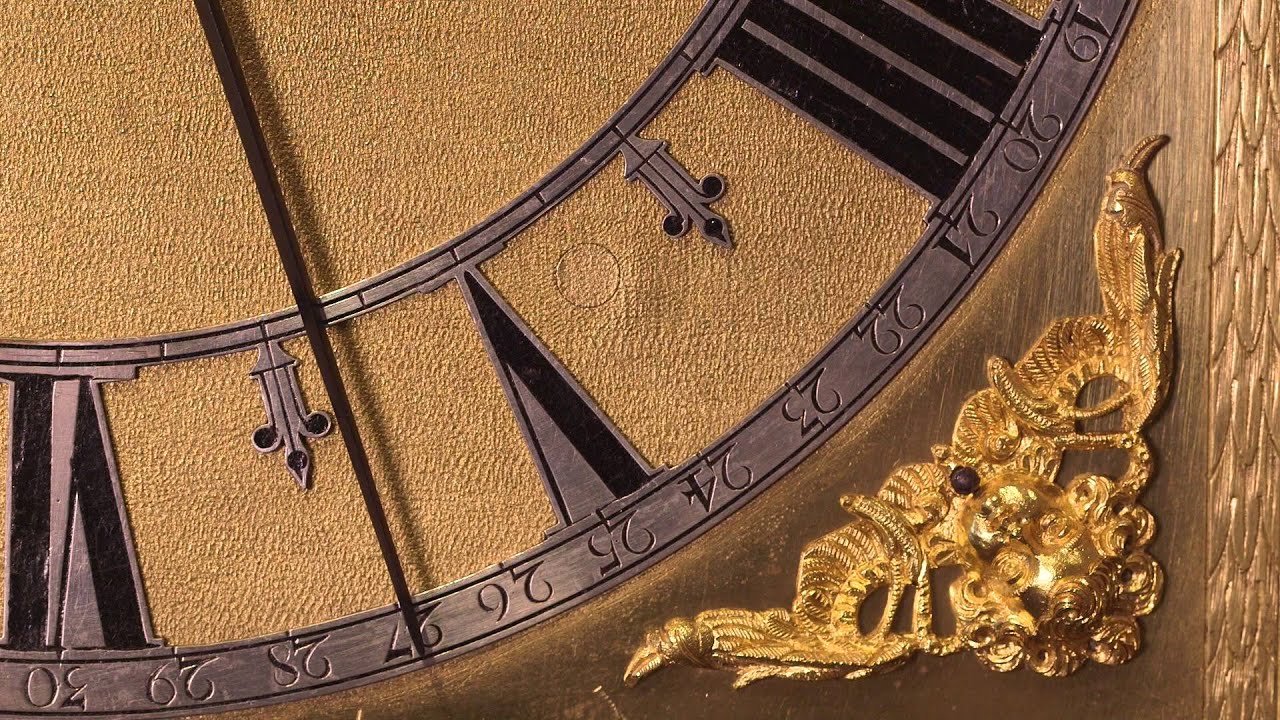
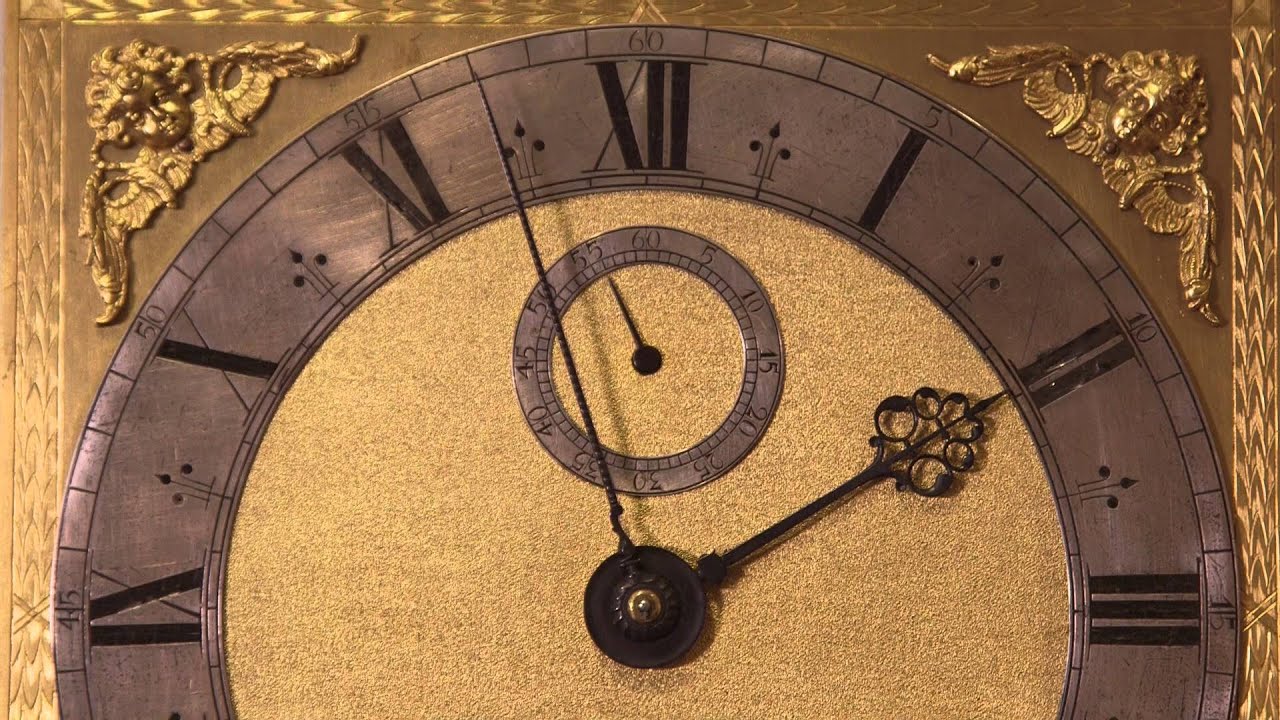
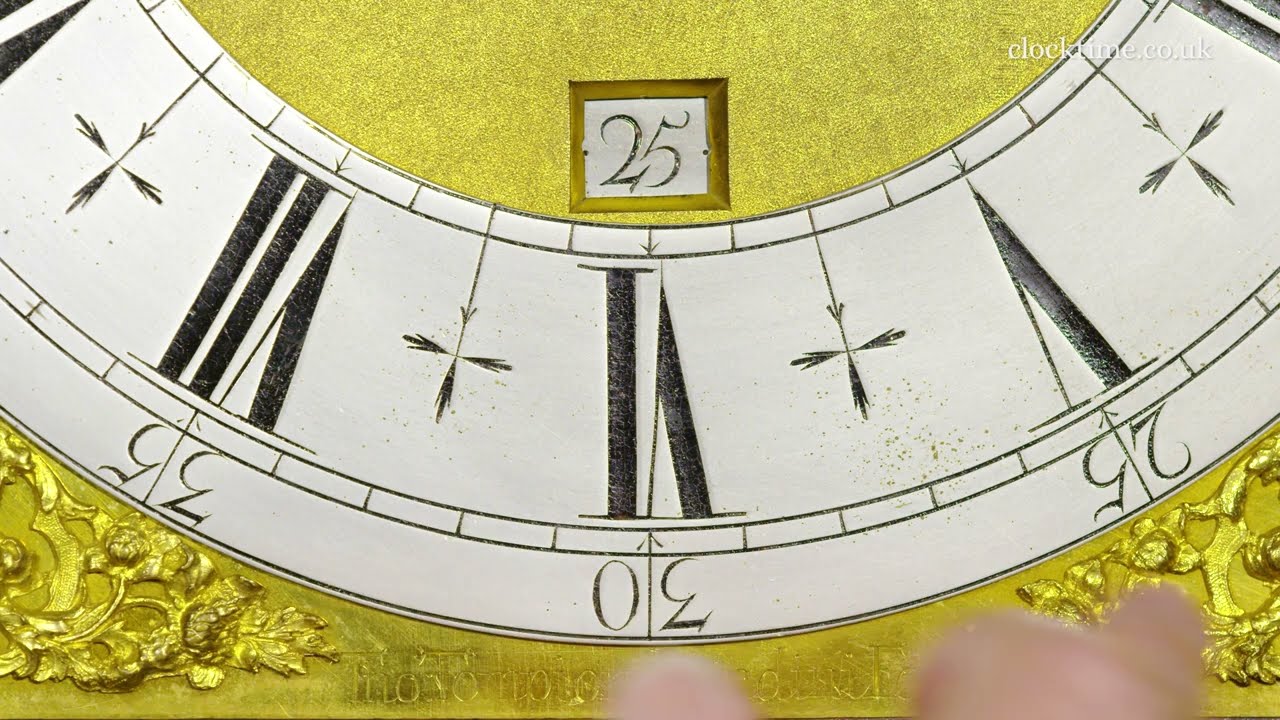
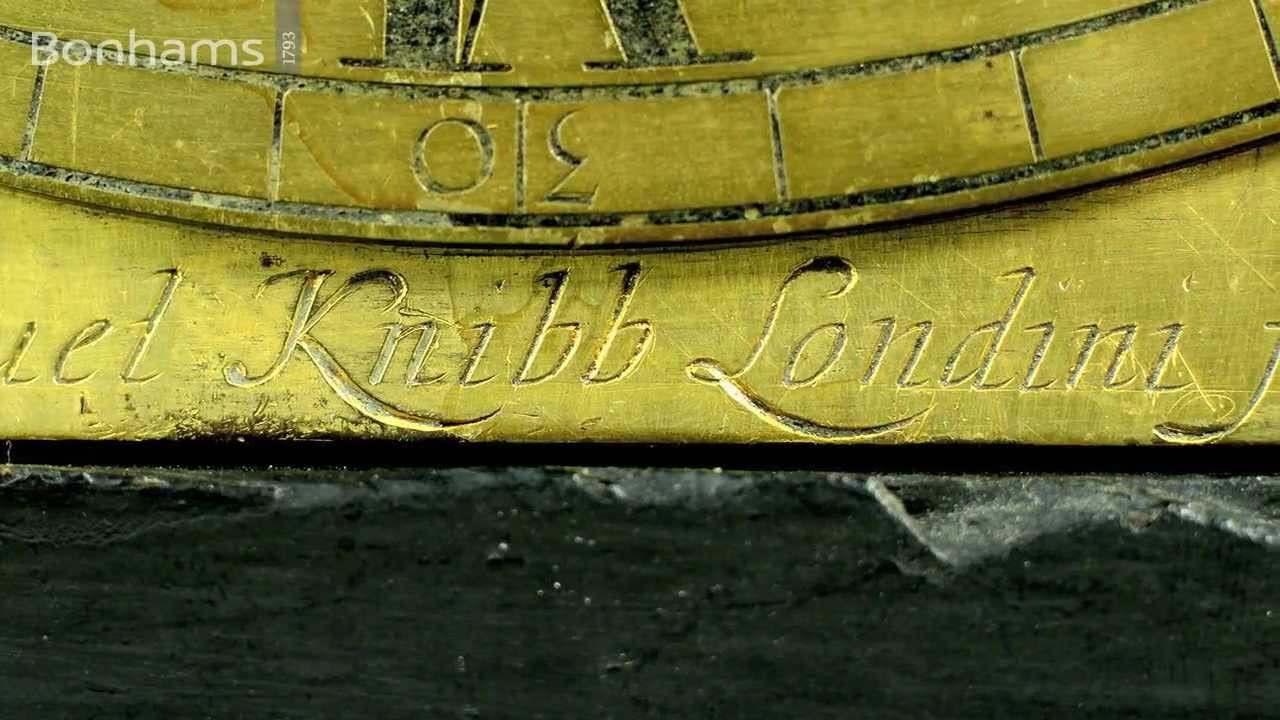
The 6¼ inch square dial is signed Joseph Knibb London beneath the silvered chapter ring with Roman and Arabic numerals, finely matted centre with well sculpted blued steel hands, winged cherub spandrels and latched dial feet.
MOVEMENT
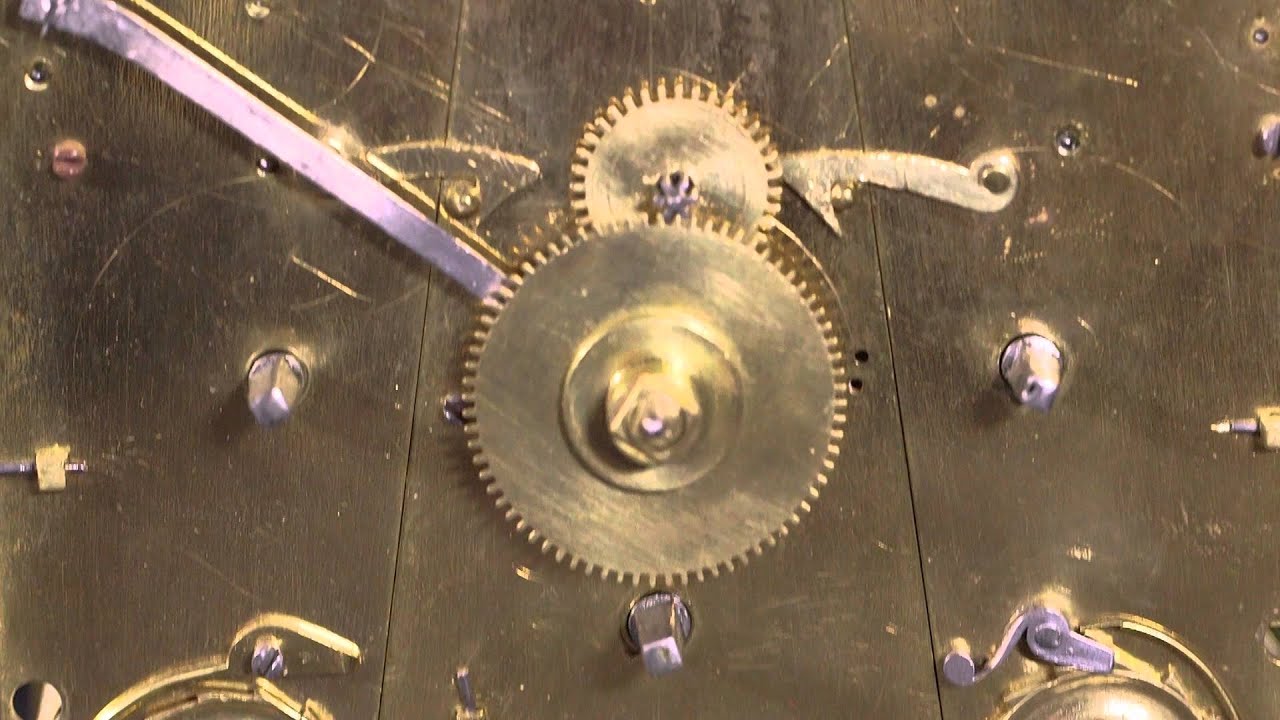
The movement has typically brass plates with rare triple-divided front plate secured in Knibb's usual fashion with long delicate latches for the ten ringed pillars. The going train has verge escapement and triple gut fusees and spring barrels; the strike trains flanking the going train operate on Knibb's double-six hour regimen employing two countwheels; the calibrated quarter wheel with lifting pins and later steel cross-arm lever over to the later hour countwheel: The hours are struck on the larger bell, the quarters on the smaller bell. The back plate is exquisitely engraved with tulip heads amongst scrolling foliage and it is signed Joseph Knibb Londini Fecit in a downward curve. The movement is secured by means of turnscrews at the back of the dial and now also with two later steel bolts into bottom pillars.
Provenance:
Wetherfield Collection, No. 112 Christie’s, London, 5th July 2002, lot 88 – sold for £108,000
David Arthur Wetherfield (1845-1928) was a successful coal merchant who assembled one of the greatest collections of English clocks ever formed. Upon his death his house in Blackheath contained some 232 of the finest English clocks. Every room in the large house (except the bedroom) contained clocks - there were thirteen longcases in the dining room alone. On Wetherfield's death the collection was placed in the hands of the auctioneer W.E. Hurcomb. In the first instance it was to be offered as a whole but if the reserve was not reached it was then to be presented in single lots. Dates for the auction were set but in the event the entire collection was purchased for £30,000 by a syndicate comprising Francis Mallett, Percy Webster and an American clock dealer called Arthur Vernay.
Ronald Lee (The Knibb Family Clockmakers, Manor House Press, 1964, p.112) writes of Joseph Knibb;
"Of all makers Joseph was by far the most daring when it came to methods of striking the hours and subdivisions of the hour"
Double-six hour striking was a method imported from the Continent. The first six hours are struck as normal. The clock then reverts to one blow at seven o'clock, through to six blows at twelve o'clock. This economical method uses only forty-two blows on the bell in a twelve hour period, as opposed to seventy-eight on a normal clock.
Доступные форматы для скачивания:
Скачать видео mp4
-
Информация по загрузке: