The Last Samurai of Shotokan - Keigo Abe
Автор: Sports ForEver
Загружено: 2026-01-24
Просмотров: 248
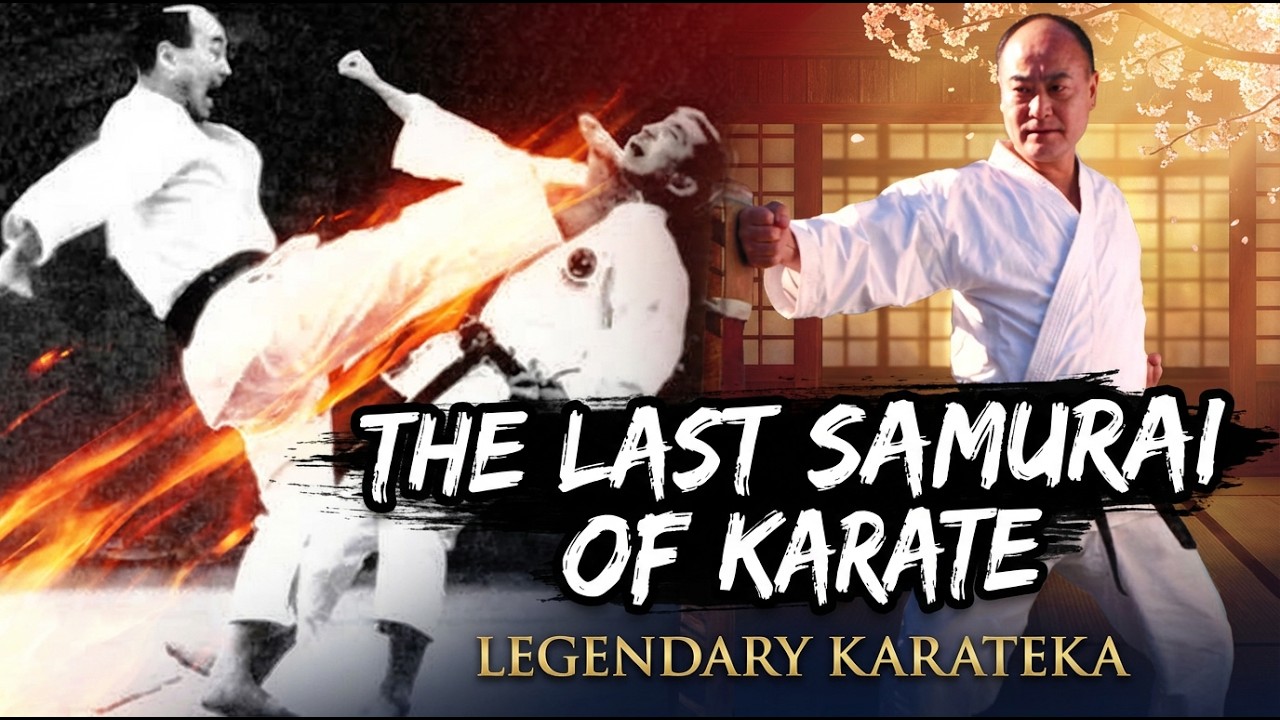
Keigo Abe was respected inside Shotokan not only as a high-ranking leader, but as a genuinely elite technician—one of those instructors whose movement looked “correct” even before you understood why. People often called him a master of basics, and that wasn’t a polite compliment. In Abe’s world, kihon was the highest level of karate, because it was the place where weak posture, poor distance, and false power get exposed. His skill was the ability to make fundamental techniques—stances, stepping, hip action, timing—so refined that they held up under pressure, which is why he described what he did as “Real-Fight Karate.”
As a teacher, Abe was known for being calm, disciplined, and extremely precise. He didn’t rely on motivational speeches or dramatic dojo energy. Instead, he corrected details that most people overlook: how the foot grips the floor, how weight transfers during sliding steps, how the pelvis locks at the moment of impact, and how the shoulders stay relaxed so speed doesn’t disappear. Students often came away feeling that one small correction from Abe could change an entire kata or make a kumite technique suddenly “work.” That style of teaching demanded honesty—because it forced practitioners to admit where their technique was only imitation rather than something they truly owned.
His technical “signature” was strong Shotokan structure with practical intent. Abe insisted that stances were not poses but fighting positions, and that every move needed distance, angle, and purpose. In kata, he emphasized rhythm and timing, not as performance, but as a way to express real combative logic—when to enter, when to cut the line, when to settle the hips, and when to finish with clear kime. He was also strongly associated with Bassai Sho (he demonstrated it in Nakayama’s Best Karate series), and that mattered because being chosen to represent kata in that classic reference series signaled that his execution matched the JKA standard at the highest level.
In kumite, Abe’s skill showed in control and decisiveness. Coming from the JKA era where ippon shobu thinking was central, he trained students to end exchanges with one committed technique rather than collecting points with scattered movement. That didn’t mean reckless aggression—it meant correct distance, sharp entry, and finishing power. His reputation as a competitor—fighting deep overtime bouts against top names and placing at All Japan level—gave credibility to his insistence that kihon must connect directly to fighting. You could see it in how he moved: clean lines, no wasted motion, and techniques that looked simple but hit with real penetration.
Abe’s teaching philosophy also had a moral center. He repeated the idea that karate training is a mirror: it shows you your weaknesses, then gives you a method to correct them—physically and personally. That’s why he stressed trustworthiness and character alongside technique. When he founded the JSKA, part of his motivation was to protect that quality-control mindset: fewer politics, higher standards, and a direct line back to the Shotokan he learned under Nakayama. In that sense, Abe’s “skill” wasn’t only what he could do with his body; it was the ability to pass on a way of training that produced strong technique, clear thinking, and better human beings.
Доступные форматы для скачивания:
Скачать видео mp4
-
Информация по загрузке: