Slingwing V2 Review
Автор: MACkiteboarding
Загружено: 2020-05-05
Просмотров: 8106
This year you can expect different size wings.
3.2 / 4.0 / 4.4 / 5.4 / 6.4
Sizing / Design
I’m using the 5.4 and at 200 lbs that covers me from 15 knots to roughly 30 knots depending on my foil choice. If I had to choose one size, this would be it. Something interesting about the sizing is the wingspan does not change much per size. The aspect ratio changes accordingly to accommodate each size. Therefore, the larger the wing, the lower the aspect ratio and the smaller wing, the higher the aspect ratio. This helps the larger wings with low end grunt and handling while allowing the smaller wings a larger wind range and upwind angles.
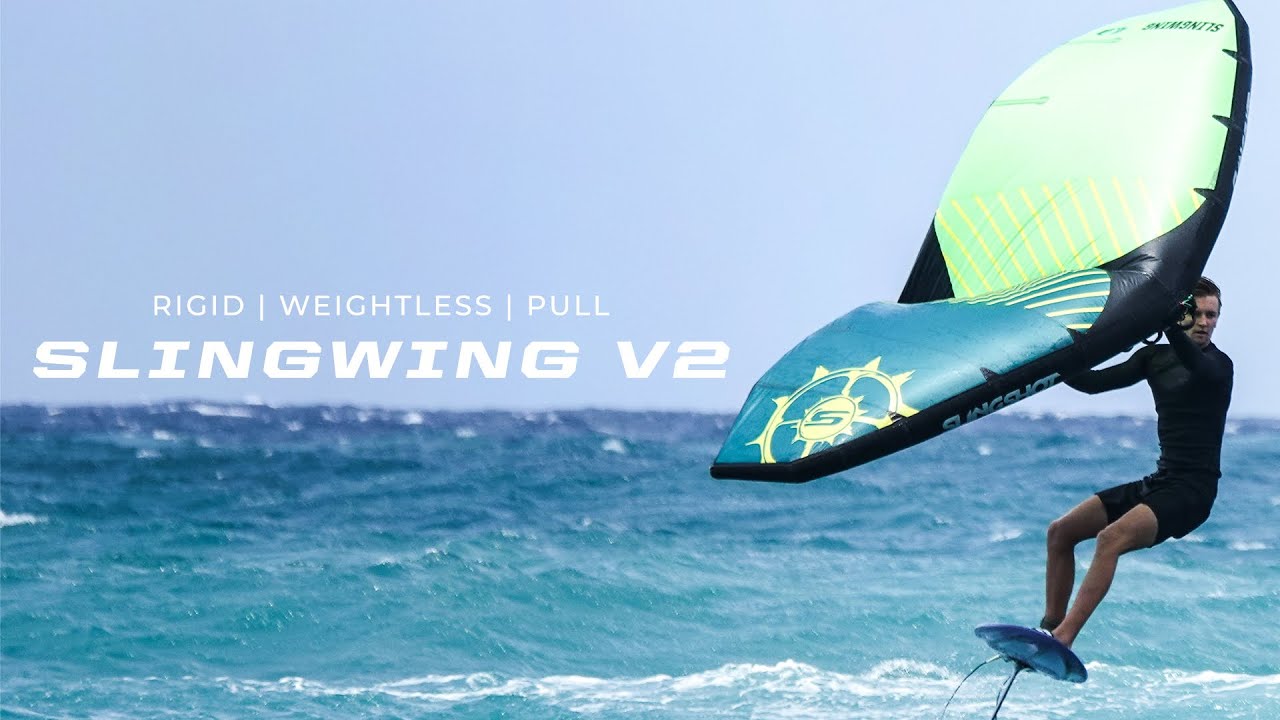
The shape is not only manageable but well thought out. It's easy to flip over, it catches lighter winds easier, and the square wingtips recover from wingtip drags. A detail I’ve noticed is how long the boom is. The boom extends longer than the wing tips, keeping the wing afloat without flooding the canopy. It also allows for optimal airflow along that boom. The panel between the canopy and the boom maintains a deeper airfoil section that helps generate the most power per meter of canopy.
Durability
The wings come with 4x4 canopy ripstop, meaning you can expect this to be the most durable canopy currently on the market. If you are pushing it on the waves or in general, these can really take the beating required for that rider looking to progress. Somehow, they still manage to make this one of the lightest wings in our offering.
This wing does NOT include a window. Most riders have found that the window adds weight and a point of vulnerability to the canopy, so it can be scrapped as a feature. When riding, you look in front of the wing. On the wave, you look under it, so it is really not needed. Even if you did, the windows are generally full of droplets or condensation that makes them more of an opaque white than translucent window anyway.
The corners also come with some heavy duty yet lightweight bumpers to reinforce any wear you might encounter with dragging on the beach. If you happen to hit a stick or a shell or a rock, this is going to protect your tips. It is also helpful when riding on land with a landboard or skateboard.
The trailing edge includes short sewn-in battens. They are made from a durable, flexible plastic rather than fiberglass or carbon. These reduce flutter and help maintain the ideal canopy shape maximizing power and top speed. It will also reduce the noise while you are riding. Thanks to their flexibility and small size you won’t have to worry about them while packing, traveling, or getting tumbled in waves.
Handles
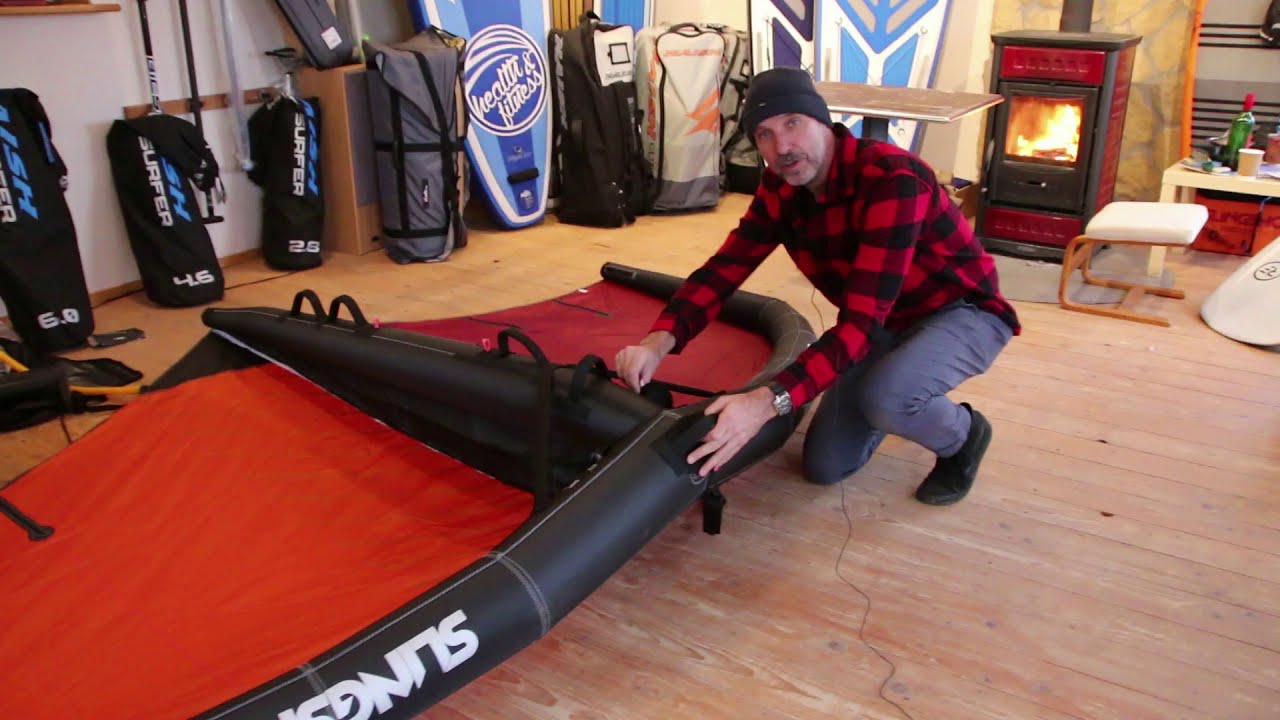
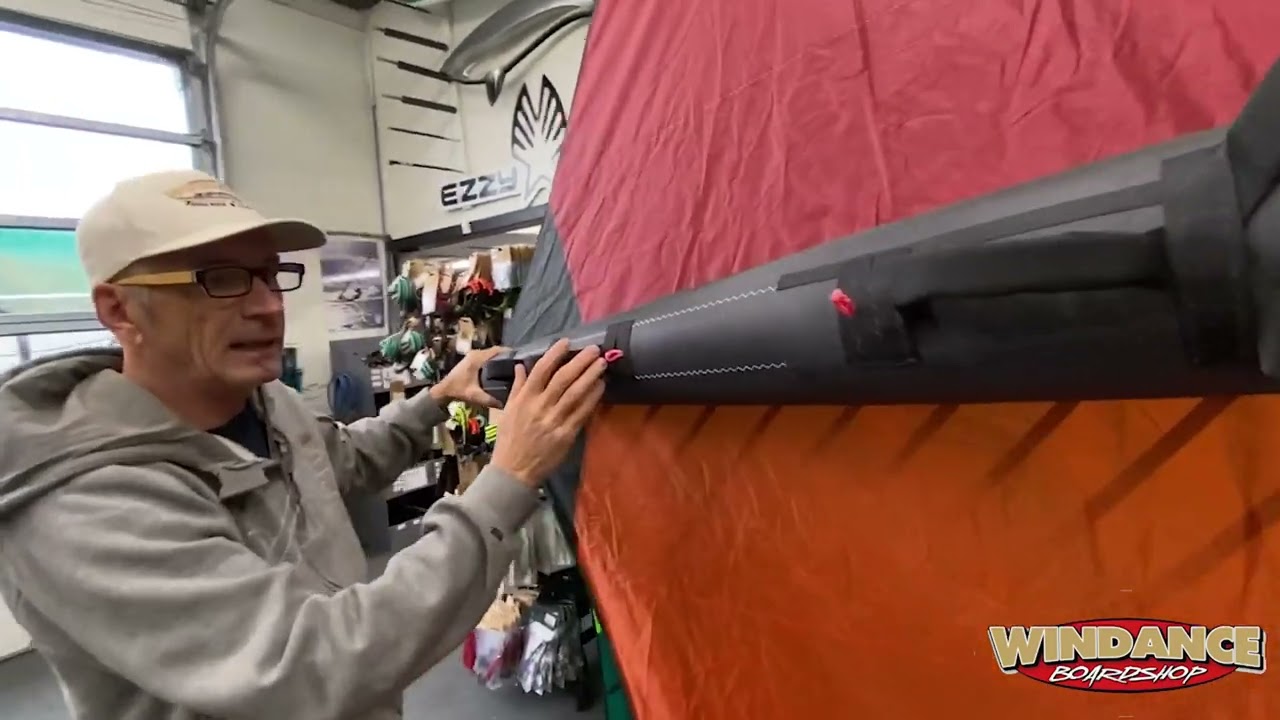
The handles are my favorite part of Slingshot’s design. They are all rigid enough for control but padded nicely for long sessions. They have a Y strap connecting the boom to the leading edge. This functions as a cross brace between the boom and the leading edge leading to provide a stiffer connection that prevents warping and twisting. It also makes for a great hand hold in gusty winds. The Y strap will reduce the roll or twisting you may encounter without one and reduces wingtip drags. If you are holding a standard handle, oftentimes you won't have the leverate to hold the wing steady in an uneven gust. When it comes to transitions, it's a lot easier switching Y straps rather than juggling a single strap with two hands. It might seem trivial but details like this make a big difference on the water. This is especially true with gloves on. It’s intuitive, you know where they are without looking and it will improve your session and learning curve.
The leading edge handle is used for luffing the sail and has a nylon patch just underneath. This is a nice detail that will protect your knuckles from getting rubbed raw on the dakron during those long wave rides. While luffing the Slingwing V2 it remains stable with just enough wind in the canopy to keep it flying consistently. You can tell that this was an important objective for the Slingshot design team on this wing surfer because you can really forget about the wing and ride the wave with your full attention.
Just below that is a secondary handle that works great for transitioning. It’s also nice when surfing downwind or light winds where you might need a little more power in the canopy to prevent it from falling in front of you. I’ve found it to be useful riding downwind or for transitions. It’s also easier on your arms having options. Especially in high power conditions, it’s nice to pair this handle with one of the back handles to change the angle of my wrist to prevent fatigue from holding the same position on those longer or more powered sessions.

Доступные форматы для скачивания:
Скачать видео mp4
-
Информация по загрузке:





![Мы получили 2,5 млн рублей чтобы сделать экзоскелет, и это наконец закончилось [2/2]](https://imager.clipsaver.ru/X3uZq2joiW8/max.jpg)