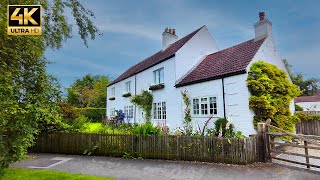
A Glimpse of Hornsea
Автор: Above the Ordinary - Nigel G
Загружено: 2025-09-20
Просмотров: 157
HORNSEA POTTERY AND HORNSEA FREEPORT
The fall in the number of visitors to the seaside was compensated for, to some extent, by the growth of Hornsea Pottery. Started as a cottage industry in 1949, the Hornsea Pottery Company was founded in 1954 and rapidly established a reputation for innovative design and creative manufacturing methods. Hornsea Pottery products were exported to more than 50 countries, and the town, by association, became known worldwide.
The company diversified by introducing guided factory tours, a tearoom and opportunities to buy ‘seconds’. More visitor attractions were introduced and Hornsea Pottery eventually became one of the most popular tourist destinations in Yorkshire, although with consequent strain being placed upon an antiquated local road system.
Hornsea Pottery expanded further by opening a factory and leisure attractions in Lancaster in 1976, although this was not as successful as Hornsea, and was closed down in 1987.
In 1992 Hornsea Pottery Freeport was established at the pottery complex and two years later the business was acquired by Freeport Leisure which carried out an expansion scheme to create a shopping village that catered for the increasingly popular pastime of leisure shopping.
By this time the Pottery and the Freeport had gone their separate ways and, in 1990’s the Pottery found it increasingly difficult to survive, particularly because of cheaper imported products from foreign manufacturers, and the factory ceased production in 2000.
HORNSEA MERE
Hornsea Mere is the largest natural lake in Yorkshire. The water is shallow and the lake and its surroundings support a wide variety of wildlife and plants. During the Middle Ages there were several disputes between St. Mary’s Abbey, York and Meaux Abbey, near Beverley over the right to take fish from the Mere. At one juncture the monks resorted to trial by combat, although they did not take part themselves, but hired champions to represent them. When the monasteries were dissolved the Mere was seized by the Crown. In 1595 it was bought by Marmaduke Constable of Wassand, and has remained part of the Wassand estate ever since. For centuries the Mere was the private preserve of its owners, although, in the early 19th century, people were allowed to fish, so long as they made a donation to the poor.
In 1885 the Mere was opened up to the public by the short-lived Hornsea Mere and Hotels Company. Rowing boats could be hired and fishing permits could be purchased. In addition, for a fee, sailing boats could use the Mere and could also be stored on the bank. These activities have continued up to the present day. During the First World War the Mere was used by the Royal Naval Air Service as a base for float planes that patrolled over the sea.
THE LATE 20th CENTURY
As the result of private enterprise, the North Holderness Museum of Village Life opened in 1978 in a former farmhouse in Newbegin. Shortly afterwards it became a charitable trust, and further expansion has taken place so that the premises now include all of the former farmyard. In 1981 Hornsea became twinned with La Grande-Motte in the South of France as a consequence of the links forged in 1944, when Free French soldiers were stationed in the Hornsea area.
Hornsea Leisure Centre opened in 1995, and includes a swimming pool which was provided more than 70 years after the idea was first proposed.

Доступные форматы для скачивания:
Скачать видео mp4
-
Информация по загрузке:


![Hull and Hornsea Disused Railway Exploration [] Pt 1 [] Hornsea Town to Wassand [] Original Stories](https://ricktube.ru/thumbnail/CMLMqTaSdfs/mqdefault.jpg)