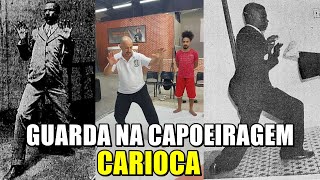
Capoeira carioca was a street fighting version of capoeira that existed in Rio de Janeiro during19th
Автор: GetFitWithTony
Загружено: 2025-05-19
Просмотров: 387
Capoeira (Portuguese pronunciation: [kapuˈe(j)ɾɐ]) is an Afro-Brazilian martial art and game that includes elements of dance, acrobatics, music and spirituality.
Capoeira
Capoeira or the Dance of War by Johann Moritz Rugendas, 1825, published in 1835
Also known as
Jogo de angola
Jogo de capoeira
Capoeiragem
Focus
Kicks, evasions, takedowns, handstands, acrobatics
Hardness
Full-contact
Date of formation
Unknown, first mention in 1789
Famous practitioners
See notable practitioners
Parenthood
Engolo
Ancestor arts
Engolo, batuque, possibly moraingy[1] and savate[2]
Related arts
Danmyé
knocking and kicking
Breakdancing[3]
Meaning
Forest clearing[4]
It likely originated from enslaved Mbundu people, of the Kingdom of Ndongo, in present-day Angola. The Mbundu of Ndongo had a formal military in which soldiers were professionally trained for combat. When Mbundu people were captured and sold into the Atlantic Slave Trade, they would have brought these fighting abilities with them to Brazil, where it developed into Capoeira.
It is known for its acrobatic and complex manoeuvres, often involving hands on the ground and inverted kicks. It emphasizes flowing movements rather than fixed stances; the ginga, a rocking step, is usually the focal point of the technique. Though often said to be a martial art disguised as a dance,[5] capoeira served not only as a form of self defense, but also as a way to maintain spirituality and culture.[6]
Capoeira has been practiced among Black Brazilians for centuries. The date of its creation is unknown, but it was first mentioned in a judicial document under the name Capoeiragem in 1789, as "the gravest of crimes".[7] In the 19th century, a street fighting style called capoeira carioca was developed. It was repeatedly outlawed and its performers persecuted,[7] and it was declared totally illegal and banned in 1890.[8] In the early 1930s, Mestre Bimba reformed traditional capoeira and developed the capoeira regional style.[9] The government came to see capoeira as a socially acceptable sport. In 1941, Mestre Pastinha later founded his school where he cultivated the traditional capoeira Angola, distinguishing it from reformed capoeira and the "national sport" approach.[10]
In the late 1970s, trailblazers such as Mestre Acordeon started bringing capoeira to the US and Europe, helping the art become internationally recognized and practiced. On 26 November 2014, capoeira was granted a special protected status as intangible cultural heritage by UNESCO.[11]
Martial arts from the African diaspora similar to capoeira include knocking and kicking from the Sea Islands, and ladya from Martinique, both of which likely originate from Engolo
Only Mestre Braulio conducts the class today. You can follow, the class is in group
Location
Academia Capoeira Cordão de Ouro Malaysia
19-3, Jalan 14/22 Petaling Jaya
Monday, Wednesday, Thursday: 8-9.30pm
Tuesday: 4-5pm (ladies only)
Saturday: 3.15-4pm, 4-5pm, 5-6pm (kids classes)
One Heart Studio
Glomac, Cyberjaya
Friday: 7.15-8.30pm (adults)
Friday: 5.30-6.30pm (kids)
Panda Freestyle Gym
Ayer Keroh, Melaka
Friday: 8.30-10pm
#capoeira #martialarts

Доступные форматы для скачивания:
Скачать видео mp4
-
Информация по загрузке: