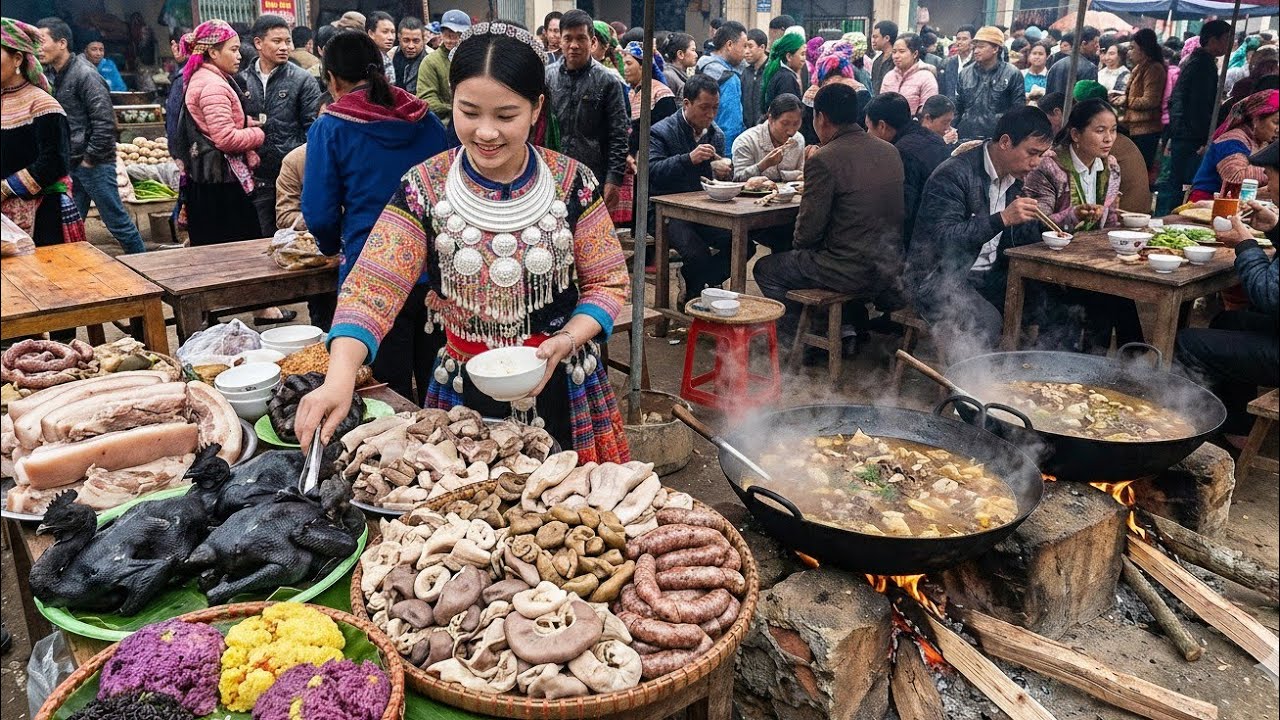
Jinuoshan Township Market, Xishuangbanna, Yunnan, China
Автор: Chaos Travel Log 超思旅行日志
Загружено: 2024-04-01
Просмотров: 6349
The Jinuoshan Township Market
Jinghong City, Xishuangbanna, Yunnan, China
2023 July
The Jinuoshan Street Market is held every two weeks. You can buy a variety of Jinuo specialty clothes, fabrics and handmade products. There will also be different mountain goods in different seasons.
Jinuo Mountain Jinuo Ethnic Township is the main settlement area of the Jinuo ethnic group, the last recognized ethnic group in China. It is located in the northeast of Jinghong City, Xishuangbanna Prefecture, 24 kilometers away from the urban area. It has a population of more than 10,000 people, of which the Jinuo ethnic group accounts for 97%.
Jinuo Mountain Jinuo Township is located in a mountainous area with a northern tropical and now subtropical climate. It is one of the six major Pu'er tea mountains in Yunnan Province. It has superior climatic conditions, rich biological resources, and strong ethnic customs. There are many kinds of rare animals and plants growing in the territory, and it is suitable for planting a variety of tropical economic crops.
The Jinuo people were originally called the Aulacese people. "Ji" means "uncle" and "nuo" means "after". Jinuo means a nation whose descendants respect their uncles. The Jinuo people admire the big drum and call themselves the big drum people. This is a national tradition. The festival is "Temaoke" Festival (February 6-8 every year). The traditional ethnic songs and dances mainly include: big drum dance, bamboo pole dance, and sowing dance. The traditional national skills are mainly textile, embroidery and weaving.
The Jinuo people have their own language. The Jinuo language belongs to the Tibeto-Burman language group of the Sino-Tibetan language family. They do not have their own written language and used to rely on wood carvings to record events. There is no written record about the origin of the Jinuo people. According to legend, the Jinuo people moved from Pu'er, Mojiang, and even further north. Their ancestors were part of Zhuge Kongming's southern expedition force during the Three Kingdoms period. They stayed here because they got separated from the large army.
The Jinuo people believe in primitive religion, believe that all things are animistic, worship nature, worship ancestors, and worship Zhuge Kongming. The Jinuo people generally like to live on gentle hillsides, and their houses are mostly stilt-style buildings. There are two types of ganlan-style bamboo buildings: one is a bamboo building with a fire pit, in which all members of the father's family live; the other is a rectangular bamboo building, in which several generations of the same paternal family live together. People live in the Ganlan Bamboo House upstairs and livestock are kept downstairs. Jinuo Mountain, where the Jinuo people live, is a tropical area and is rich in various specialties. In addition to rice, corn and other staple foods, various delicacies and game in the Jinuo Mountains also provide the Jinuo people with rich nutritious food.
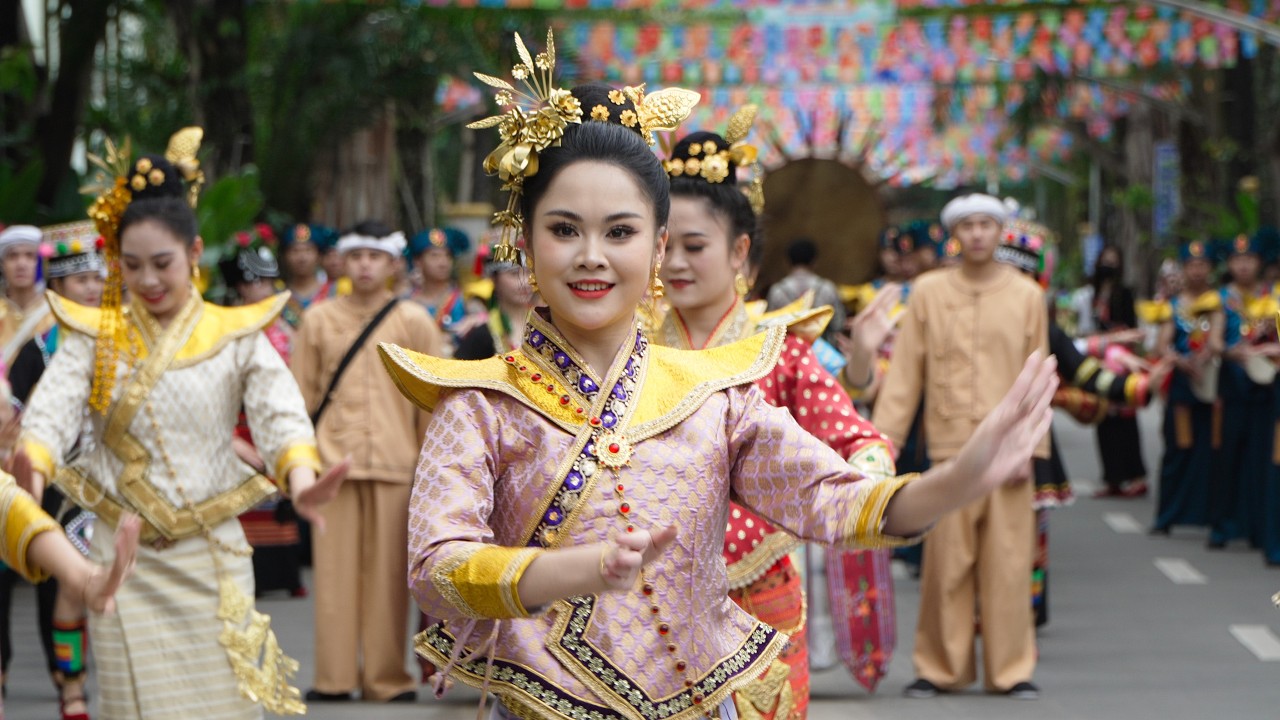
Most of the Jinuo women can spin and weave cloth and make the famous "machete cloth". Men usually wear collarless and buttonless double-breasted black and white checkered tops, with a square piece of red cloth sewn in the middle of the back and a beautiful sunflower embroidered on it, and white or blue wide trousers or shorts. The sunflower on men's clothing comes from a touching love story of the Jinuo people. The women wear a collarless double-breasted varicolored coat, and a black open-close skirt with red edges. Some also wear long skirts. Kenuo women are accustomed to wearing leggings and buns on their heads. They also wear thick white linen on their heads and capes with shoulder-length wings behind them, making them appear solemn and elegant as well as lively and pretty.

Доступные форматы для скачивания:
Скачать видео mp4
-
Информация по загрузке: