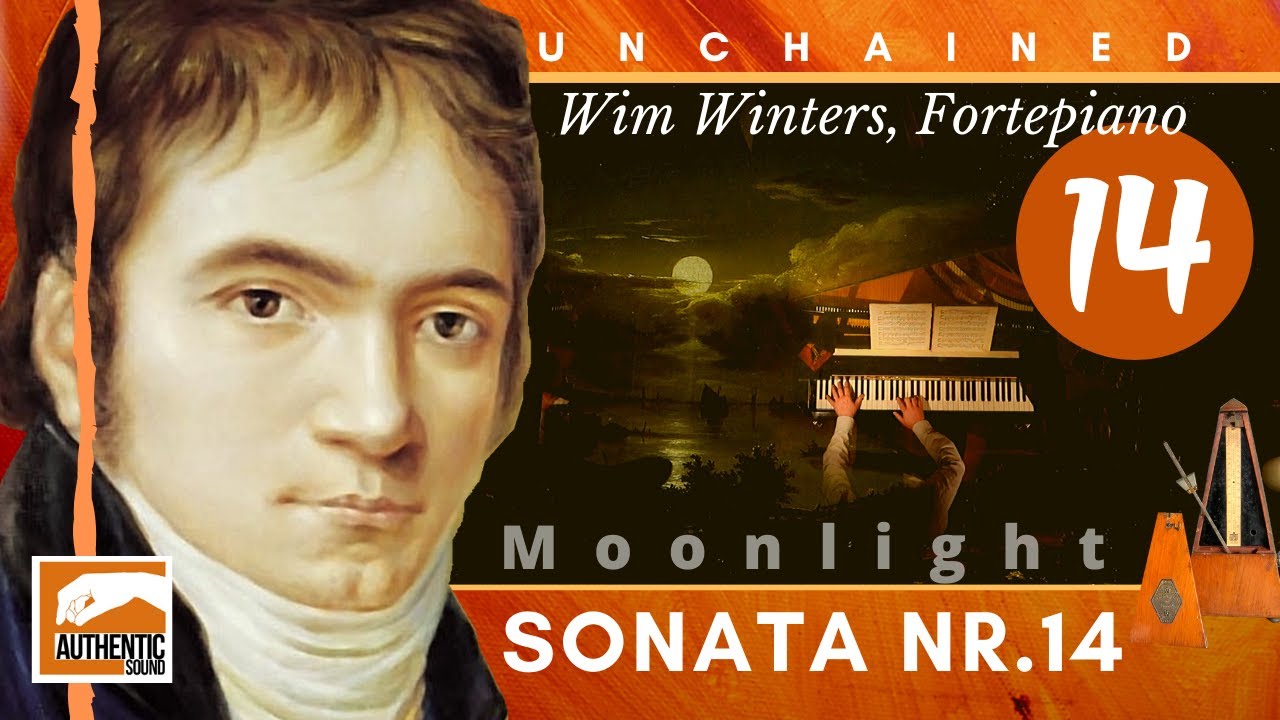
Beethoven Sonata Nr.14 "Moonlight" - Opus 27 Nr2 - Historical Tempo Reconstruction- Wim Winters
Автор: AuthenticSound
Загружено: 2020-03-23
Просмотров: 70156
Beethoven published his so-called Moonlight (Mondschein) Sonata Nr.14 (Opus 27/2) as a Sonata quasi una fantasia. It is not so hard to imagine this sonata might very well represent the level and skill Beethoven had when improvising. Certainly the first and last movement are built (read further below)
0:00 Adagio Sostenuto (Czerny/Simrock Ed. MM Q=60)
9:47 Allegretto (Czerny/Simrock Ed. MM Dotted Half = 80)
13:33 Presto Agitato (Czerny/Simrock Ed. MM Half = 92
🙋We need your support to continue in full (!) speed! ▶ / authenticsound
upon clear harmonical structures that for a trained composer/improviser form a perfectly manageable base to built an entire structure on. Apparently it was Ludwig Rellstab (1799-1860), a German poet who wrote about this sonata already in 1832 as the 'Mondschein' (Moonlight' sonata). Now, while one can find some writings and lectures about why we should stop calling this sonata the 'Moonlight' Sonata, Rellstab is close enough to me as an 'authentic' source to Beethoven to keep enjoying this description. Why not? Music of that time, whether we like it or not in our post modernistic world was connected to images and real feelings and if you have another image that comes to mind when listening, that's fine too.
It wouldn't even surprise me that the reason musicians apparently as big of a name and talent as Andras Schiff feel the need to publicly keep music lovers from using that name Rellstab gave almost 2 centuries ago, simply is because the there is not much left of that image when you hear them play these works the way they do. I am not saying musicians of the caliber of Schiff are not of the highest possible level imaginable, because they are, the only thing I'm saying is that the way he and so many others -including the Early music musicians - play Beethoven, is much more a reflection of the late 19th century than the early 19th century. There is too much steam and electricity power in their recordings and too little silence from a horse-driven society.
Main reason of course being the fact that so many disregard completely (though they might claim differently) the most important performance indications we have from that time, which are in order of relevance:
1. Tempo indications (MM)
2. Pedal indications
3. Fingerings
How often we hear the request that the score must be followed without any exception and yet, when it comes to the MMs, musicians and musicologists alike are quick to say that tempi, of course - that's an important addition- are personal. So strike that part of the score as not important. I mean, really?
Not to mention pedal indications that are - again: of course- dependent of the instrument and room (as if we talk about flexibility between a study room and Carnegy hall), but instead of at least trying to understand the meaning behind it, what we really do with this self-invented premise, is giving us permission to do whatever we want and still claiming to follow the score.
Not saying this is a simple issue to solve, but let's at least not pretend to take the score serious when also this major element simply is... ignored.
And last but not least : fingering. O yes, that also is - again: of course- personal. As if you would be allowed in Chopin's or Czerny's class to just bring your own fingering system... as if musicians of today still have one, since most of us simply don't.
Fingering is even more problematic than use of pedal, I'm the first to acknowledge that. Though as influential almost as use of pedal and tempo (yes). Difficult matter, yes, but some principles are not hard to bring forward: they didn't use the finger substitution often (even not in "legato' octave passages) and in combination with the sparingly use of the pedal, their understanding of legato must have been much different.
Beethoven didn't leave us almost any of his fingerings, but his student Czerny did, as in the Simrock score I'm playing from (not on Imslp, not on Google, not on Archive, can you imagine this...you'll find my scans through my Patreon site if you're interested along with other early prints I have here). Czerny gave us in this score all three elements: Metronome Marks, Fingerings and Pedal indications (very close to Beethoven's original editions).
Enjoy!
Wim
P.S. 96/24 versions of these recordings available through Patreon ( / authenticsound ) and Bandcamp (https://authenticsound.bandcamp.com/)
--
📩One weekly mail in your mailbox? 👉http://bit.ly/as-mailinglist
--
📱 Website: ▶http://www.authenticsound.org
Доступные форматы для скачивания:
Скачать видео mp4
-
Информация по загрузке: