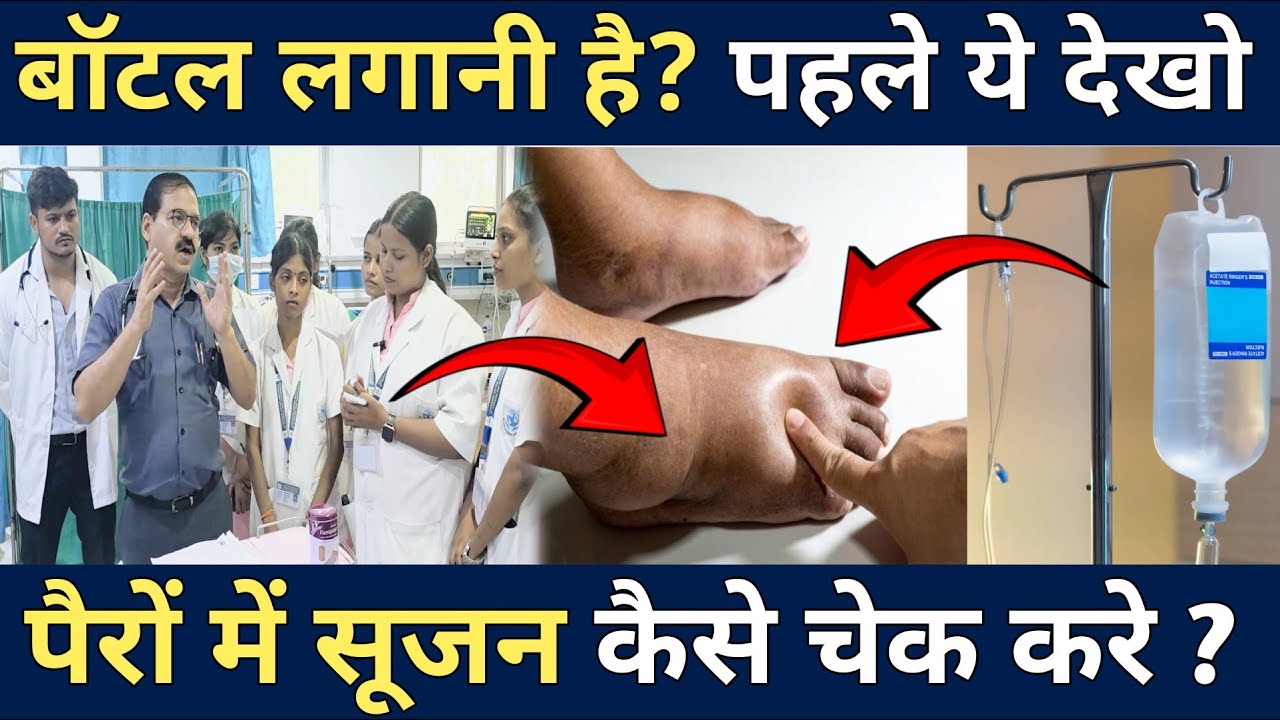
IV Fluid (बॉटल) लगाने से पहले ये clinical sign ज़रूर चेक करे, नजरअंदाज किया तो होगा बड़ा नुकसान |
Автор: Dr. M.S. MedGuide
Загружено: 2026-01-06
Просмотров: 17127
Today, Dr. Abhishek Shukla discussed a critical bedside concept — the relationship between fluid therapy, edema, and volume overload, particularly in geriatric and critically ill patients.
He emphasized that before prescribing intravenous fluids, clinicians must always assess for existing edema and signs of fluid overload.
Low blood pressure, tachycardia, and diarrhea often prompt fluid resuscitation, but the presence of edema, raised JVP, facial puffiness, or recent weight gain demands careful reassessment.
Patients with left ventricular failure, reduced ejection fraction, or poor cardiac reserve are especially vulnerable to fluid overload. Bedside IVC assessment can aid in evaluating volume status.
Incorrect fluid management can worsen outcomes. A thorough clinical examination and consideration of differentials such as sepsis, shock, metabolic disturbances, acidosis, and alkalosis are essential for safe patient care.
आज Dr. Abhishek Shukla ने समझाया कि fluid correction, edema और volume overload का आपस में क्या संबंध है।
उन्होंने बताया कि IV fluid देने से पहले यह देखना बहुत जरूरी है कि मरीज में पहले से सूजन तो नहीं है।
Low BP, तेज pulse और loose motion देखकर तुरंत fluid देना सही नहीं होता, खासकर जब चेहरे या पैरों में सूजन, गर्दन की नसें उभरी हों या वजन बढ़ रहा हो।
Heart failure या low ejection fraction वाले मरीजों में ज्यादा fluid देना हालत बिगाड़ सकता है। IVC assessment से volume status का अंदाज़ा लगाया जा सकता है।
गलत fluid management से गंभीर complications हो सकती हैं, इसलिए इलाज में sepsis, shock, acidosis और alkalosis को भी ध्यान में रखना चाहिए।
Your Query :-
fluid management
edema assessment
volume overload
IV fluids complications
low blood pressure management
heart failure fluid management
IVC assessment
geriatric patient care
critical care medicine
medical education
nursing education
MBBS clinical concepts
Dr Abhishek Shukla
Disclaimer:
This video is for educational purposes only and does not replace professional medical advice. Clinical decisions should always be made after proper patient evaluation and according to standard treatment guidelines. Do not self-medicate or alter treatment without consulting a qualified healthcare professional.
#DrAbhishekShukla #FluidManagement #Edema #VolumeOverload
#CriticalCare #GeriatricCare #MedicalEducation
#NursingStudents #MBBS #IVFluids #PatientSafety
#DrMSMedGuid
Доступные форматы для скачивания:
Скачать видео mp4
-
Информация по загрузке: