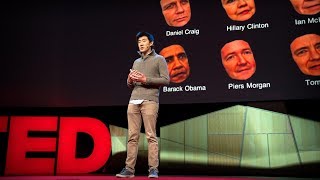
Deepfakes Explained: How they're made, how to spot them & are they dangerous? | Explained
Автор: Behind the News
Загружено: 2019-10-17
Просмотров: 38929
Deepfakes are the next generation of video and audio manipulation. Often they involve swapping someone’s face onto someone else’s. Sometimes they’re made to look accurate, others are just for laughs.
This kind of facial recognition technology has been around for a long time and has appeared in major movies like Star Wars to make actors look younger or bring them back to life - like Peter Cushing 22 years after their death.
Or Paul Walker in the Fast & the Furious Series…
Where his face was mapped onto his brother’s bodies.
But it’s not just major studios that can make convincing fakes…
Deepfake tech has advanced so much it’s accessible to pretty much anyone.
So, how does this amazing tech work?
Part of the reason why almost anyone can make them, is that Artificial Intelligence does a lot of the hard work.
When it comes to face swapping, you feed the A data, in this case a photo, or lots and lots of photos of your subject. The AI uses that info to map the face onto another one.
Deepfakes aren’t just face-swapping though. They can also things like manipulating someone’s mouth to make it seem like they’re saying something they never did.
There is a darker side to Deepfakes. They can also be used to harass people and spread misinformation by making it seem like people have done or said something they never did or never would.
In the age of Fake News this is a big problem and something lots of people are worried about right now
Because it could be used to mislead the public especially when it’s applied to someone in a position of power like a politician or a world leader.
One of the most well-known politician deepfakes…
Deepfakes have already been made of world leaders, like Mark Zuckerberg, Barack Obama, Vladmir Putin, Donald Trump, Angela Merkel, Greta Thunber & Former PM Matteo Renzo.
Some of these use impersonators, which can make it easier to spot fakes.
But that is changing thanks to new technology like Lyrebird.
It’s able to create copies or ‘imprints’ of peoples voices.
So what does the future hold for Deepfakes?
Now we’re seeing deepfakes made from just 1 photo, even a painting, like the Mona Lisa.
Chinese app Zao has been blowing up recently for the same reason. It gives people a chance to become someone famous, like Leonardo DiCaprio, with just one selfie.
Also, real time face mapping is pretty much everywhere now. In fact, you’ve probably already seen a version of it on popular phone apps, like Snapchat, Facebook, Instagram, MSQRD or MrrMrr.
Someone working on that tech right now, is Hao Li (CEO & Co-founder, Pinscreen / Associate Professor of Computer Science University of Southern California).
He actually worked on that Fast & Furious deepfake mentioned earlier. More recently, he’s been working on cutting edge tech with his own company.
Li reckons virtually undetectable deepfakes are just around the corner.
He says that not only is the video quality getting a lot better…
They’re also becoming a lot easier to make.
A recent study found the total number of deepfake vids on the internet had practically doubled in just 9 months between December 2018 and July 2019.
That study was spearheaded by this guy, Giorgio Patrini, and his cybersecurity company Deeptrace - which specialises in detecting deepfake videos.
There’s one thing that both Li & Patrini agree, while virtually undetectable deepfakes might not be here just yet, it doesn’t really matter because people are already being fooled now.
So, are there certain things people should look out for when trying to spot a fake?
Not exactly.
The problem is, telling people to look for changing skin tone, weird blurring or unnatural shadows might work right now, but those problems are eventually going to get fixed.
Patrini says we need to educate people on the subject and make think critically about what they’re seeing. Make sure to watch the video for a better understanding of the issue.
Report by Nicholas Maher
__
For the past 50 years, Behind the News has been helping to break down current issues and events for young people all around the world. The program is a high-energy, fun way for people to learn about the stories we see in the news, while providing background information that isn’t usually given by other news bulletins.
We have over 1000 stories on all sorts of topics - everything from politics & volcanoes, to online security & fortnite. If you're looking for help to understand something, you'll probably find it on BTN.
Make sure to like & subscribe our videos if you want to stay in the know!
http://www.abc.net.au/btn/
Follow us on Social Media:
Facebook: / abcbtn
Instagram: / behindthenews
Twitter: / behindthenews

Доступные форматы для скачивания:
Скачать видео mp4
-
Информация по загрузке: