Yikun Qi - Piano Sonata No. 2 (2024/2025)
Автор: Yikun Qi
Загружено: 2026-01-12
Просмотров: 67
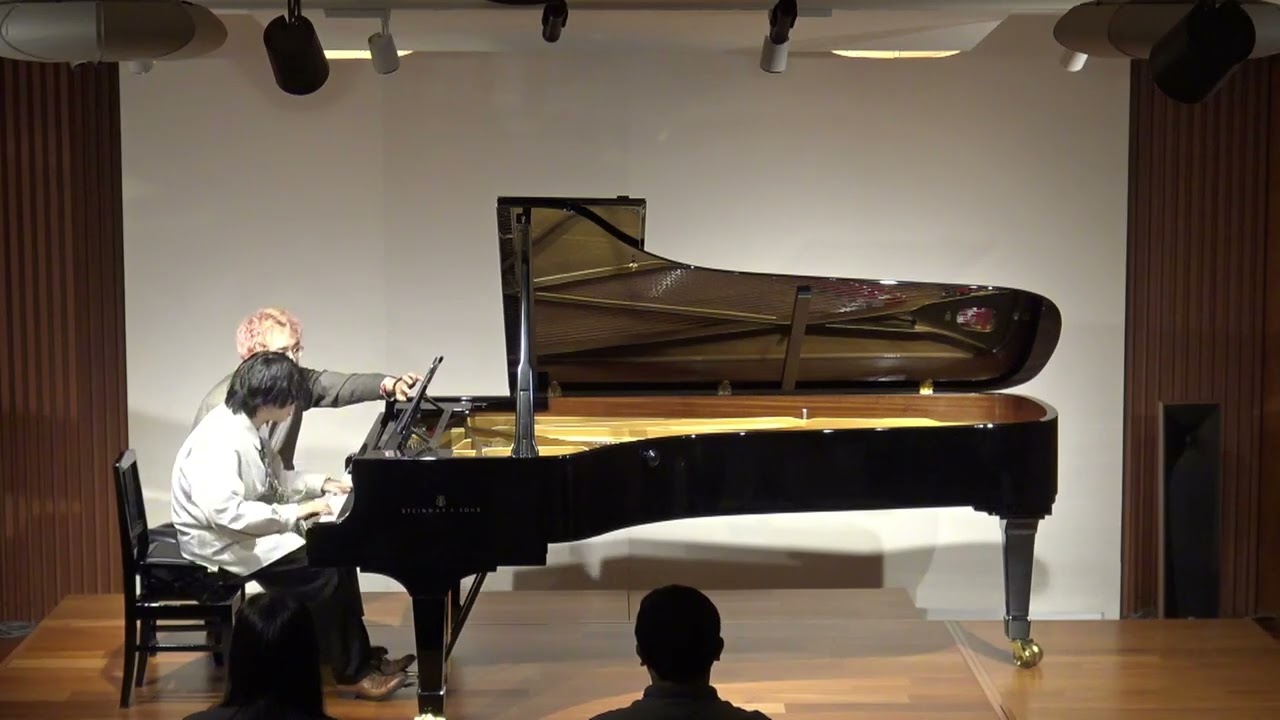
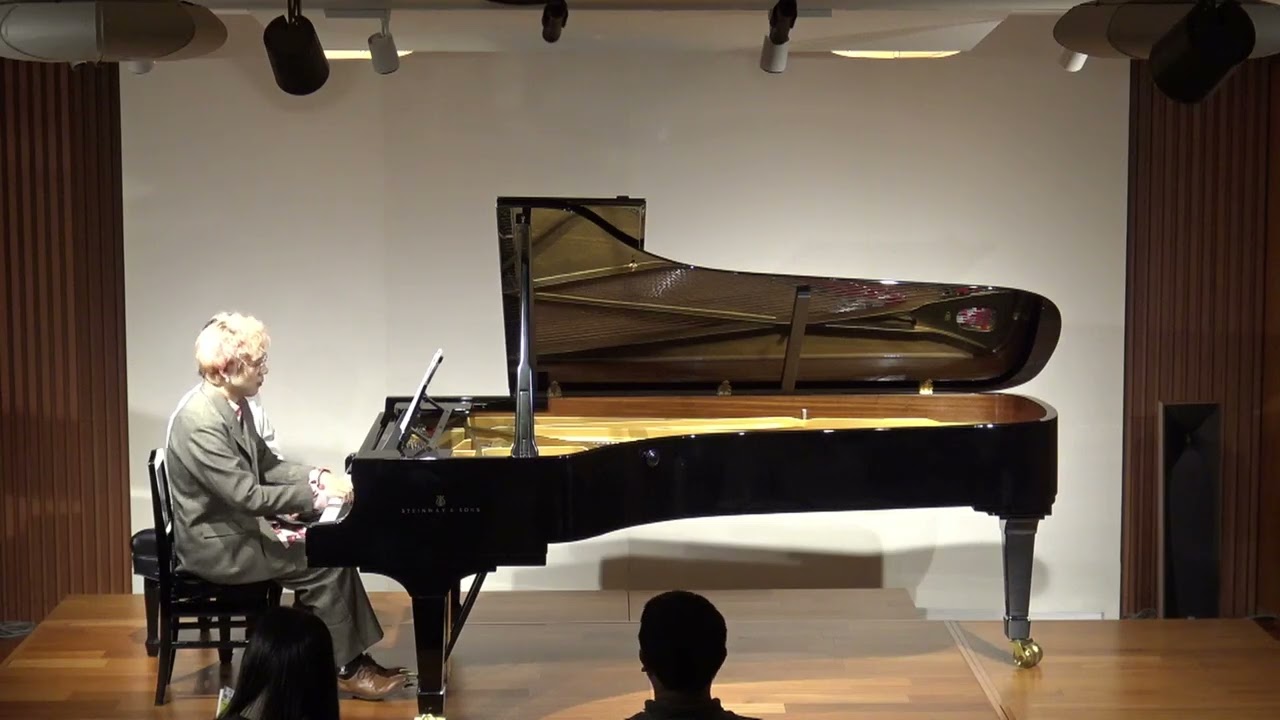
2025.12.26 紀尾井町サロンホール にゃにゃ経第一回演奏会
ピアノ:斉芸琨
Kioicho Salon Hall NyaNyaKyo Concert Vol. 1
Piano: Yikun Qi
私の「ピアノソナタ第1番」は、まだ自分でもその気持ちが何なのか分かっていなかった頃に構想し、気づけば恋愛の最中に書き上げていた。そして、彼女に献呈した作品である。2024年、私は失恋した。
そのすぐあと、佐藤伸輝からドラムセットとなにかの曲を依頼された。ピアノとドラムセット(オプション)のための「ピアノソナタ第2番」として構想していたが、やがてクラリネットの“crazy”な響きや、オタマトーンの「荒唐」(虚無的で、どこか可笑しくて悲しいような美しさ)な存在感も加えたくなり、「これはもはやピアノソナタではない」と思い至った。こうして生まれたのが、「Although I intended to write Piano Sonata No. 2」である。「ピアノソナタ第3番」を書いてから、1〜3を連続で演奏したくて、ピアノソロのために「ピアノソナタ第2番」を編曲した。
全体的には、提示部・3つの展開部・コーダからなる。
提示部は、譜面上で複雑な連符が並ぶが、これは数値的に計算したものではなく、音の長さや速さを感覚的に捉え、それを一定のテンポに当てはめて譜面に起こすと、結果的に非常に複雑な連符となった。バッハの「記譜された装飾音」のように、私はそれを「記譜された即興」と呼んだ。
第一展開部は、第一主題の変形から始まり、私がこれまで幾度も用いてきた「付点8分音符=72の3/8拍子」の中で展開する。「ピアノソナタ第1番」の素材を引用し、同音連打の動機を発展させる。それからは、花束を模した図形楽譜となる。
第二展開部はポップスのコード進行(4536251)とそのさまざまな変形による。非常に美しい部分であり、カプースチン作品によく見られる「変わらない拍子記号の中での変拍子」を取り入れた。
第三展開部では、ピアノパートによるラフマニノフ《ピアノ協奏曲第2番》の歪んだ引用、そして狂乱的なクライマックスへと至る。
コーダ。作曲中、私の祖母が病に倒れ、亡くなった。その後の帰り道で、最初の4小節がふと浮かんだ。
「荒唐、虚無、甘美、そして非常に難しい」――それは曲が完成したあと、私が書いたひと言。そして、私はこの作品で、自らの「新ロマン主義」を見出した。
My Piano Sonata No. 1 was conceived before I even realized what those feelings were—back when she and I were still just friends. Before I knew it, I was in love, and the piece was finished. I dedicated it to her. In 2024, I experienced heartbreak.
Soon after, Nobuaki Satoh commissioned a piece for drum set and something else. I originally envisioned it as Piano Sonata No. 2 for piano and optional drum set, but gradually I wanted to add the “crazy” resonance of the clarinet, and the absurd—somewhat nihilistic, yet comically tragic and beautiful—presence of the Otamatone. Eventually, I thought: This is no longer a piano sonata.
That’s how Although I intended to write Piano Sonata No. 2 was born.
After composing Piano Sonata No. 3, I wanted to perform Sonatas 1 through 3 in sequence, so I created this new Piano Sonata No. 2 as a solo piano arrangement.
Structurally, the piece consists of an exposition, three development sections, and a coda.
The exposition is filled with complex tuplets on the score, though these were not mathematically calculated. Instead, I intuitively felt the length and speed of each sound, then notated them in a fixed tempo—which resulted in extremely intricate tuplets.
Like Bach’s “notated ornaments”, I call it “notated improvisation”.
The first development begins with a variation of the main theme and unfolds in the familiar 3/8 meter at dotted quarter = 72—a rhythm I’ve used many times before. It includes quotations from Sonata No. 1, developing its repeated-note motif. This section transforms into a graphic score resembling a bouquet of flowers.
The second development is based on a pop chord progression (4536251) and its many variations. It’s a strikingly beautiful section, incorporating the kind of “irregular meter within unchanged time signatures” often seen in Kapustin’s works.
The third development escalates toward a frenzied climax, featuring a distorted piano quotation of Rachmaninoff’s Piano Concerto No. 2.
Then comes the coda.
While I was composing this work, my grandmother fell ill and passed away.
On the way back from the hospital, the first four measures of the coda came to me.
“Absurd, nihilistic, sweet, and extraordinarily difficult”—these were the words I wrote after completing the piece.
And through this work, I found my own New Romanticism.
Доступные форматы для скачивания:
Скачать видео mp4
-
Информация по загрузке: